Markets

Luxury, more customers worldwide. And the richest 0.1% generate 37% of expenditure

The new edition of the Altagamma Consumer and Retail Insight shows an increase of the ultra-rich by 9% per year by 2030. Demand for tailor-made experiences, products and communication on the rise

by Fashion Editor

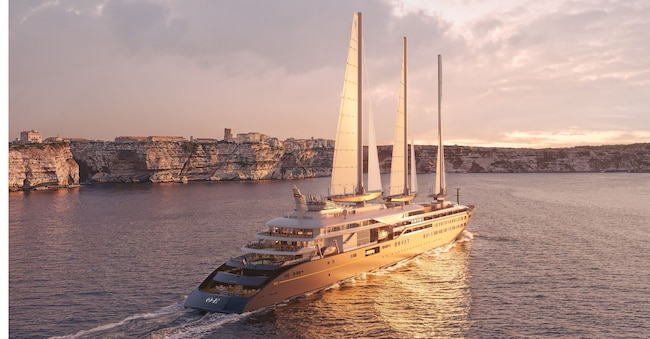
L’Orient Express Corinthian sarà il più grande yacht a vela del mondo: il suo viaggio inaugurale è previsto nel 2026

4' min read

4' min read

An expanding but increasingly polarised universe: this is the picture of luxury customers taken by the 11th edition of the Altagamma Consumer and Retail Insight, presented in Milan.

The "True-Luxury Global Consumer Insight" report by the Boston Consulting Group highlighted how global wealth is growing and diversifying: while North America remains the centre of gravity for HNWIs ("High Net Worth Individuals", with personal financial assets of at least USD 1 million), new basins are emerging in India and South-East Asia. The global HNWI population has surpassed 940,000 individuals and is expected to grow by an average of 9% per year in terms of numbers and 8% in terms of assets by 2030.

Loading...

The process of democratising luxury has generated extraordinary growth over the last 50 years, with aspirational consumers, i.e. those who spend less than €5,000 a year on luxury goods and services, now accounting for over 74% of the total market value. However, this segment is now showing some fragility and, while still accounting for 61% of the high-end market, it is down 13% compared to 2013, due in part to the decline in purchasing power resulting from the global situation of uncertainty and the geopolitical crisis. The sharpest declines were recorded in China (-45%) and in Europe and the United States (-30%).

Top-tier customers, spending over EUR 50 thousand a year on luxury goods and services, are today the real market players: although they make up just 0.1% of the segment's consumer base, they generate 37% of purchases. Their average annual expenditure is €360,000 in the categories of personal luxury, hospitality, design, wines and spirits, a figure that reaches €500,000 if luxury cars and spending on wellness and longevity care are also included. In fact, they prefer experiential luxury, particularly the new 'health as wealth' trend, which considers wellness, aesthetics and personal space care as priority dimensions and for which spending is expected to increase by around 10% over the next 18 months.

"The profile of the high-end customer is constantly evolving and brands are being called upon to develop more personalised, engaging and targeted strategies," said Matteo Lunelli, President of Altagamma. "Over the next 18 months, 75% of aspirational consumers say they will maintain or increase their spending, and this percentage rises to 85% for top-tier customers. To seize this opportunity, companies will have to continue to invest in an increasingly personalised and effective relationship with customers, to consolidate the relationship of trust with them based on a solid sharing of values, and to leverage the excellence of their creations and innovative services".

The most important luxury customers, in fact, are asking for new and more careful ways of communication and involvement: less invasiveness and communication chaos, first of all, and more personalisation. 60%, for example, feel overwhelmed by excessive and impersonal marketing: on average, they actively interact with 57 brands and receive 40-50 communications per month. 80% want exclusive and intimate spaces, not standardised and crowded retail experiences. Ninety per cent consider product quality a must, a consideration that fuels strategies to strengthen craftsmanship and transparency along the supply chain. "Strengthening the luxury sector means returning to what made it extraordinary in the first place, especially for top-tier customers: deep connections, intimacy, quality and trust," noted Guia Ricci, managing director and partner at BCG. In this sense, a renewed centrality of the human relationship can be implemented and supported by artificial intelligence technologies.

Retail spaces also need to be rethought in the light of these considerations, as Bernstein's 'Reinventing Multi-Brand Retail' study underlined, focusing on the formula of multi-brand shops, which are at the centre of a challenging evolutionary phase, as opposed to single-brand shops. If the latter, as Luca Solca, Head of Global Luxury Goods at Bernstein, pointed out, have experienced an impetuous development over the last 15 years, multi-brand stores, both physical and digital, have often entered a crisis.

'The result is that consumer choice has been greatly reduced, as have the distribution channels available for smaller brands that do not have the strength to sustain a single-brand retail presence,' Solca emphasised. The Internet does not solve the problem, because while it is easy to find well-known brands, it is very difficult to discover something you do not know. The game to reinvent multi-brand clothing retail is open. There are the traditional players trying to improve the traditional 'department stores'' format: the new Seibu Ikebukuro shop is very interesting here, as is Maxwell's in the US. There are the mass fashion players - such as Inditex - that are successfully expanding into the premium segment. Finally, there are new players - internet giants like Google or Amazon - who are each in their own way looking for a way. The Amazon + Saks hybrid is very interesting. Without forgetting the big Chinese online mass marketers, such as Shein or Temu'.

The study also highlighted how the traditional formulas of department stores and multi-brand boutiques, both in the West and in Japan, are in structural difficulty, despite their presence in high-traffic locations. On the digital side, multi-brand online platforms have failed to build sustainable models: an example is Farfetch, which with its generalist marketplace has not built sustainable models for either retailers or brands.

However, even in this universe there are exceptions, with the successful cases of Sephora in cosmetics, EssilorLuxottica in eyewear and Level Shoes in footwear, hyper-specialised multi-brand models that have prospered thanks to strong economies of scale, consolidation and category expertise.

In the future, the study continues, the players that could shape the future of multi-brand retailing are established players with a specialisation in menswear; Japanese department stores with a new display approach; fast fashion retailers with potential to move up the bracket, such as Zara, Shein and Temu; web giants such as Google and ChatGPT; and hybrid physical-digital retailers (e.g. Saks, Rebag, Amazon).

Copyright reserved ©
Loading...

Brand connect

Loading...

Newsletter

Notizie e approfondimenti sugli avvenimenti politici, economici e finanziari.

Iscriviti