
Luxury rises on hopes of flow recovery in the Gulf. Cucinelli ok in Milan
The ceasefire mitigates concerns about the stability of global supply chains and potential impacts on the demand for goods in general from a weak economy

Le ultime da Radiocor
Usa: superindice economia invariato a settembre, sopra stime (RCO)
***Ets: Parlamento Ue chiede assegnare quasi 100 mln quote gratuite per proteggere industria
Autotrasporto: associazioni, bene decreto, dialogo prosegua il 27 ottobre
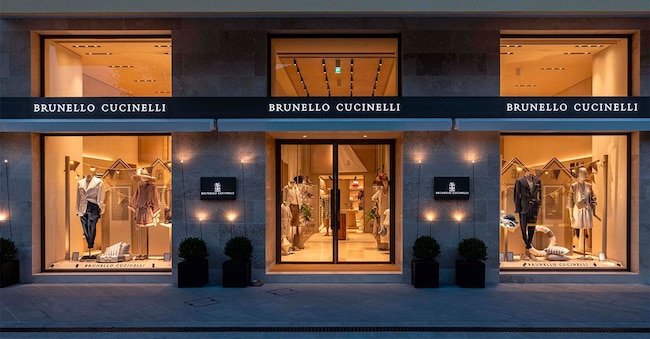
(Il Sole 24 Ore Radiocor)- European luxury goods are taking advantage of the truce in the Middle East and racing on hopes of a recovery in tourist flows to and from Asia and the Gulf countries. Thus, in Paris, the Lvmh , owner of brands such as Louis Vuitton and Dior and considered a leading indicator for the sector, is soaring. Also on the Cac are French rivals Hermes, Kering and Essilorluxottica, while in London purchases on Burberry and in Zurich the holding company of Cartier Cie Financiere Richemont Sa . Italy's luxury companies are no less impressive, with Brunello Cucinelli , Moncler and Ferrari among the best on the main list, while, among other stocks, Salvatore Ferragamo is trading strong.
The ceasefire between the US and Iran is indeed positive news for the sector. The war, operators explain, was in fact a further threat to the luxury sector, which has already had to contend for years with falling demand and difficult market conditions in the important Chinese market, which has been slowing down after the Covid boom. With the truce, on the other hand, the end of the interruption of tourist flows of the rich clientele linked to the Gulf countries, which makes up a significant part of the sector's turnover, seems closer. Moreover, operators explain, the ceasefire, although temporary, mitigates concerns about the stability of global supply chains and the potential impact on the demand for goods in general resulting from a weak economy. Therefore, should the negotiating path continue, according to Intermonte, among the stocks that could continue to rebound are Consumers, including fashion stocks, primarily Moncler. In recent weeks, luxury has seen around USD 100 billion of market capitalisation evaporate due to soaring geopolitical risk premiums and worsening consumer confidence. However, analysts were already predicting a rebound in the sector in recent days in the event of a cessation of hostilities in the Middle East. The region, although accounting for around 6% of global sales, has in fact been crucial for luxury during a period of stagnation in other important markets, such as China. Moreover, a recent report by Deutsche Bank - which maintains a 'buy' rating on industry giants such as Lvmh - identified 'valuation anomalies' in the sector's stocks as one of the catalysts for the possible post-war rally. "Major luxury groups are currently trading at steep discounts to their historical multiples, largely due to a risk premium that has decoupled share prices from fundamental profitability," the experts explained. Although 'timing remains uncertain', Deutsche Bank predicts a return to growth in the sector, also fuelled by 'a pick-up in US and Chinese demand'. Analysts at Ubs are along the same lines: another recent report states that the gradual easing of uncertainty in the Middle East could 'trigger a wave of institutional buying', 'with funds returning to invest in high-quality discretionary stocks', such as luxury goods.


