
The luxury sector is growing thanks to experiences (+4 per cent), but sales of products are also picking up

Key points
2026 will be remembered as yet another year marked by instability – with wars, energy crises, general elections and street protests – but the luxury market will end the year on a broadly stable note, at a value of 1,500 billion euros. Looking beneath the surface, however, there is actually very little that is stable: the geography of consumption has changed, as has the nature of spending by luxury consumers. In 2026, these consumers chose above all to invest in experiences: luxury hotels, restaurants, travel and cruises have enabled so-called ‘experiential luxury’ to reach a value of 533 billion (+4 per cent).
Luxury personal goods on the rise: jewellery and beauty products are leading the way
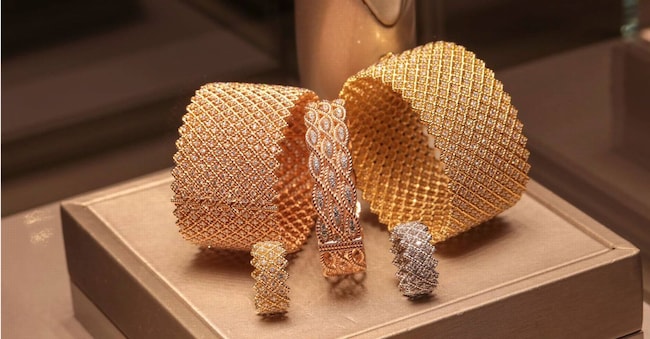
The figures come from the now historic (this is the 25th edition) survey by Fondazione Altagamma and Bain & Co. on the state of the global luxury sector. The Observatory also confirms a return to growth in sales of luxury personal goods, which have risen both in value to 367 billion (+1/+3 per cent) and, for the first time in years, in volume. “It seems that nothing has changed compared with a year ago,” explains Claudia D’Arpizio, senior partner at Bain & Co. –, “but significant changes have taken place, and there are huge differences not only between the performances of markets that are doing well – such as South Korea, which is seeing double-digit growth, and the Middle East, which has declined due to the conflict in the Gulf – but also between product categories.” According to the Altagamma-Bain Luxury Worldwide Market Monitor, the category that has performed best is jewellery, followed by beauty and watches, whilst those still struggling include clothing, leather goods and footwear. This is all confirmed by the Altagamma Consensus, which looks ahead to 2027: jewellery (+6 per cent) and cosmetics (+5 per cent) will be the driving sectors.
Widespread growth in the US; India and Latin America among the most promising markets
The driving force behind growth in 2026 lies in the United States, where “consumer spending has resumed its growth across all target segments, including the aspirational segment”, says D’Arpizio. And in 2027, North America (+5 per cent) will be one of the most dynamic markets alongside India, with a projected increase of 7 per cent. Sales of luxury goods in the land of the maharajas – which has always been a market with an interest in luxury but is very closed off commercially and in terms of regulation, and has therefore been difficult for brands to penetrate – could benefit from the agreement recently signed between the EU and India. The same applies to Latin America, another region with high potential for the high-end market: in 2026, after two and a half decades of negotiations, the European Union signed a trade agreement with the Mercosur countries. However, the effects will only become apparent in due course, and the policies of key countries in the region, such as Brazil, could change following the recent election victory of former President Lula.
Middle East on the rise, China down 1 per cent
China, on the other hand, remains in the background: the Altagamma-Bain report confirms that there has been no recovery and forecasts that Mainland China will stagnate in 2026, with sales at around -1 per cent. The situation is different in the Middle East, where the appetite for luxury goods remains strong, but sales in 2026 have fallen sharply following the Gulf states’ indirect involvement in the conflict between the US, Israel and Iran. “In recent months, we have seen a slight recovery,” says D’Arpizio.
Altagamma’s requests to the government
Globally, the number of luxury consumers – which has fallen sharply following price rises – stands at 450 million, though the potential market is estimated to be nearly 900 million. “The luxury sector as a whole is holding up,” explains Giovanna Vitelli, who has been president of the Altagamma Foundation since 2026, “but we have noticed a shift towards new forms of consumption that include experiences, longevity and wellbeing. I believe this evolution further enhances the value of the Italia system: the seven sectors in which Altagamma’s members operate account for 7.5 per cent of national GDP. For this reason, we have decided to table a number of amendments to the 2027 Budget Bill concerning two priority issues for businesses: training, with tax relief for in-house academies, and the tax credit for design and aesthetic conception, which we would like to see become a structural measure.”

