
Lynch, the 'British Bill Gates' acquitted of fraud and false accounting charges
Last June, he was resoundingly exonerated by a San Francisco court of charges brought by Hewlett Packard
by Nicol Degli Innocenti
2' min read
2' min read
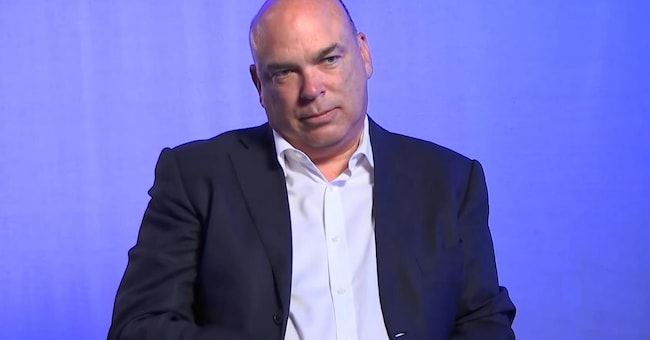
Mike Lynch did not have much time to enjoy his new-found freedom. Last June, the entrepreneur, known as the 'British Bill Gates', was resoundingly exonerated by a San Francisco court from charges of fraud and false accounting brought by Hewlett Packard, to which he had sold Autonomy, the IT company he had founded.
After 13 years of legal disputes, the full acquittal, which is very rare in the US, had given him 'a second life', as Lynch had declared. Just over two months later, however, a boating holiday in Italy turned into tragedy.
Lynch, who was born in Ireland in 1965 but grew up in England in a family he described as 'modest', had shown great mathematical ability from a very young age. After graduating and obtaining a doctorate from the University of Cambridge in physics, mathematics and biochemistry, he had launched a number of technology start-ups. Cambridge Neurodynamics, specialising in automatic fingerprint recognition, had been used by the British police. Then, in 1996, Lynch founded Autonomy, a software company specialising in the rapid analysis of large amounts of data - in fact a forerunner of artificial intelligence.The company's rapid success led to its listing on the Brussels Stock Exchange in 1998 and then its entry into the Ftse 100 of the London Stock Exchange, with clients such as Shell, BMW, the British Parliament and numerous US ministries. Lynch had become and remained one of the richest men in England.
In 2011 the then Prime Minister David Cameron hired him as the government's technology advisor, tasked in particular with studying the risks and opportunities of artificial intelligence. In the same year, Lynch had received an offer from US giant Hewlett Packard that was impossible to refuse: $11.1 billion for Autonomy. It seemed the conclusion of a happy entrepreneurial path, with over 500 million ended up in the brilliant founder's pocket. Instead, it was just the beginning of a very long judicial nightmare. One year after the acquisition, HP wrote down Autonomy by two thirds, claiming to have discovered 'serious accounting irregularities' and accusing Lynch and Stephen Chamberlain, the chief financial officer, of inflating the company's value and rigging the accounts.
A first case at the High Court in London in 2019 had been lost and the American group had requested Lynch's extradition. After three years of trying to avoid extradition, Lynch was forced to leave for the United States in 2023, where he was arrested as soon as he landed. For almost a year awaiting trial he remained under house arrest in San Francisco with an electronic bracelet on his ankle. The entrepreneur was facing more than 20 years in prison. At the end of the trial, however, in June 2024, the San Francisco jury exonerated both Lynch and Chamberlain from all charges. After thirteen years of legal battles, Lynch expressed his 'enormous relief' and his desire to 'get back to doing what I know how to do: being an innovator'. Fate decided otherwise.

