
LyondellBasell has made its decision: it will leave Brindisi by 2026
Impact of the closure of the Eni Versalis cracking plant. 81 direct employees affected
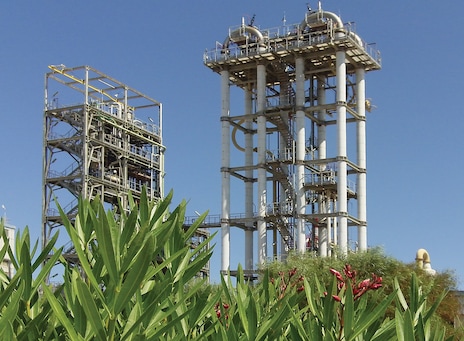
LyondellBasell, another company in the petrochemical complex specialising in the production of polypropylene resins, is also set to leave Brindisi by the end of the year. The closure of Eni Versalis’s cracking plant in April 2025 has deprived the company’s site of the raw material necessary for its operations, triggering a widely anticipated domino effect for this cluster, where all activities are highly integrated and interlinked. This also puts at risk other companies in the petrochemical sector, which employs almost 2,500 workers, including both direct and indirect staff.
The decision by the American multinational, officially announced on 10 June, at the Confindustria Brindisi headquarters, to the national and local trade union secretariats, affects 81 direct employees and a further 150 in related industries; in the coming weeks, certainly once business resumes, the package of measures for departing staff will be discussed and finalised, including early retirement, voluntary redundancy schemes or redeployment to the group’s other Italian plant in Ferrara, where, two years ago, the 45 redundant workers from the monomer plant – which was also closed at the Brindisi site – were transferred.
In the months following the shutdown of the cracking unit – which previously allowed the raw material to be supplied ‘directly from the wellhead’, i.e. directly on site – LyondellBasell, which has been based in Brindisi since 2010, turned to other supply channels, with operating and logistical costs (sea transport from other parts of the Mediterranean) becoming progressively higher. This has “gradually reduced – said Jim Guilfoyle, Senior Vice President of Olefins & Polyolefins – the site’s competitiveness”, its sustainability and operational centrality within the group’s strategies. Hence the decision to close and decommission it. And only if interest were to emerge in acquiring the Versalis cracker would Basell then consider its options. That is, whether not to sell or to sell, as has already happened with four other sites – in France, Germany, the UK and Spain – which the American multinational has sold to the German fund Aequita.
Production at the Brindisi site – with a nominal capacity of 200,000 tonnes of propylene – will be integrated into the company’s global production network, starting with the research centre in Ferrara, which is one of LyondellBasell’s core assets.
The trade unions have pledged to involve the Ministry of Enterprise, without ruling out the involvement of the regional government. “We expect,” explains Carlo Perrucci, regional secretary of Uiltec, “the regional task force for employment to be involved.” Meanwhile, all eyes are on the meeting, scheduled at the Ministry of Economic Development for 6 July, regarding the future of Versalis following Eni’s decision to appoint an international advisor to identify the industrial or financial entity to which the currently mothballed cracking operations are to be sold. If sold, and accompanied by other transactions that might lead to the acquisition of LyondellBasell, “the basic chemicals business would remain in Brindisi,” hopes Perrucci.

