
Lystimäki (Swappie): 'Used cars are no longer a risk but the smarter choice'
The CEO of the Estonian company speaks. In their centre in Tallinn, iPhones pass 60 tests to gain a second life and become a 207 million euro business

TALLIN (Estonia) - Se conservate un vecchio telefono nel cassetto siete in buona compagnia: quasi 8 italiani su 10 ne hanno più di uno. Eppure, al di là di abitudini più o meno consolidate, dare una seconda vita ai telefoni è diventato un business fiorente. È il caso di Swappie, nata nel 2016 da un’intuizione Del founder Sami Marttinen dopo un tentativo mal riuscito d’acquistare uno smartphone usato su una piattaforma online. La tech company finlandese funziona in modo semplice: acquista dispositivi Apple da privati e fornitori, li rigenera e li rivende. Nel mezzo, un rigoroso processo di ricondizionamento che trasforma un vecchio iPhone in un “quasi nuovo”. Una formula che fino al 2024 ha convinto oltre 2 milioni di clienti europei e generato 207 milioni di euro di fatturato nel 2023, evitando oltre 123.000 tonnellate di CO₂ — l’equivalente di 7mila alberi cresciuti in dieci anni.
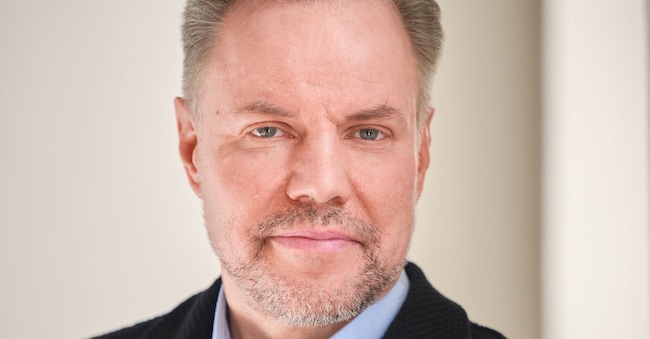
The invitation to visit the reconditioning centre in Tallinn, Estonia, allowed us to take a close look at a rigorous process, consisting of 60 steps and supported by a complex chain of controls. Around 350 employees operate here on a line capable of handling up to 5,000 telephones per day, thanks to a mix of advanced automation and human skills. 'We have introduced solutions to make everything more efficient: advanced automation, material recovery, optimised logistics. The aim is to reduce waste and maximise reuse,' explains CEO Jussi Lystimäki.
It is by wearing the yellow waistcoat provided for guests that the journey into Swappie's 'clinic' begins. The first line is reminiscent of a real factory: devices from private individuals and B2Bs arrive from logistics. A robotic arm inserts them into the housings, discarding stolen or questionable ones by reading the IMEI code. The others move on to automated diagnostics: robots test touch, display and camera, while artificial intelligence performs an initial aesthetic evaluation, providing useful information to the human operators.
The hardware check determines whether to intervene by replacing damaged or worn-out components - often batteries with less than 80 per cent capacity. This is where the manual work of specialised technicians comes into play, who dismantle and repair devices, replacing screens, batteries or camera modules. No automation: everything requires precision and care, as in a high-quality craft workshop. Once 'remanufactured', the phones go through the final examination: the aesthetic evaluation by specialised staff who assign the sales category - acceptable, excellent or outstanding, depending on the presence of scratches, marks and other aesthetic imperfections.
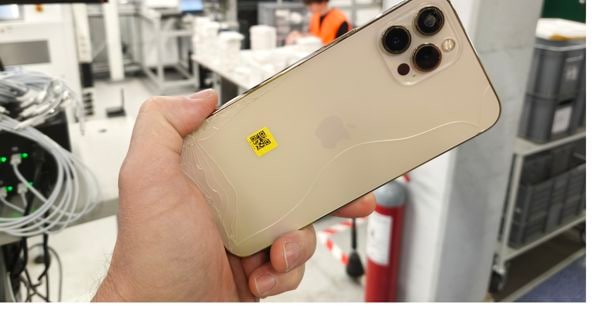
At each stage, Swappie traces each product with a unique identifier, reconstructing its history and feeding a database analysed by managers and AI systems to optimise each step and correct any criticalities. The objective is clear: to build a solid system of trust, offering quality reconditioned products at sustainable prices. Only in this way can consumers stop seeing second-hand products as a risk and start considering them as the smartest choice,' Lystimäk explains. A path that has consolidated Swappie's reputation in Italy, one of the key markets: 'Italy is a market that is notoriously reluctant to innovate. Being among the first to enter the reconditioned market has allowed us to win trust, through clear communication, solid guarantees and flexible payment solutions.

