

Petrolio, la Nigeria si affida alla Cina per il rilancio delle sue raffinerie
dal nostro corrispondente Alberto Magnani

3' min read
3' min read
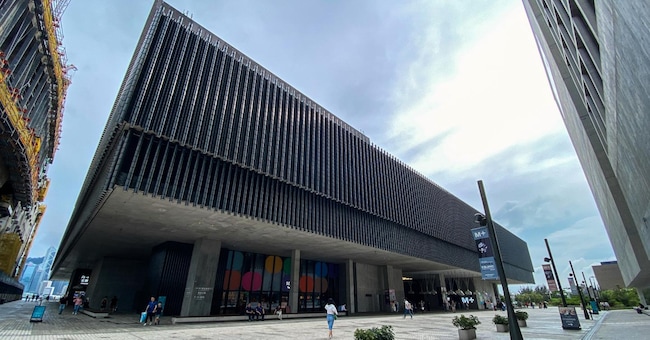
The ambitions of Hong Kong's premier museum are trying to come of age. The M+ Museum is now the major attraction of West Kowloon's burgeoning cultural district. Not for nothing in its gravitational shadow is also the headquarters of Phillips, the dynamic auction house that has always been very careful about the strategic choice of its locations.
A construction site and a building site of art and politics, the discovery of the M+ (i.e. Museum and much more) is a winning bet first and foremost for the play of proportions between architectural and exhibition spaces; a synthesis not always successful in the category of modern museum environments, as the recent examples of Berlin, Rome and Moscow demonstrate.
The project signed by Herzog & de Meuron and Farrells has balance, perhaps due to the familiarity of these emblazoned firms with the practice of transit-oriented development, i.e. the integration of public transport as an essential element of architectural design. Same logic for the interior. The works and installations, simply put, do not get lost inside the museum, but can enjoy their rightful ease, and so can the visitors.
As for the collections, it is very relative, although dense and vibrant, because one of the museum's fundamental nuclei comes from the renowned Uli Sigg, a Swiss diplomat and collector who donated no less than 1450 works from his private collection of Chinese art comprising more than 300 artists to M+. Among the most interesting works are those by Gu Dexin, Zhang Huan, Liu Wei, Wang Wei and Li Songsong.
A powerful extract that Sigg consciously wanted to be in Hong Kong, where non-alignment to the People's Republic is a decisive, albeit dialectical, factor for freedom of expression. And it is no coincidence that an artist such as Ai Weiwei has several works here that are otherwise opposed in Beijing.

