
Macron presses ahead and introduces a ban on mobile phones in secondary school classrooms in France
The President has decided to enact the law containing this provision despite its rejection by the ‘Wise Men’ of the Constitutional Council. But it is already causing controversy and provoking negative reactions amongst headteachers and school administrators: in their view, there is not enough time to organise the ban on mobile phones within 10 days.

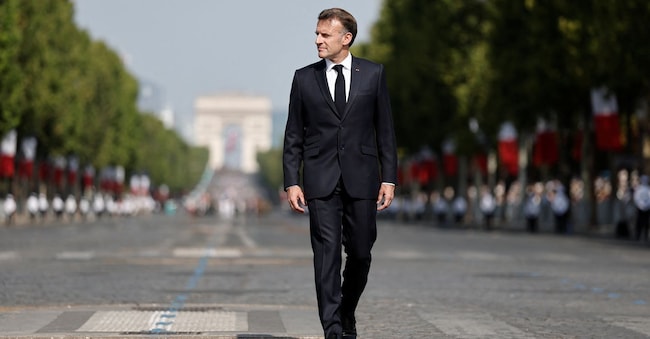
Mobile phones are to be banned from school desks: Emmanuel Macron’s crusade against young people’s addiction to digital screens has claimed its first victim, with smartphones now being banned from secondary school classrooms. The measure escaped the axe of the ‘Wise Men’, who rejected several provisions of the package introduced by the government, in particular the ban on social media for under-15s.
Controversies
But it is already sparking controversy and provoking negative reactions amongst headteachers and school administrators: in their view, there is not enough time to organise the ban on mobile phones within 10 days, and it will be difficult to be ready by the time pupils return from the holidays. Yet it is precisely on this occasion – the first day of term, which in France falls at the start of September – that government spokesperson Maud Bregeon emphasised, during the traditional press conference following the first Cabinet meeting after the summer break: “The ban on mobile phones in secondary schools will be in force as soon as pupils return to class” next week. She added that “President Macron has taken the decision to enact the law” containing this measure, despite the Constitutional Council’s ‘Wise Men’ having rejected the most well-known and hotly debated provision – the one concerning the ban on social media for under-15s. The ban on smartphones, however, remains in place and will come into effect as soon as pupils return to school, “within a stable and well-established legal framework”.
The trade unions’ reaction
“Schools aren’t ready,” replied François Resnais, secretary of the main headteachers’ union, Snpden-Unsa, immediately, criticising “poor timing”. In fact, a circular dated 2 July, accompanied by an implementation table, asked secondary schools to prepare for the mobile phone ban to come into force in September – a measure approved by Parliament. However, in order to implement the ban, schools must amend their internal regulations and therefore consult bodies such as the Council of Representatives and the school’s governing body. In many cases, it will not be possible to do this before schools reopen, and headteachers are largely left grappling with a conundrum.
Revision of the measure
Meanwhile, the challenging work of Prime Minister Sébastien Lecornu continues; he was instructed by President Macron – immediately following the rejection of the ban on social media for under-15s – to redraft the measure. The Constitutional Council – to which Socialist MPs and members of La France Insoumise had appealed – ruled that the law passed by Parliament to protect adolescents from the harmful effects of social media “is not appropriate, necessary or proportionate” in relation to the freedom of expression and communication of very young people. Lecornu, already grappling with the Herculean task of drafting a 2027 budget bill that appears increasingly difficult to pass, will also “consider” the new wording of the social media legislation, so that the new legislative package “takes account of the Constitutional Council’s findings”. “The President’s aim,” emphasised spokesperson Bregeon today, “is to establish a stable legislative framework by next spring to protect children and adolescents.”

Brand connect


Newsletter Scuola+
La newsletter premium dedicata al mondo della scuola con approfondimenti normativi, analisi e guide operative
Abbonati