
Mad for Science: you have until 26 November to enter the 11th edition of the competition
The Diasorin ETS Foundation is offering a grant of 200,000 euros for the refurbishment of science laboratories. The theme for the 2026–2027 edition is ‘Natural Resources and Health’, with the aim of introducing students to biotechnology research and the life sciences.

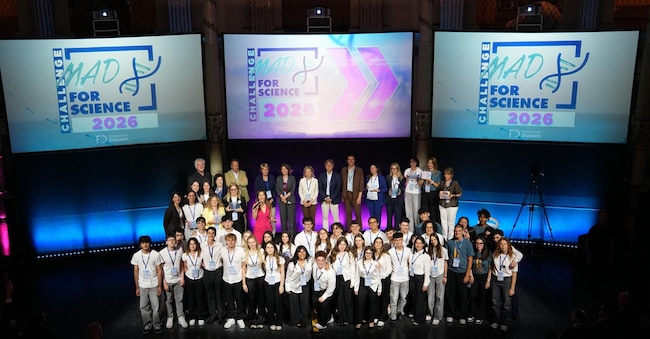
Mad for Science, the competition promoted by the Diasorin ETS Foundation and recognised by the Ministry of Education and Merit as an initiative to promote excellence, is once again engaging Italian schools. Now in its 11th edition, the project invites scientific sixth-form colleges, classical sixth-form colleges offering an enhanced biology programme with a biomedical focus, and technical colleges to design laboratory-based teaching programmes in the life sciences, with the aim of promoting the science laboratory as an environment for learning, research and innovation.
Applications
The theme for the 2026–2027 edition is ‘Natural resources and health. How biotechnology research helps us protect people and the environment’. Schools will be asked to devise a research project comprising five laboratory experiments, to be carried out with the support of at least one external organisation, such as a university, research centre or company. Proposals may relate to biological, environmental or energy resources and must focus on the contribution of biotechnology to the protection of health and the environment.
Multiple stages
The competition takes place in several stages throughout the school year. Applications must be submitted by 26 November 2026. By 7 January 2027, the 50 schools that will progress to the second stage will be selected, and they will have until 24 March 2027 to submit their full project. The eight finalist teams will be announced by 7 May 2027 and will compete in the Mad for Science Challenge 2027, scheduled to take place by 31 May 2027, when the winning schools will be announced.
Prize fund
The total prize fund amounts to 200,000 euros. The winning school will receive up to €75,000 to set up its science laboratory and provide consumables for the following five years; the runner-up will receive €45,000, whilst the third-placed school will receive €30,000. The other five finalist schools will each receive a grant of 10,000 euros towards the purchase of small-scale equipment and laboratory supplies.
Central Instrument Laboratory
“Mad for Science stems from the belief that the laboratory is one of the most effective tools for introducing the younger generation to the scientific method,” says Francesca Pasinelli, President of the Diasorin ETS Foundation. “Pupils and teachers engage with highly topical issues through projects that combine scientific rigour, creativity and collaboration with the world of research. The dialogue between schools and the scientific community is the value we wish to continue promoting, as it offers young people the opportunity to learn about research through direct experience.”

Brand connect


Newsletter Scuola+
La newsletter premium dedicata al mondo della scuola con approfondimenti normativi, analisi e guide operative
Abbonati