
Made-in-Italy medical aids and devices does research and attracts investors
Fifty companies considered by Area Studi Mediobanca: they are small or medium-sized, have a turnover of 1.3 billion, and growing profitability

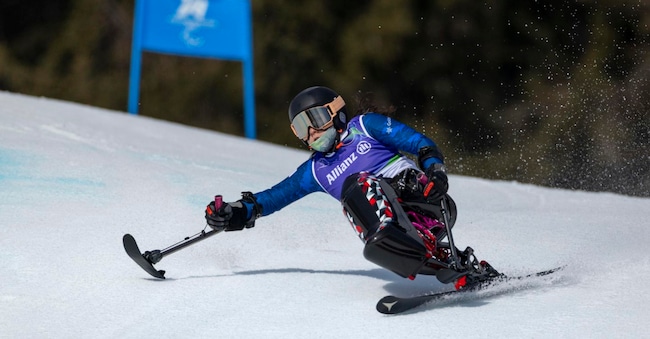
In the Rossignol-Lange racing centre in Montebelluna (Treviso), you can hear milling machines and hammers shaping competition boots, millimetre by millimetre. Whether they are Federica Brignone's boots or those of Paralympic athletes makes little difference: here, the world of able-bodied and Paralympic athletes is the same. The same skills, the same tools, the same professionalism to give skiers perfectly fitting boots for their feet or stumps. "It is the para athletes who contact us for customisations in which to adapt the boot to the prosthesis," explains Stefano Dal Fabbro, general manager of Rossignol-Lange. It is a tailor-made job that starts with a mould of the stump, then shoes are stretched, internal shaping is modified, and shoes with specific padding are created. Abutment, prosthesis, boot become a single soul for a kinematics that allows descents at 100 km/h.
What happens at the Treviso prototyping centre is similar to the design and production carried out at Tecnica di Giavera del Montello (Treviso): identical materials between Olympic and Paralympic athletes, even if to allow the maximum expression of gestures they do not reach the rigidity levels of the World Cup competition product, preferring identical characteristics of the top level juniors with normal abilities. These are stories of customised adaptations, but the Italian industry of mobility aids and devices is much broader and more varied, and has been the subject of research carried out by Area Studi Mediobanca.
The analysis focuses on Italian companies with a turnover of more than 5 million that produce orthopaedic aids and mobility aids: there are 51 of them, almost all with plants in Italia, and, in 2024, they will have a turnover of more than 1.3 billion (estimated growth in 2025: +5%), employing more than 5 thousand people. They are part of the world's largest MedTech (Medical Technologies) industry, which is worth 650 billion dollars, with expectations of 5% annual growth in the short term despite macroeconomic uncertainty and trade tensions; in Italia - source: Centro Studi di Confindustria Dispositivi Medici (Confindustria Medical Devices Research Centre) - the market is worth 18.9 billion euros (6 billion from exports) and has 4,648 companies with over 130 thousand employees and a marked propensity to invest in research, amounting to an average of 5.3% of turnover. The most striking fact of the study is that we are in the presence of small and medium-sized companies, all driven by research innovation and attracting the attentions of foreign investors, so much so that the contribution of foreign-controlled operators has increased from 47.6% of the aggregate turnover in 2024 to 48.8% in 2025, as a result of M& A operations. The three companies on the turnover podium are the Friuli-based LimaCorporate, 261.6 million, belonging to the US-based Enovis Group; Demetra Holding, 101.9 million, headquartered in Milan, whose control is held by the French private equity fund Astorg; and the Emilia-based Olmedo Special Vehicles, 93 million. More than one sixth of the panel's total revenues are held by private equity funds that recognise the excellence of Made in Italy both at product level (two out of three orthopaedic devices are sold across borders) and at financial level, with profitability growing, on average, from 5.3% ebit in 2022 to 8.8% in 2024.
Within this framework, the niche of the niche must be considered: micro-companies, scattered all over Italia, that produce wheelchairs and sports aids, not only for the elite. From Rehateam of Castagnole di Paese (Treviso) to Guidosimplex's customised driving devices for racing cars, from Ormesa of Foligno to Neatech of Cercola (Naples), with its electric wheelchairs for hockey and other sports. They are almost artisan realities, forges of customised innovation, where, as Offcarr of Villa del Conte (Padua) explain, to produce a sled for cross-country skiing or biathlon, they start by scanning the athlete's body, moving on to the shaping of the carbon shell and finally finding the best position of the centre of gravity so that the biomechanics of the arm thrust gesture performs at its best. There are no manuals, no standards, just the experience of each technician at the service of people with disabilities who want to start running again.


