Startup

Made in Trentino the prototype of the world's first railway taxi

RailEvo was born in 2023 and settled in Polo Meccatronica, the Trentino Sviluppo technology hub - Around 900 single-track lines in Europe

by Barbara Ganz

4' min read

Translated by AI
Versione italiana

4' min read

Translated by AI
Versione italiana

There will be no more need to wait for the train on the platform at a predefined time: through the app, you will be able to book your journey like a taxi at the most convenient time, counting on a service that is always available 24 hours a day.
Innovazione

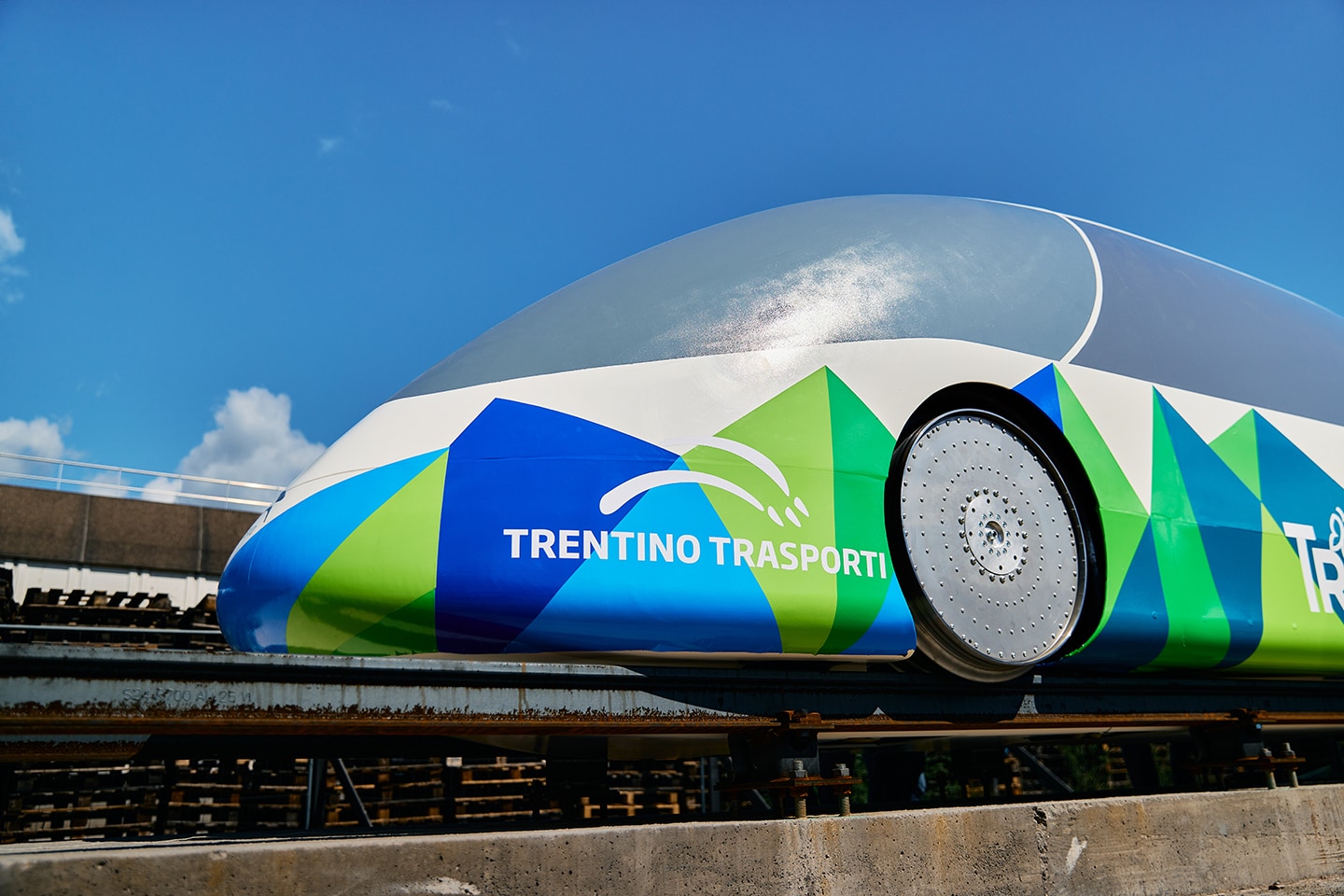
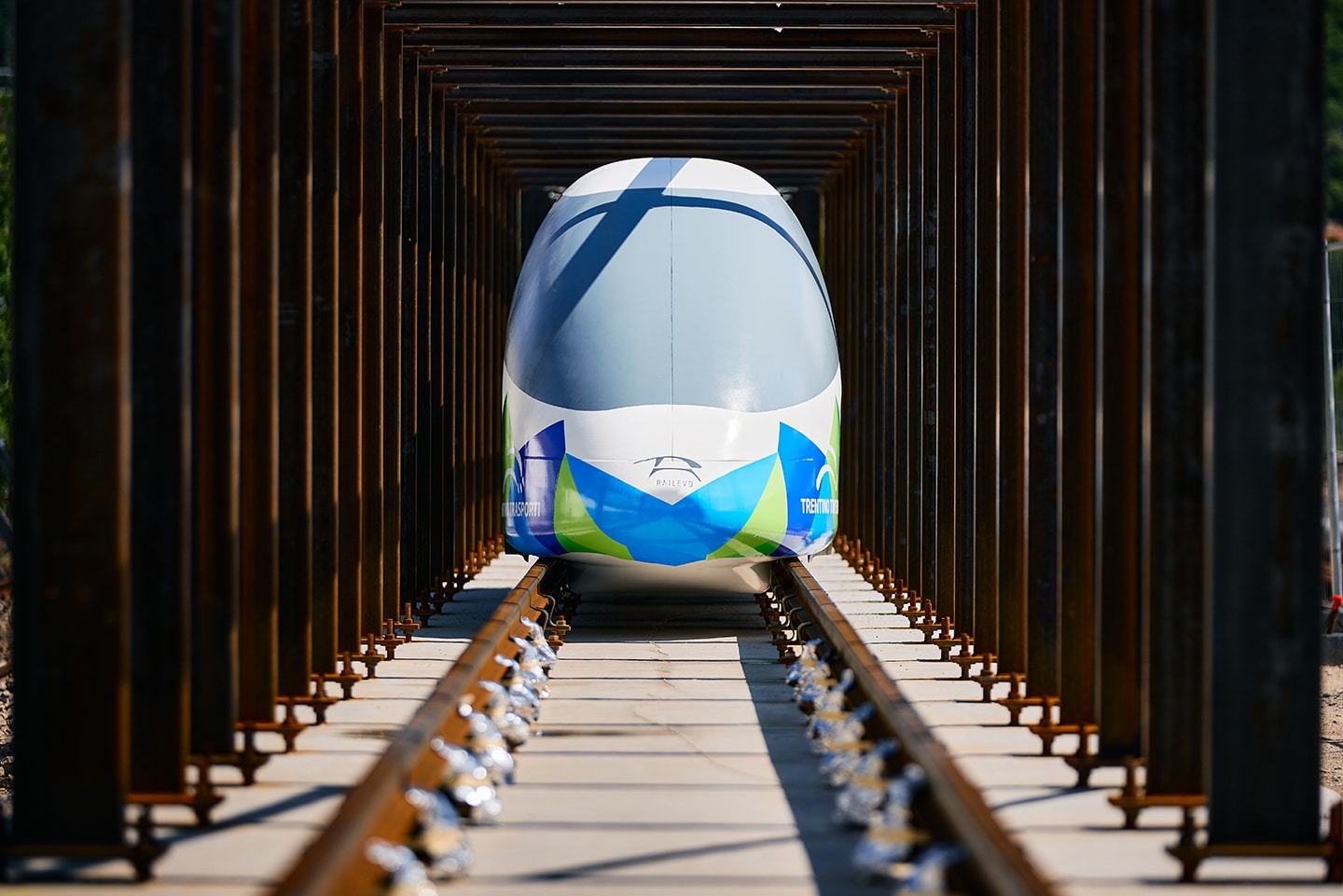
RailEvo is the innovative startup founded in 2023 and based at Polo Meccatronica, Trentino Sviluppo's technology hub in Rovereto, which has unveiled the prototype of the world's first rail taxi. The basic idea is to transform the single tracks of Italian and European railways, mainly used for commuter transport and characterised by operational bottlenecks, into rail highways for a new, more efficient local mobility paradigm.

Loading...

The result is a compact, self-driving electric vehicle, bookable from a smartphone, capable of carrying up to six passengers, which will travel at 100 km per hour to transport them to their destination without the hiccups and delays typical of local rail transport.
The secret lies in the patented axle that will allow the taxi to ride on an elevated track and thus stop, when requested to do so by the user, at intermediate stations built at a higher level, without affecting the traffic of following vehicles, and thus able to continue their journey at the lower level to subsequent destinations without ever stopping.

Maximum efficiency

The design of the vehicle, conceived by start-up founder Federico Bernabei, is tapered and narrow, designed to maximise energy efficiency and allow two vehicles to travel simultaneously in opposite directions, occupying the same width previously allocated to a traditional single-track railway carriage. The taxi is also designed to allow the transport of a wheelchair for the disabled or a bicycle, and if required, the handling of goods, as it can hold two euro pallets.
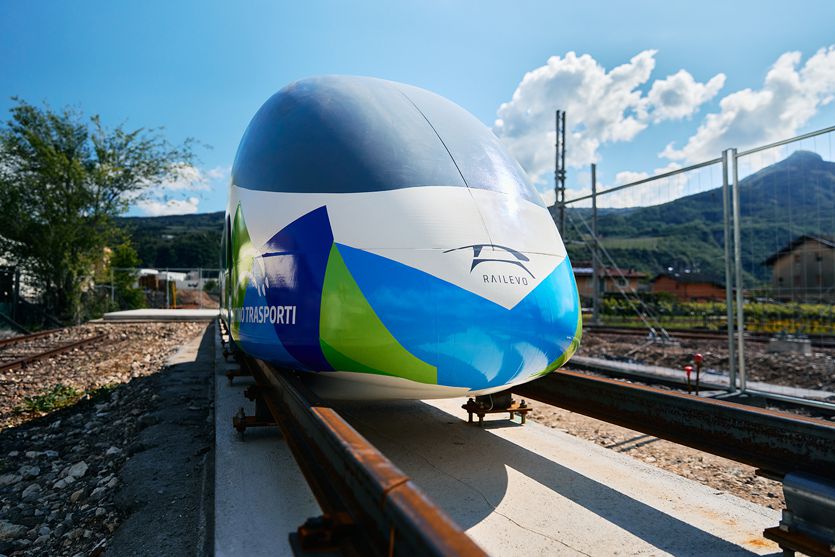
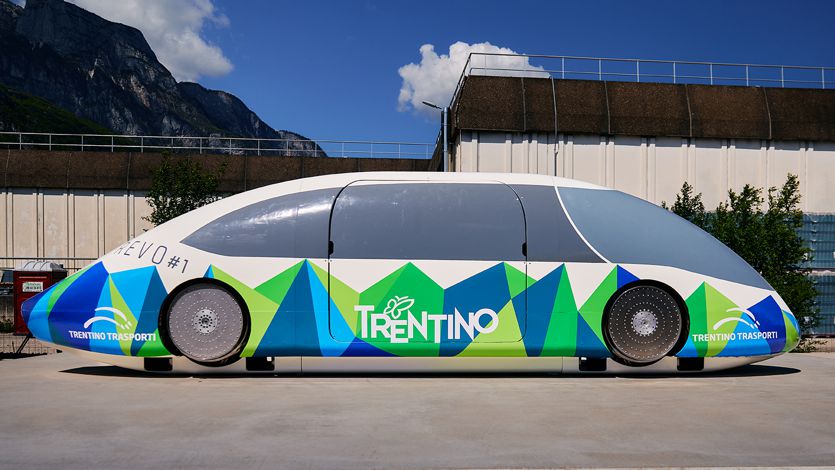
"The aerodynamic efficiency is in addition to the contact between the iron wheels and the track, typical of rail transport, which is ten times more efficient than that of rubber on asphalt," says Bernabei, who leads a team of 10 people including experts in mechanics, mechatronics and software development. "All this makes it possible to reduce energy consumption to just 3 kilowatt hours per 100 km of travel, which is highly competitive compared to the minimum 14 kilowatt hours required by an electric vehicle covering the same distance on the road.

Each taxi is also equipped with a set of mecanum wheels, wheels usually used in industry and for the first time applied in the railway sphere. Placed under the vehicle bed, they are able to make it move 360 degrees and are used when, having arrived at its final destination, the taxi leaves the track to go and position itself in the car park where it will wait for the next call, while it recharges its electric battery, which has already been partially restored during the journey thanks to a regenerative braking system.

The Network

"It will be possible to pay a higher fare to have a vehicle just for oneself that arrives at one's destination as soon as possible, or choose a lower fare when sharing the vehicle with other passengers who will stop at certain intermediate stops," explains co-founder and CEO Nicola Mosca.

The idea of turning railways into rail highways for innovative small vehicles stems from the observation that in Italia and Europe many railway lines are still single-track with such operational problems that transport is often unsatisfactory for customers. "At the European level there are about 900 single-track lines, about a quarter of which carry at least 5,000 passengers a day," explains Nicola Mosca, "not to mention that a study from 2023 shows that 13,000 kilometres of these lines are currently unused, infrastructures that with RailEvo could literally be reborn, offering a fast, ecological and economical travel service, improving people's quality of life and supporting territories at risk of depopulation.

In Italia things are no different: in the network about 60% of the lines are single-track and there are 1289 km of disused lines.

From an economic point of view, the solution is also competitive, although it requires infrastructure investment. "Each RailEvo seat costs, in terms of investment, 30 per cent less than a seat on a regional train, but in the case of single-track lines, several trains (for both directions) are needed to achieve an acceptable level of service, and this makes the cost-effectiveness at least 50 per cent higher," Mosca continues. This aspect, together with the fact that the service will be on-demand with no hourly interruptions, allows, with the same number of cars available, a wider coverage of user needs and consequently a lower operating cost, since the vehicles never travel without passengers, as often happens on little-used railway lines.

Il prototipo: è made in Trentino il primo taxi ferroviario

RailEvo's innovation lies not only in its technology but also in its market access strategy. The start-up has decided to focus its core business exclusively on the production of the configurable axle, 'opening' its system to other industrial partners for the remaining parts of the solution: railway infrastructure, chassis, bodywork, stations, mechatronics, and so on. This will accelerate both the R&D and subsequent engineering phases, and will allow for greater return on investment, as each player can concentrate on its core business.

It is within this perimeter that the collaboration with Trentino Sviluppo, which has made a financial contribution to the creation of the prototype, and the first industrial partnership entered into with Valente Spa, a company that has been active for over 100 years in the rail transport, rail distribution and processing sectors, which, recognising the strategic value and industrial potential of the project, has entered into the capital of RailEvo and will make its technical expertise available to optimise the old single-track routes. Equally important is the collaboration with Trentino Trasporti. "We operate with the aim of guaranteeing efficient, safe and sustainable public transport services also through innovation as a strategic lever for the development of future mobility," says president Diego Salvatore.

Copyright reserved ©
Loading...

Brand connect

Loading...

Newsletter

Notizie e approfondimenti sugli avvenimenti politici, economici e finanziari.

Iscriviti