
04 January 2026
Army recognises Rodríguez presidency. Rubio: illegitimate. EU: let the people decide
The Constitutional Chamber of Venezuela's Supreme Court ordered on Saturday 3 January 2026 that Vice-President Delcy Rodríguez assume the role of interim president of the country in the absence of Nicolás Maduro, who was arrested Saturday morning during an operation by US forces
For feedback, please contact
english@ilsole24ore.com
 Aggiungi Il Sole 24 Ore
ai preferiti su Google
Summary by points
- EU countries: restoring democracy in Venezuela requires respect for the will of the Venezuelan people
- Rubio: after Venezuela Cuba? We are not big fans of Havana
- Brazil recognises Delcy Rodríguez as interim president of Venezuela
- Nyt: at least 40 dead in US attack in Venezuela
- Hundreds of flights in the Caribbean cancelled after US operation
- Maduro to Brooklyn jail, same as El Chapo
4 January 2026Pinned update
On 3 January 2026, President Donald Trump declared that he would place Venezuela under temporary US control after the US captured President Nicolas Maduro in a raid and brought him to New York to answer drug trafficking charges.
"We will govern the country until we can achieve a safe, proper and judicious transition," Trump said during a press conference at his Mar-a-Lago resort in Florida. "We cannot take the risk of someone else taking control of Venezuela without the best interests of Venezuelans in mind." Trump said that, as part of the deal, major US oil companies would relocate to Venezuela, which has the world's largest oil reserves, and refurbish severely degraded oil infrastructure, a process that experts say could take years.
According to a Justice Department official, Maduro, indicted on various US charges, including narcoterrorist conspiracy, should appear for the first time on Monday in federal court in Manhattan. His wife, Cilia Flores, also faces charges, including conspiracy to import cocaine.
It is unclear how Trump intends to oversee Venezuela. US forces have no control over the country itself and Maduro's government seems not only still in charge, but has no intention of cooperating with Washington. Trump has not said who will lead Venezuela when the US relinquishes control. Maduro's possible successor, Venezuelan Vice President Delcy Rodriguez, appeared Saturday afternoon on Venezuelan television along with other senior officials to denounce what she called a kidnapping. "We demand the immediate release of President Nicolas Maduro and his wife Cilia Flores," Rodriguez said, calling Maduro "the only president of Venezuela."
In the United States, some legal experts have questioned the legality of an operation to capture the head of state of a foreign power, and Democrats who claimed to have been misled during recent briefings have asked to be informed of the next steps.
4 January 2026
Kallas: EU calls for calm, people decide future
"The European Union calls on all actors to remain calm and moderate in order to avoid escalation and ensure a peaceful solution to the crisis." This is the statement of the EU High Representative for Foreign Policy, Kaja Kallas, on the consequences of the US intervention in Venezuela. This statement is supported by 26 EU member states (Austria, Belgium, Bulgaria, Croatia, Cyprus, Czech Republic, Denmark, Estonia, Finland, France, Germany, Greece, Ireland, Italy, Latvia, Lithuania, Luxembourg, Malta, the Netherlands, Poland, Portugal, Romania, Slovakia, Slovenia, Spain and Sweden).
"The EU recalls that, in all circumstances, the principles of international law and the UN Charter must be respected. The members of the UN Security Council have a particular responsibility to uphold these principles as a pillar of the international security architecture.
The EU 'has repeatedly stated that Nicolás Maduro does not have the legitimacy of a democratically elected president and has supported a peaceful transition to democracy in the country, led by Venezuela and respectful of its sovereignty. The right of the Venezuelan people to determine their own future must be respected'.
4 January 2026
EU countries: restoring democracy in Venezuela requires respect for the will of the Venezuelan people
The EU countries, with the exception of Hungary, called on all actors in Venezuela for moderation and said that respecting the will of the Venezuelan people is the only way to restore democracy in the country. "The European Union calls on all actors for calm and restraint to avoid escalation and ensure a peaceful solution to the crisis," the 26 EU countries and the Union's High Representative for Foreign Affairs and Security Policy Kaja Kallas said in a statement. "Respect for the will of the Venezuelan people remains the only way for Venezuela to restore democracy and resolve the current crisis," the statement stressed.
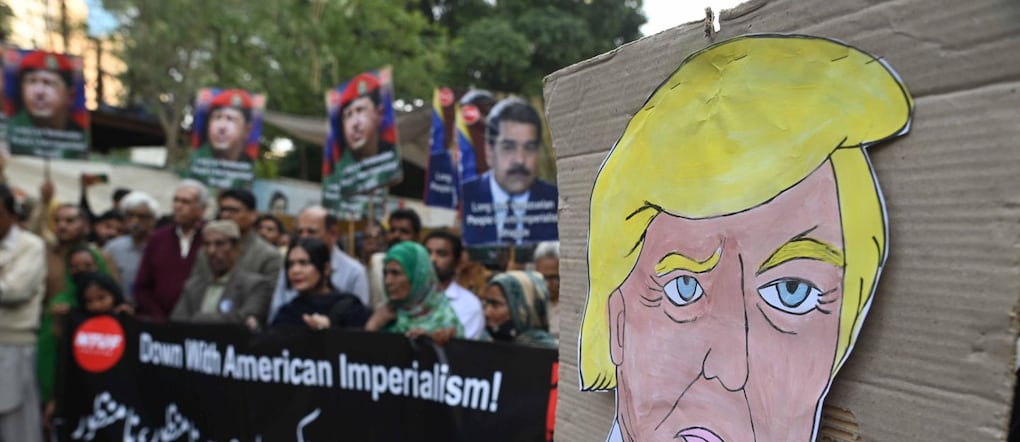
Manifestanti tengono in mano ritratti del presidente venezuelano Nicolas Maduro e dell'ex presidente Hugo Chavez durante una protesta contro l'operazione delle forze statunitensi in Venezuela, a Karachi, in Pakistan, il 04 gennaio 2026. Il presidente degli Stati Uniti Trump ha annunciato che le forze americane hanno catturato con successo il presidente venezuelano Nicolas Maduro e sua moglie durante una serie di attacchi su larga scala nella notte a Caracas, il 03 gennaio 2026. EPA/SHAHZAIB AKBER
Ask the editorial team
Have questions or feedback about this article? Contact our editorial team.
4 January 2026
Meloni hears Machado, without Maduro a new page for Venezuela
Prime Minister Giorgia Meloni had a telephone conversation with Maria Corina Machado on the prospects for a peaceful and democratic transition in Venezuela. This was stated in a note from Palazzo Chigi. During the phone call 'it was shared how Maduro's exit from the scene opens a new page of hope for the people of Venezuela, who will be able to return to enjoy the basic principles of democracy and the rule of law'.
4 January 2026
Trump, 'it's not about hemisphere control, it's about the individual country'
US President Donald Trump has denied that the military operation against Venezuela is aimed at US control of the Western Hemisphere, in the wake of the so-called Monroe Doctrine, which he made his own (dubbing it the 'Donroe Doctrine'). "It's not about the hemisphere. It's about the country. It's about the individual countries,' he said during a telephone interview with The Atlantic, in which he 'made it clear that the decision to kidnap the Venezuelan president was not taken simply for geographical reasons,' as the paper writes.
4 January 2026
Nyt, death toll rises in US attack in Venezuela, up to 80
The death toll of the US attack in Venezuela rises. The dead number 80, double the previous estimate. This was reported by the New York Times citing sources, according to which the tally could rise further.
4 January 2026
The rise of Rubio, now also 'Viceroy of Caracas'
Secretary of State, national security advisor, acting head of the federal archives, administrator of the now defunct Usaid. And now also 'viceroy of Venezuela', as the Washington Post christened him for his crucial role in devising the ousting of Venezuelan President Nicolás Maduro and in the country's future transition. A post that could become the most demanding of all, having concentrated in his hands powers greater than those of Henry Kissinger in the 1970s. 'Secretary of everything', the New York Times had joked last May, describing the irresistible rise of the head of US diplomacy, one of the few with great experience and expertise behind him in the Trump presidency, where he is emerging as one of the strongest figures in government.
Maduro's capture not only realises a long-standing goal of Rubio's, but also represents a victory for him within an administration that includes figures sceptical about regime change, notably J.D. Vance, more sensitive to the bellyaches of the Maga base, opposed to US interventionism. The vice-president officially supported the operation in Venezuela. But it is perhaps no coincidence that he has been keeping a low profile: absent at Mar-a-Lago both when the commander in chief followed the blitz live with the loyalists (he was on video link) and at his press conference, where the president was flanked by Rubio, Defence Secretary Pete Hegseth, Joint Chiefs of Staff Dan Caine, envoy Steve Witkoff and White House Deputy Chief of Staff Stephen Miller.
On the success of the Venezuelan dossier will also depend Rubio's chances of running on his own for president in 2028, parading himself as a running mate in a hitherto hypothetical ticket led by Vance. In the absence of an immediate successor to govern a country of some 29 million people, Trump is relying on Rubio to help 'manage' Venezuela, divvy up its oil assets and facilitate the establishment of a new government: a delicate task, one that makes one's wrists shake for someone who already has so many other responsibilities. 'The task before him is staggering,' said a senior US official, emphasising the dizzying array of policy decisions on energy, elections, sanctions and security that lie ahead. His command of Spanish (as a Cuban exile) and familiarity with Latin American leaders and the Venezuelan opposition make him Trump's natural interlocutor, another senior US official said, warning, however, that the administration will have to appoint a full-time envoy to assist Rubio, given the enormous scope of decisions and responsibilities inherent in such a task.
In the meantime, the Secretary of State began to dictate the line in a series of interviews with American TV stations: 'No invasion but only an arrest operation' that 'did not require the OK of Congress'; 'we will cooperate with Venezuelan officials if they make the right decisions'; 'the transition will take time', including new elections; 'María Corina Machado is fantastic, but the immediate reality is that, unfortunately and sadly, the vast majority of the opposition is no longer present within Venezuela'.
4 January 2026
Taylor Greene, 'Trump ignored Maga movement'
Outgoing US Congresswoman Marjorie Taylor Greene criticised President Donald Trump's decision to strike Venezuela and capture its leader, Nicolas Maduro, saying that the military operation conducted yesterday constitutes a betrayal of the "America first" promise and that the Trumpian "Make America Great Again" (Maga) movement is "tired of being ignored". He said this during an interview with Nbc's 'Meet the Press' programme, saying he did not believe it was a move to stop the flow of drugs from the South American country, otherwise the administration would move against the Mexican cartels. Making it clear that she does not support Maduro, Taylor Greene, a Trump loyalist until a few months ago and a leading figure in the Maga movement, said it is the 'same Washington script that we are sick and tired of'. She added that the removal of the Venezuelan leader 'does not serve the American people... but actually serves the big corporations, the banks and the oil executives. And so, my opposition here is to the Trump administration that campaigned on Make America Great Again, which we thought put America first." The movement 'has its list of enemies, and the enemies of the world are not on the list', and Maga members 'are tired of being ignored', he said.
4 January 2026
Trump, reconstruction and regime change is better than what is now in Venezuela
'Reconstruction and regime change, whatever you want to call them, are better than what we have now' in Venezuela. "It couldn't be worse." Donald Trump said this in an interview with The Atlantic.
4 January 2026
Trump, Rodriguez do the right things or pay high price
IfDelcy Rodriguez "doesn't do what is right, he will pay a very high price, probably higher than Maduro." This was said by Donald Trump in an interview with The Atlantic, according to Bloomberg news agency.
4 January 2026
Medvedev, 'Zelensky could end up like Maduro'
"Washington could repeat against Kiev the operation already attempted in Caracas, and in the case of Ukraine the reasons for doing so would be much stronger". This was stated by the deputy chairman of the Russian Security Council, Dmitry Medvedev, Tass writes. "The Yankees, having already set a similar precedent with Maduro, could repeat it with the Bandera bastards," he comments referring to Ukrainian nationalist Stepan Bandera, and in this case pointing to the Kiev regime. "There are certainly many more reasons to do so," Medvedev adds, responding to a question about the possibility of the US taking similar action against Volodymyr Zelensky should he reject a deal with US leader Donald Trump.
4 January 2026
Most of Maduro's bodyguards dead in US attack
US forces killed 'most' of Venezuelan President Nicolas Maduro's security detail during the raid to capture him. This was stated by Venezuela's Defence Minister, Vladimir Padrino Lopez, speaking on state television. According to Padrino Lopez, the operation had a particularly heavy human toll. A senior Venezuelan official told the New York Times that more than 40 military and civilian personnel died in the attack, adding that the final death toll could be higher.
4 January 2026
Rubio: Delcy Rodriguez is not the legitimate president of Venezuela
Secretary of State Marco Rubio believes that interim President Delcy Rodríguez is 'not the legitimate president of Venezuela' because the United States does not consider the regime currently in power to be legitimate. In one of his TV interviews, Rubio explained that he understands that there are people in Venezuela today 'who are the ones who can actually make changes'. But he pointed out that this is different from recognising the legitimacy of the Venezuelan government, which will result from a transition period and an election.
4 January 2026
JD Vance: Venezuela central in drug trafficking, US attack right
US Vice President JD Vance defended the US operation against Venezuela on Saturday 3 January on X, rejecting criticism that Caracas did not play a central role in drug trafficking and linking the Venezuelan dossier to drug trafficking, Latin American cartels and US energy interests. Vance argued that limiting the debate to fentanyl is misleading. "Fentanyl is not the only drug in the world and fentanyl still arrives from Venezuela, or at least used to arrive," he wrote, adding that cocaine remains the main substance trafficked from the South American country.
According to the Vice President, cocaine is a key profit centre for the Latin American cartels. 'If you cut or even reduce cocaine revenues, you substantially weaken the cartels as a whole,' he said, emphasising that it is still a harmful drug. Vance then reiterated that a significant portion of fentanyl continues to come from Mexico, an issue that remains central to US policy. 'This continues to be a focus of our policy in Mexico and is one of the reasons President Donald Trump closed the border on day one,' he wrote, referring to President Donald Trump.
4 January 2026
Venezuelan Defence Minister: united in the face of US aggression, Maduro president
Venezuela's Minister of Defence Vladimir Padrino Lopez, in an official statement released by the official AVN news agency, today reiterated his condemnation of the US 'brutal military aggression' against Venezuela's sovereignty, denouncing the kidnapping of President Nicolas Maduro and first lady Cilia Flores and announcing security measures throughout the country. He also announced that tomorrow there will be the formal inauguration of Delcy Rodriguez as interim president, reiterating that Maduro remains the 'constitutional president'.
The minister and head of the Bolivarian National Armed Forces (FANB), said that the army was 'united in the face of the 3 January aggression' and that the country had been hit by 'an unprecedented deployment against the Republic of Venezuela', described as 'grotesque and anti-legal'. According to Padrino Lopez, 'yesterday the person whom the people elected as their president was kidnapped', reiterating that Nicolas Maduro is 'the constitutional president for the period 2025-2031' and 'the legitimate leader of all Venezuelans', elected in consultations defined as 'free, sovereign and secret'. The FANB call for the 'immediate release of the president of the Republic', denouncing that he was kidnapped together with his wife Cilia Flores, described as 'a courageous woman taken away in handcuffs'.
4 January 2026
Defence Minister of Caracas, 'we recognise the presidency of Rodriguez'
"We reject the cowardly kidnapping of constitutional president and our commander-in-chief Nicolas Maduro. In compliance with the Supreme Court's decision we recognise the appointment of Delcy Rodriguez'. This was said by Vladimir Padrino López, Venezuela's army chief and defence minister.
4 January 2026
Venezuela: Hegseth, 'operation is exact opposite of Iraq'
US Secretary of Defence Pete Hegseth stated that there are no parallels between the US military operation in Venezuela, which led to the capture and arrest of the country's leader Nicolas Maduro, and the 2003 US-led invasion of Iraq, which led to the overthrow of dictator Saddam Hussein. "It's the exact opposite," Hegseth commented during an interview with CBS. "We've spent decades and decades and paid in blood, getting nothing in return economically, and President (Donald) Trump flips the script," the defence secretary stressed, adding that Washington can now help both the people of Venezuela and the US following the "most complicated and successful joint special operations raid of all time".
The South American country 'has a long history as a rich and prosperous country', he continued, pointing out that it has been 'taken away from its people by a horrible leadership'. Hegseth also hinted that an overhaul of Venezuela's inefficient oil sector is on the way. 'These oil deposits have been operating at 20 per cent of capacity. The situation will change,' he said in the interview. Yesterday, during a press conference also attended by the Pentagon chief, President Trump said that the US will 'manage' Venezuela until a 'safe, appropriate and judicious transition' can be ensured, adding that the country's vast oil reserves will be exploited. 'We're going to get our very large US oil companies, the largest in the world, to come in, spend billions of dollars, repair badly damaged infrastructure and start making money for the country,' he said.
4 January 2026
Defence Minister of Caracas: 'We guarantee democratic continuity'
"The armed forces of Venezuela have guaranteed democratic continuity and will continue to do so: I call the people to peace and order and to resume their economic, work and educational activities. The homeland must get back on the road'. This was said by Vladimir Padrino López, head of the Venezuelan army and Minister of Defence.
4 January 2026
Tabarelli (Nomisma): 'Catastrophic US action, oil curse on country'
Oil 'is the past, the present and the future of Venezuela', a 'gigantic, failed opportunity'. So says the president and founder of Nomisma Energia Davide Tabarelli, speaking of the US military operation as 'a catastrophe for the country, the culmination of a disaster that has seen oil production collapse, as well as per capita income, and a quarter of the population flee the country, 8 million people. And then poverty, hunger... It is the best example in the world of the 'oil curse', what in English is called the 'oil curse', in Europe the 'Dutch disease', i.e. the 'disease' of those countries that have enormous mineral resources and live off their income', income that then ends up 'in corruption, arms, or to consolidate the regime in power, which is what has happened in Venezuela over the last 25-30 years'. Sickness and damnation culminated in the US attack and the arrest of President Nicolas Maduro, "a dramatic event, very bad, from a geopolitical point of view" and "a madness: there is no way in the world to see in the 21st century a dictator or presumed dictator militarily taken from his country", says Tabarelli.
4 January 2026
NYT: US attack preceded by cyber operation
The US launched a cyber attack at the start of the military operation that led to the capture of Venezuelan President Nicolas Maduro and his wife Cilia Flores yesterday, causing power outages in several areas of Caracas. This was reported today by The New York Times. According to the US newspaper, which cites anonymous officials with knowledge of the details of the mission, the cyber-attack allowed US planes, drones and helicopters to approach targets without being detected by Venezuelan defence systems.
4 January 2026
Trump's raid splits Colombia ahead of elections
The US raid on Caracas has unleashed another political storm in Colombia, aggravating the climate of internal confrontation ahead of the elections to be held in the coming months. On the one hand, the right has supported Donald Trump's military action. Opponents of the government of Gustavo Petro approved the attack, calling it an act of 'self-defence', adding that the next on the list would be President Gustavo Petro, a thesis somewhat confirmed by Trump himself in his press conference in Mar-a-Lago.
On the opposite side were the right-wing critics of the US government and supporters of the Colombian executive who interpreted what had happened as a demonstration of Washington's violent interference and its plans to apply the Monroe Doctrine by force. All this in an atmosphere of the end of the holiday season, in a nation that knows how to dance and have fun even in the midst of misfortune, involved for over 60 years in a low-intensity internal war and knows the smell of gunpowder and the trajectory of bullets.
4 January 2026
Rubio: Venezuela cannot be hub of Iran, Russia, China, Hezbollah
The United States will not accept Venezuela continuing to serve as an operational hub for its enemies. This was stated today by US Secretary of State Marco Rubio speaking on NBC News's Meet the Press programme, talking about Venezuela after the capture of Nicolas Maduro and pointing the finger at Iran, Russia, Hezbollah, China and the Cuban intelligence apparatus.
"You cannot flood this country with members of criminal gangs. You cannot flood this country with drugs coming from Colombia through Venezuela with the cooperation of elements of the security forces,' saidRubio, insisting: 'You cannot turn Venezuela into the centre of operations for Iran, for Russia, for Hezbollah, for China, for the Cuban intelligence agents who control that country. This cannot continue'.
The other central issue, according to the head of US diplomacy, concerns the control of energy resources. "We cannot continue to have the world's largest oil reserves under the control of the United States' adversaries, without benefit to the Venezuelan people, taken away by a handful of oligarchs around the world, including within Venezuela," he said. 'We have seen,' he continued, 'how our adversaries around the world exploit and extract resources from Africa and other countries. They will not do so in the Western Hemisphere'.
The Secretary of State also referred to the US National Security Strategy and President Donald Trump's line. "Read our national security strategy. The president is serious about this, he will do something about it and we are already doing something about it,' he concluded.
4 January 2026
Rubio: after Venezuela Cuba? We are not big fans of Havana
US Secretary of State Marco Rubio hinted today that the Cuban government could be the next target of US pressure, but without going into details of Washington's future moves. He said this in response to a question from NBC News. "I'm not going to talk to you about what our next steps or policies are going to be right now on this issue," Rubio said, adding that "it's certainly not a mystery that we're not big fans of the Cuban regime."
4 January 2026
Rubio, no invasion in Venezuela but an arrest operation
'This was not an invasion, but an arrest operation'. Secretary of State Marco Rubio said this when describing the US raid in Venezuela. Rubio then clarified that the US has no forces on the ground in the country. A clarification that follows Donald Trump's openness to send troops on the ground if necessary.
4 January 2026
Caracas restarts after raid, transport regular and shops reopen
Caracas tries to return to normal in the aftermath of the US attack and the capture of Nicolas Maduro. Despite the climate of great political uncertainty in the streets of the Venezuelan capital, businesses reopen and transport resumes. Only baseball games, the national sport, were cancelled, but only as a precautionary measure. National airlines such as Laser Airlines announced the resumption of exclusively domestic flights limited to key airports such as Maiquetía, Porlamar and La Fría. As ANSA verified on site, employees of shopping centres were called to work normally.
The Caracas metro also operates regularly, as do buses and taxis. No major demonstrations, few people on the streets, also because it is a Sunday in the middle of the Christmas holidays that will last until 7 January, when activities usually resume at full pace. Only the Venezuelan Professional Baseball League (LVBP) is at a standstill: the semi-finals that were supposed to start yesterday, the day of the raid, have been suspended indefinitely. LVBP president Giuseppe Palmisano said the decision not to play was mainly to safeguard the players, technical staff and fans. The league said it will assess the situation 'day by day' to determine whether the security conditions exist to allow the tournament to resume.
4 January 2026
Trump to oil bigwigs: 'Invest in Venezuela if you want to recover confiscated assets'
The Trump administration has told US oil companies that if they want to recover assets confiscated by the regime in Venezuela they must prepare to return to the country and invest significantly in reviving the local oil industry. This is reported in the American media, pointing out thatTrump's offer to the crude oil biggies has been on the table for 10 days but has so far been met with cold reception. At the moment only Chevron is in Venezuela, a country with larger reserves than Saudi Arabia. Attracting the others is no small challenge. On the one hand, there is the country's instability and the lack of clarity about what will happen: analysts believe that the removal of Nicolas Maduro is the easy part of a difficult process that is not yet clear whether it will bring stability and security. Then there is the issue of oil demand: the world is much less hungry for it than in the past and this makes big companies sceptical about investing heavily.
4 January 2026
Rubio: we have no soldiers on the ground in Venezuela
US Secretary of State Marco Rubio said there are no US military forces deployed on the ground in Venezuela, clarifying the administration's position during an interview on NBC News' Meet the Press programme. Rubio clarified that the presence of US military on Venezuelan soil was limited to a narrow window of time related to the operation to capture President Nicolas Maduro. "We do not have US forces on the ground in Venezuela. No, we do not have US forces on the ground, everyone knows that. They were on the ground for about two hours when they went to capture Maduro,' he said.
4 January 2026
US Secretary of State Marco Rubio confirms direct involvement in transition
US Secretary of State Marco Rubio confirmed that he is directly involved in managing the transition in Venezuela and coordinating the American line on the South American country. He said this while speaking on NBC News' Meet the Press programme. Rubio claimed his central role in US policy in the Western Hemisphere, emphasising the level of personal involvement in the Venezuelan dossier. "I'm obviously very involved in all of this. I think everybody knows that I am deeply involved in the politics of this hemisphere,' he said.
According to the Secretary of State, the US strategy on Venezuela is the result of a coordinated effort of the entire national security apparatus. Rubio pointed in particular to the role of the Department of Defence and the Department of Justice, the latter being responsible for the judicial aspects of the operations. 'The Department of Defence plays a very important role, along with the Department of Justice, because they are the ones who have to go to court. It is a team effort of the entire national security apparatus of our country," he said.
4 January 2026
Rubio, talk of elections in Venezuela premature
Talking about elections in Venezuela is premature. This was said by Secretary of State Marco Rubio in a series of interviews with American networks, during which he noted that among the objectives in Venezuela is that it no longer have ties with Iran and Hezbollah. Rubio added that he was 'very involved' in the transition in the country.
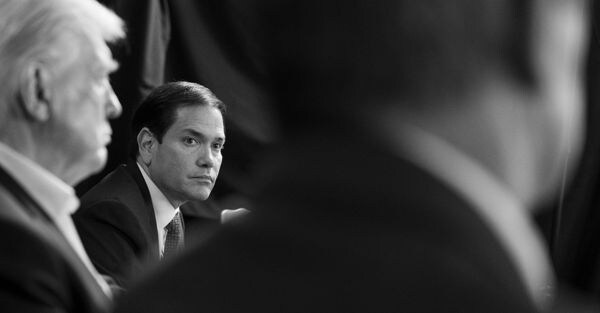
In this photo released by the White House, President Donald Trump monitors U.S. military operations in Venezuela, with Secretary of State Marco Rubio, center, at Mar-a-Lago in Palm Beach, Fla., Saturday, Jan. 3, 2026. (Molly Riley/The White House via AP)
4 January 2026
The end of Maduro, from bus driver to three-time president

From bus driver to three presidential mandates: Nicolas Maduro, Venezuela's overlord father, at the head of a cruel repression, and captured by the Pentagon together with his wife Cilia Flores during an air raid on Caracas, was the longest-serving Venezuelan chief executive in the country's political history. Known also for his role as deputy, foreign minister and vice-president during the governments of Hugo Chávez - who nominated him as his successor in 2012 - the leader plunged the South American state into a record economic crisis, with GDP having collapsed by 80% in ten years, inflation at over 500% and an unprecedented wave of migration.
The Head of State began his political career as a child, encouraged by his father, Nicolás Maduro Garcia, an economist and founder of socialist parties. Born in the neighbourhood of Los Chaguaramos in Caracas in 1962 into a Colombian family and an avid fan of the Caracas Leones baseball team, Maduro was already participating in rallies and election campaigns at the age of five. While his mother, seeing him wearing altar boy's clothes, would have wanted him to be a priest.
4 January 2026
The US may have a super-witness against Maduro
The US may have a super-witness in the trial against Nicolas Maduro. According to Newsweek, it is Hugo Armando Carvajal Barrios, the former head of Venezuelan military intelligence, who was ousted by Maduro for treason and then arrested by the US for a trial in which he pleaded guilty last June to crimes that carry a life sentence and are similar to those charged against the Venezuelan leader. He is mentioned in the indictment and has not yet been convicted, a sign that prosecutors may want him to testify against Maduro before deciding his fate.
4 January 2026
The cruciality of the first 100 hours and the first 100 days
The first 100 hours and the first 100 days. These are the two crucial factors. The evolution of the Venezuelan crisis depends on the capacity for articulation and resilience of the government in Caracas (as well as its military apparatus), as opposed to the effectiveness with which the opposition led by Maria Corina Machado will be able to propose a transition idea. This is the only point of convergence between pro-Washington and pro-Caracas political analysts.
Machado, opposition leader and Nobel Peace Prize winner, said: 'We are ready to take power'. In a statement published in X, he says: 'What was supposed to happen is happening, we will restore order, free political prisoners, build an exceptional country and bring our children home'. He does not specify to whom the 'we' refers. Machado left Venezuela in December to collect the Nobel Peace Prize in Oslo and has never returned to Caracas. Machado then explains that Edmundo González, winner of the July elections, 'must immediately assume his constitutional mandate and be recognised as commander-in-chief of the Army'. Finally, he calls on everyone to remain 'vigilant, active and organised until the democratic transition is complete', inviting both those inside the country and those abroad to take on this task. However, Trump curbs the Machado hypothesis: 'He does not have the support to govern'.
4 January 2026
Four counts against Maduro
There are four counts against Venezuelan President Nicolas Maduro. This is revealed in the indictment of the Southern District of New York, published today by the Washington Post, which says that essentially Maduro enriched himself and his entourage through the proceeds of illicit drug trafficking.
The document reiterates the same charges brought by the Trump administration in 2020, including conspiracy to commit narcoterrorism, conspiracy to import cocaine, and possession of automatic weapons and destructive devices.If convicted, Maduro faces decades of imprisonment in the United States.
According to the prosecution, Maduro allegedly 'acted in partnership with his accomplices by using illegally obtained authority and corrupt institutions to transport thousands of tonnes of cocaine to the United States', exploiting state power and drug trafficking to accumulate wealth and political control.
Unlike the 2020 indictment, the updated act also includes Maduro's wife, Cilia Flores, as a co-defendant. The other four co-defendants, all from the former president's inner circle, also include his son, Nicolas Ernesto Maduro, who has not been caught.
The document also reconstructs Maduro's political rise from the role of parliamentarian to that of foreign minister under his predecessor Hugo Chavez, describing him as the 'de facto but illegitimate ruler of the country' in the light of a series of electoral defeats.
4 January 2026
Trump administration works on post-Maduro plan
US President Donald Trump's administration is working on a plan for dealing with Venezuela after the capture of President Nicolas Maduro by US forces. This was reported by the Wall Street Journal, citing senior US officials, according to whom the dossier is being followed directly by the White House national security team.
According to the newspaper, at work on the plan are Secretary of State Marco Rubio, National Security Advisor Stephen Miller, and Secretary of Defence Pete Hegseth.
4 January 2026
Tajani: we work for the release of Italian prisoners
In Venezuela 'we are following the evolution of the situation minute by minute. We have urged our compatriots to exercise the utmost caution and we are also working to see what can be done to free the detained Italians, including the cooperator Trentini'. Foreign Minister Antonio Tajani told Tg2. "We hope that with the change of regime and with Maduro leaving we can manage to bring them home," he added.
4 January 2026
PM Japan: restore democracy in Caracas
Japan's Prime Minister Sanae Takaichi said today that Japan will engage diplomatically to facilitate the restoration of democracy in Venezuela and help stabilise the situation in the South American country. In a message posted on social media, Takaichi recalled that Japan has "long respected fundamental values and principles such as freedom, democracy and the rule of law," adding that Tokyo will "work closely with other G7 countries and interested states" on the Venezuelan crisis.
The Prime Minister did not comment on the legality of the US-led operation against Venezuela, an action that took place without authorisation from the US Congress and that raised legal questions both in the US and internationally.
In a separate note, the Japanese Foreign Ministry reported that it was following the development of the situation 'with great attention' and was committed to ensuring the safety of Japanese citizens in the country. Tokyo diplomacy pointed out that it had already made contact with most of its compatriots in Venezuela and that there were 'no casualties' at the moment.
Read also: Japan, Takaichi aims to rewrite economic security to cope with China and global instability
4 January 2026
India expresses concern
India expressed deep concern over developments in Venezuela andcalled for a peaceful solution to the crisis. In a note, the Foreign Ministry in New Delhi called on "all parties concerned to resolve the issues peacefully through dialogue, ensuring peace and stability in the region", while pledging support "for the welfare and security of the Venezuelan people".
The Indian stance comes in the aftermath of US President Donald Trump's announcement that he has confirmed a large-scale military strike against Venezuela and the capture of President Nicolas Maduro, who has been transferred with his wife Cilia Flores to New York to stand trial for drug trafficking offences. Trump also stated that after Maduro's arrest, Washington intends to 'administer Venezuela until a safe and sensible transition is possible' and did not rule out the possibility of 'deploying troops' on Venezuelan territory if deemed necessary.
4 January 2026
The Pope: 'Guarantee Venezuela's sovereignty, ensure the rule of law'
"With a heart full of concern I follow the developments of the situation in Venezuela," the Pope said at the Angelus. The good of the beloved Venezuelan people must prevail above all other considerations and lead to overcoming violence and embarking on paths of justice and peace, guaranteeing the sovereignty of the country, assuring the rule of law enshrined in the Constitution, respecting the human and civil rights of each and all, and working together to build a serene future of collaboration, stability and concord, with special attention to the poorest who suffer because of the difficult economic situation".
4 January 2026
Nyt: US targets Rodriguez for his handling of the oil industry
Venezuela's Vice-President Delcy Rodríguez has reportedly impressed Donald Trump's officials with her handling of Venezuela's crucial oil industry and this has convinced them that she could be an acceptable replacement for Nicolas Maduro. The New York Times writes this, citing people involved in the discussions. According to the article, the intermediaries convinced the US administration that Rodriguez would protect and support future US energy investments in the country. "I've been following his career for a long time, so I have an idea of who he is and what he does," said a senior US official, referring to Rodríguez. "I'm not claiming he's the ultimate solution to the country's problems, but he's certainly someone we think we can work with on a much more professional level than we were able to work with him," the official added, referring to Maduro. Trump, explains the Nyt, had never shown sympathy for Venezuelan opposition leader María Corina Machado. The president yesterday made overtures to Rodríguez, stating that Machado lacks the 'support' needed to govern Venezuela. Despite Rodríguez's public condemnation of the attack, a senior US official said it is too early to draw conclusions about her approach and that the administration remains optimistic about working with her. Rodríguez, the US media recalls, has managed to stabilise the Venezuelan economy after years of crisis and to slowly but steadily increase the country's oil production, despite the tightening of US sanctions, a feat that has even earned her the respect, albeit reluctant, of some US officials.
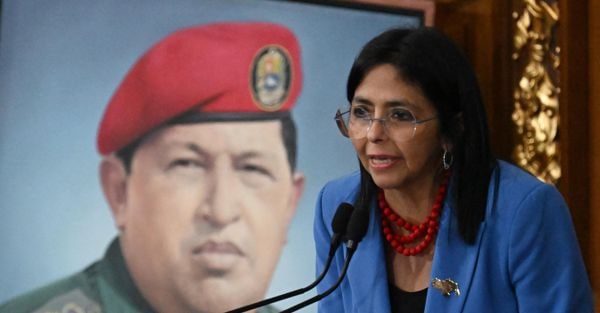
Delcy Rodríguez, presidente ad interim del Venezuela (Photo by JUAN BARRETO / AFP)
4 January 2026
Delta Force and the secret operation to capture Maduro and Cilia Flores in Venezuela
A three-stage military operation, conducted directly by US special forces with the extensive support of the entire US army and difficult to frame in terms of international law: while the precise course of the attack on Venezuela culminating in the capture of Nicolás Maduro and his wife Cilia Flores is still shrouded in numerous questions, some military analysts and legal experts try to outline the contours for Il Sole 24Ore, based on their experience and what we know so far.
4 January 2026
Nyt: Maduro rejected US ultimatum with exile Turkey
According to several American and Venezuelan sources told the New York Times, in late December Venezuelan President Nicolas Maduro rejected US President Donald Trump's ultimatum to leave the country's leadership, which included a golden exile in Turkey.
His subsequent public appearances, with his demonstrations of nonchalance in the face of US threats, 'helped convince some members of Trump's team that the Venezuelan president was playing them and trying to call what he thought was a bluff', according to two people involved in the talks. So the White House decided to follow up on the military threats, launching yesterday the attack that led to the capture and transfer to the United States of the Venezuelan leader, accused of drug trafficking.
4 January 2026
Delcy Rodriguez: Maduro's loyalist who will lead the country
Delcy Rodríguez, former executive vice-president and minister of finance and oil, took over the leadership of Venezuela after the capture of Nicolas Maduro and first lady Cilia Flores by an American commando. This was ruled by the Supreme Court in Caracas based on the provisions of the Venezuelan Constitution, in particular Articles 233 and 234. 'We call on the peoples of the great country to remain united, because what was done to Venezuela can be done to anyone. That brutal use of force to bend the will of the people can be perpetrated against any country,' he said in a speech broadcast on state television Vtv. Rodríguez, 56, is originally from Caracas and studied law at the Central University of Venezuela.
For more than 20 years she was one of the leading figures of chavismo, the political movement founded by President Hugo Chávez and led by Maduro after the death of his predecessor in 2013. Together with her brother Jorge Rodríguez, current president of the National Assembly, she has held various positions of power since the Chavez era. She was Minister of Communication and Information from 2013 to 2014 and later became Minister of Foreign Affairs from 2014 to 2017. As head of Venezuela's diplomacy she defended the Maduro government against international criticism, including accusations of democratic backwardness and human rights violations in the country.
As foreign minister, Rodríguez also represented Venezuela in fora such as the United Nations, where she accused other governments of wanting to weaken her country. In 2017 Rodríguez became president of the National Constituent Assembly, expanding the government's powers after the 2015 legislative elections. In 2018 Maduro, at the beginning of his second term, appointed her vice-president. Rodríguez held the post during Maduro's third presidential term that began on 10 January last year, following the controversial elections of 28 July 2024. Until the president's capture, he served as Venezuela's chief economic authority and as Minister of Oil.
Political analyst José Manuel Romano, a constitutional lawyer, told CNN that the positions held by Rodríguez show that she is a 'very important' figure within the Venezuelan government and someone who enjoys the 'full confidence' of the president. "The executive vice-president of the Republic is a very efficient woman, with strong leadership skills in managing teams," Romano said. "She is very results-oriented and has a noteworthy influence on the entire government apparatus, including the Ministry of Defence. This is very important to emphasise in the current circumstances,' he added.
4 January 2026
Starlink announces free broadband until 3 February
Starlink announced on X that it will provide 'free broadband services to Venezuelan citizens until 3 February', following the US attack that led to the capture of President Nicolas Maduro. Elon Musk's company emphasised that it wants to ensure 'continuous connectivity' in the country. Musk himself commented on X about the announcement, writing: 'In support of the people of Venezuela'. Yesterday, the website that monitors global internet connectivity, Netblocks, reported 'a sudden loss of internet connectivity in parts of Caracas', in conjunction with 'power outages during the US military operation'.
4 January 2026
Amnesty International: serious risks to human rights
"The military action conducted yesterday in Venezuela by the Trump administration, which led to the capture of Nicolás Maduro and Cilia Flores, raises serious concerns for the human rights of the Venezuelan people. In all likelihood it is a violation of international law, including the UN Charter, as is the declared intention of the United States to run the country and control its oil resources'. This is what Amnesty International says in a note, saying it is also 'particularly concerned about the risk of further escalation of human rights violations in the country, which could result from both new US operations and the Venezuelan government's response to the US attacks'.
Amnesty International urges the US government to "respect international humanitarian law and international human rights law, to prioritise the protection of the civilian population and to guarantee the human rights of all persons deprived of their liberty, including due process guarantees and the right to humane treatment".
4 January 2026
Bremmer: there will not be another raid, the army will obey Trump
'Machado will not be the one to govern Venezuela, even if he has been awarded the Nobel Peace Prize and thanks Trump: the American president is not primarily interested in restoring democracy'. This was stated in an interview with Corriere della Sera, political scientist and founder of Eurasia, Ian Bremmer. 'He wasn't interested in Brazil, nor much in the United States,' he adds. 'For now he will try to govern with the military and, perhaps, with pieces of the deposed Maduro regime willing to follow his directives on what matters to him: oil and drugs. 'The military', Bremmer continues, 'did not do the coup but collaborated: in the last two months Washington has developed very intense relations with the army chiefs and, it seems, also with personalities in Maduro's political circle. Great work by the CIA but also by the military intelligence services. I believe that the dictator and his wife were arrested before the arrival of the American helicopters: the Delta Force merely took over the two prisoners. I do not think a second offensive will be necessary. The military will rule as directed by Washington. They also talked about Vice President Delcy Rodriguez. If indeed, as Marco Rubio claims, Rodriguez is ready to cooperate, she could stay on board'. 'The main target,' the Eurasia founder goes on to say, 'was Venezuela with its huge energy reserves, drug trafficking, massive emigration to the US. It will take a long time and a lot of work to stabilise the country, rebuild the energy infrastructure, give American companies a central role again. The majority of Republicans were in favour of overthrowing Maduro's illegal regime. Of course, the Magas are against wars, but American boots on the ground were few and far between: a surgical operation with no casualties. That should suit the Magas too,' Bremmer concludes.
4 January 2026
Venezuela's Supreme Court orders Delcy Rodriguez to become interim president
The Constitutional Chamber of Venezuela's Supreme Court ordered Saturday that Vice-President Delcy Rodríguez assume the role of interim president of the country in the absence of Nicolás Maduro, who was arrested early Saturday morning during an operation by US forces.
The court ruling stated that Rodríguez would assume 'the office of President of the Bolivarian Republic of Venezuela, in order to ensure administrative continuity and the overall defence of the nation'
The ruling adds that the Court will discuss the issue in order to "determine the applicable legal framework to guarantee the continuity of the State, the administration of the government and the defence of sovereignty in the face of the enforced absence of the President of the Republic".
4 January 2026
Mamdani; I called Trump to criticise the operation
Zohran Mamdani, the new mayor of New York, phoned President Donald Trump on Saturday to personally express his opposition to the US-led attacks on Venezuela and the capture of its leader, Nicolás Maduro. "I called the president and spoke directly with him to express my opposition to this action," Mamdani said during a press conference on an unrelated topic, adding that he told Trump he was "opposed to an attempt at regime change and the violation of federal and international law." The mayor refused to comment on the president's response, despite journalists' insistence. His aides said that Mamdani had made the call early Saturday afternoon and that the conversation had been 'brief'.
4 January 2026
Nyt: at least 40 dead in US attack in Venezuela
At least 40 people were killed in the US attack on Venezuela in the early hours of Saturday, including military personnel and civilians, according to a senior Venezuelan official who spoke on condition of anonymity. The New York Times reports. Donald Trump, speaking on Fox News on Saturday, said that no US soldiers were killed. He did, however, suggest that some military personnel were injured. General Dan Caine, chief of the Joint Chiefs of Staff, said later, during a press conference at Mar-a-Lago with President Trump, that one of the US helicopters involved in the operation to capture President Nicolás Maduro and his wife had been hit but 'remained airworthy' and that all US aircraft 'returned to base'.
4 January 2026
Hundreds of flights in the Caribbean cancelled after US operation
The US military operation to capture Venezuelan President Nicolás Maduro has disrupted flights to the Caribbean. On Saturday, no flights crossed into Venezuela, according to FlightRadar24.com. Major airlines cancelled hundreds of flights in the eastern Caribbean after the FAA imposed restrictions. Flights to Puerto Rico, the Virgin Islands and Aruba were cancelled. Airlines are waiving rerouting penalties on rescheduled flights. The FAA imposed a temporary airspace restriction at Puerto Rico International Airport. JetBlue cancelled about 215 flights, while United and Southwest changed their schedules.
4 January 2026
Maduro to Brooklyn jail, same as El Chapo
Nicolas Maduro and his wife Cilia Flores are expected to be transferred to the Metropolitan detention centre, a federal prison in Brooklyn, to appear before a judge on Monday to answer charges of, among others, 'narcoterrorism'. Axios writes this, recalling that the facility is home to some excellent inmates, from Mexican drug trafficker Joaquin 'El Chapo' Guzman to Luigi Mangione, the young man accused of killing the CEO of UnitedHealthcare, from rapper P Diddy to Ghislaine Maxwell, the girlfriend of paedophile financier Jeffrey Epstein.
The couple, analyst John Miller told CNN, 'will not have a honeymoon suite at the Metropolitan Detention Center', which, as Axios recalls, is known to be 'inhumane, unsafe and unsanitary'.
4 January 2026
Brazil recognises Delcy Rodríguez as interim president of Venezuela
Brazil recognises Venezuelan Vice-President Delcy Rodríguez as interim president of Venezuela after the US capture of Nicolás Maduro. This was confirmed by the secretary general of Itamaraty, the Brazilian Foreign Ministry, Maria Laura da Rocha, during a press conference in Brasilia, according to reports in the South American country's main media. "In the absence of President Maduro, the leadership of the country falls to the vice-president. Delcy Rodríguez therefore assumes the functions of interim president,' she said at the end of a meeting dedicated to the Venezuelan crisis.
