Objective +1

The magic of numbers between art, fashion and decision-making problem-solving

They are not just for counting, but for action. Formulas and algorithms, as told by a humanist mathematician like Giovanni Righini, can become very revolutionary.
by Giuditta Avellina

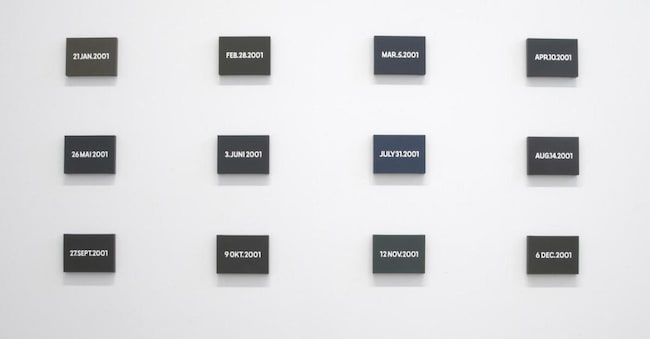
Date Paintings (twelve)”, 2001, di On Kawara. L’artista è presente ad “ArteNumero”, mentre quest’opera è esposta fino al 30/12 a “Begin Again: Repetition in Contemporary Art”, al Philadelphia Museum of Art. ©ON KAWARA, COURTESY Philadelphia Museum of Art (PMA)

4' min read

4' min read

Roman Opałka painted sequences of numbers side by side to count time from 1 to infinity, and the end of life. On Kawara kept in figures a million years in the past and a million in the future, recording the bitter brevity of existence. Ugo Nespolo makes it a playful and personal alphabet. Numbers, the protagonists of the ArteNumero exhibition in Aosta (until 20 October at the Regional Archaeological Museum), have this strange màlia. They are an integral part of the everyday and the sublime, the rational and the symbolic, the memory and the present of each of us. Giovanni Righini is a humanist mathematician and his love for formulas and figures coincides with a family memory: 'My father was a mathematics teacher. I was still small the first time he took me to a piano concert. During the interval, he took the programme and explained base-2 numeration to me: it was a beautiful interlude'.
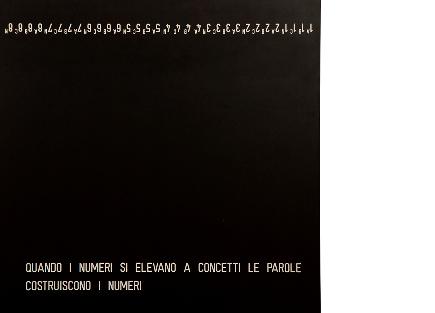
Assioma “Quando i numeri si elevano a concetti le parole costruiscono i numeri” (1972), di Vincenzo Agnetti. Tutte le opere presenti nel servizio sono esposte ad “ArteNumero. Gli artisti e il numero tra XX e XXI secolo”, fino al 20/10 al Museo Archeologico Regionale di Aosta. ©Courtesy Archivio Vincenzo Agnetti - © Archivio Vincenzo Agnet

In a society governed more and more by economic mechanisms, numbers are instruments of calculation, but they go beyond that. Righini is convinced that they have a poetic and creative value, dictating rhythms and rituals of sociality. Let's start with a small example: invitations bearing the classic +1. 'I propose a reversal of perspective: from "+1" to "1 more": counting is for passive people, improving is for active people. If I leave an invitation open, I am an optimist, if I work to get an extra person, I am an optimiser.
Loading...

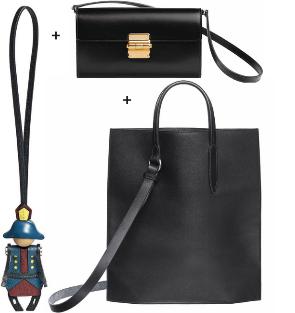
In senso orario, Pendente Artificier, snodato, in legno e pelli colorate epsom e mysore (1.400 €); portafoglio Charnieère to go, in pelle con mini tracolla (6.200 €); borsa tote Harnacheur, in pelle evergrain e vacchetta hunter (6.700 €). Tutto HERMÈS.

I personally deal with decision science, i.e. 'active' mathematics, which not only describes reality, but also helps those who want to modify and guide it by making considered choices. To do this, one needs not only static mathematical concepts such as sets, numbers, geometric figures, functions, but a dynamic concept: the algorithm. An algorithm 'works', 'evolves', 'does something', 'produces a result'. It is a portentous and extremely useful conceptual leap. A teaching that is still too little widespread in Italy'.
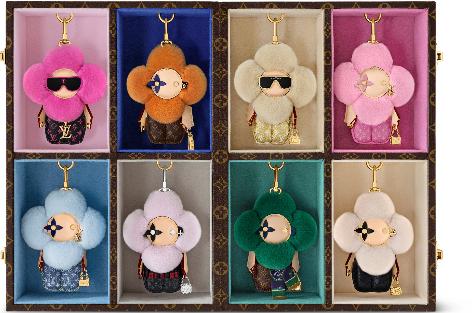
Collezione Vivienne con otto ciondoli da borsa, in formato maxi: Denim, Malletage, Golden, Pink Lady, Parisienne, Shopaholic, Mix, Rock (1.050 € ognuno). Per l’intera collezione, il coffret in edizione limitata ispirato agli storici bauli in legno e tela Monogram (6.600 €). Tutto LOUIS VUITTON.

Trends, in fashion as in design, and in consumption in general, are also connected to numbers. "There are many mathematical models, made for predictive purposes. So if there are cyclicities, the models will bring them out. But think also of the mathematics of cosmetic formulas. Or the geometric shapes that shape visual and spoken language. Each mathematical model is the starting point to elaborate another more sophisticated and precise one, an operational research that evolves and tends towards optimisation'. And optimism, given the drive for improvement. "This unknown side of mathematics is fascinating. Being able to use numbers to tackle decision-making problems motivates my young students, but it also invites them to set themselves a limit: not all areas of human life can be translated into models. Feeling cannot be encapsulated in a formula

incontrovertible'.
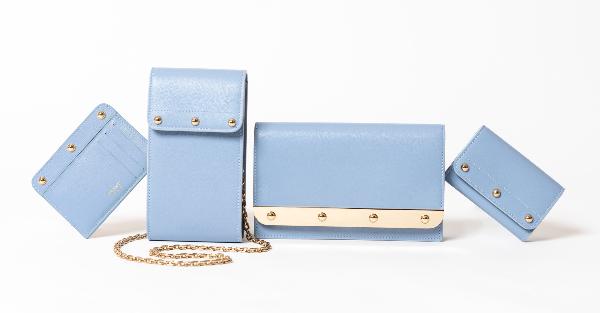
Serie coordinata Luisa, in pelle con dettagli in metallo dorato: porta cellulare (890 €), portafoglio con catena (1.900 €), mini busta (440 €). Tutto FRANZI 1864, che festeggia l’anniversario dei 160 anni.

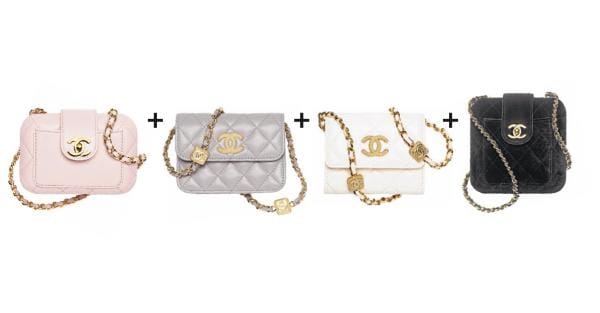
You can play with numbers: the season's accessories suggest combinations that are made up of +1 sequences (maxi bag plus minibag plus purse plus charm, all together and all in view); behavioural numerology draws mental and emotional maps. And then there is Artificial Intelligence, a beloved, hated, debated, increasingly central theme. "Now it is fashionable to call everything AI, but I follow Confucius: 'The principle of wisdom is to call things by their names'. Names should distinguish, not confuse, identify, not mystify,' observes Righini. "Artificial Intelligence does not exist. So nothing should be called that. The results these systems give, based on data, are not guaranteed. They are stochastic parrots, realistic not real, plausible, but not guaranteed like an optimisation algorithm'.

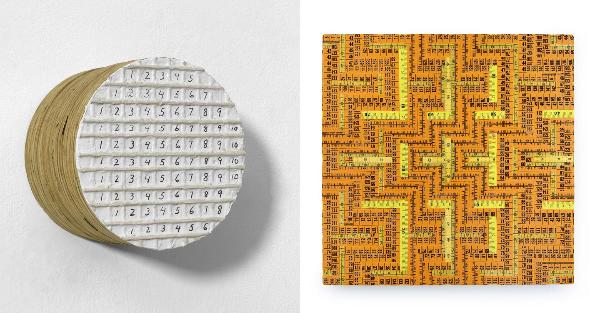
A sinistra “Untitled” (1988), di Robert E. Tiemann. A destra “Senza titolo” (2024), di Mimmo Iacopino. ©Panza Collection, Mendrisio, © Robert E. Tiemann (Foto Alessandro Zambianchi, Milano). Courtesy Galleria Melesi, Lecco - © Mimmo Iacopino

Numbers are not static, they are not neutral. Let us dispel another cliché: they are not algid. "There is a core of pure beauty in mathematics and there are those who manage to transform it into art. I am thinking of Escher's works or Mozart's scores, derived from precise mathematical structures. Or those formulas - Euler's, for example - that with just a few symbols express concepts that would require whole pages of writing. But in everyday life, what are they used for? "To make decisions, to solve concrete problems, to represent ourselves, even to woo a girl.... The zero and the one are of course the most important, calculators work with these two digits.

Via Crucis” (2022), di Elisabetta Casella. © Elisabetta Casella

The zero was the last number invented. It is said to have been used by the Egyptians in the second millennium BC, but as we know it, it was introduced to Europe in the 13th century by Fibonacci, who in turn borrowed it from the Arabs, who in turn had taken it from the Indians. With Roman numeration, the zero did not in fact exist'.

Mini bag in pelle trapuntata o in tessuto (l’ultima a destra), con catena e chiusura logo in metallo. Tutto CHANEL

And can a mathematician have a heart number? "Mine is 0 1 2 3 5," answers Righini without hesitation. "Zero, my favourite number. One and one, my wife and I. Three my children, five us together. The most precious things in my life are in numerical progression. Like the beginning of the Fibonacci sequence, isn't it beautiful?".

Copyright reserved ©
Loading...
Loading...

Newsletter

Notizie e approfondimenti sugli avvenimenti politici, economici e finanziari.

Iscriviti