
Major concerts: what TicketOne is and how it works – a pioneering ticketing platform
Ticketone is at the heart of the Italian summer – and beyond. From organising Ultimo’s massive event to the fight against the secondary ticket market, here’s how the leading ticketing platform works

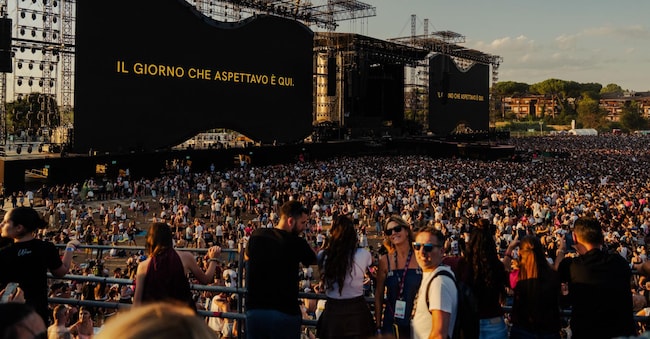
First, the 250,000 spectators who packed Tor Vergata for Ultimo’s concert; then the advance ticket sales for Vasco Rossi’s 2027 stadium tour and the major international events of the summer; from Firenze Rocks to Rock in Roma, from the Roma Summer Fest to I-Days Milano and right through to the Lucca Summer Festival, there is one name that has been appearing on the screens of millions of Italians for years: TicketOne. It is the platform through which the bulk of the ticketing market for concerts, sporting events, theatre performances and cultural events in our country passes.
Founded in 1998 in Milan and owned by the German group CTS Eventim since 2007, TicketOne was the first Italian company to specialise in ticket sales via a digital platform. Today, it is the leading Italian operator in the sector; it is listed on the Frankfurt Stock Exchange through its parent company, CTS Eventim, and in 2025 recorded a turnover of approximately 130 million euros. The company has around 140 employees spread across its two Italian offices and sells millions of tickets every year through a multi-channel sales system.
The company operates in numerous sectors of the entertainment industry. In the music world, it works with all the leading Italian promoters, whilst in sport it manages ticketing for major competitions and federations, including the Italian Tennis Federation and the Italian Rugby Federation. It also handles ticket sales for 23 football clubs across Serie A, Serie B and Lega Pro, as well as the circuits hosting the Italian rounds of Formula 1, MotoGP and Superbike. Its offering also includes theatres, musicals, cabaret, family shows, summer festivals, exhibitions and museum circuits, many of which are managed through its subsidiary TOSC. Furthermore, the group’s activities are not limited to ticket sales: CTS Eventim also invests in the management of infrastructure for live performances and has recently acquired the Arena Santa Giulia in Milan, which is set to become Italy’s largest venue.
How the platform works
For almost 30 years, hundreds of event organisers have entrusted TicketOne with managing their ticket sales, working together to establish marketing strategies, pre-sale schedules, pricing and any dedicated phases for fan clubs or affiliated customers. The platform collects ticket sales revenue from the public and subsequently transfers it to the organisers, supporting a wide range of payment methods, including credit cards, PayPal, Klarna and Satispay.

