Brescia Anti-Mafia Prosecutor’s Office

Major drug seizure off the coast of Lisbon: rubber dinghy carrying 2.6 tonnes of cocaine intercepted

The shipment is believed to have generated illicit proceeds of around 500 million euros. The four people on board the vessel have been arrested, including an Albanian national resident in the Brescia area

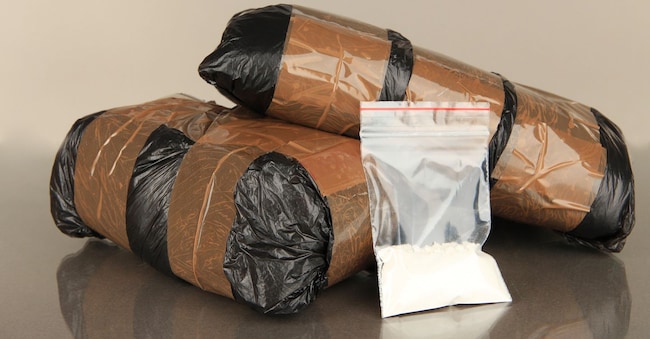
 Africa Studio - stock.adobe.com

3' min read

Translated by AI
Versione italiana

3' min read

Translated by AI
Versione italiana

Law enforcement agencies have dealt a severe blow to international drug trafficking: a rubber dinghy carrying over 2.6 tonnes of cocaine was intercepted in the Atlantic Ocean. The seizure came at the end of a complex operation coordinated by the Brescia District Anti-Mafia Prosecutor’s Office, which saw the Guardia di Finanza working alongside the Spanish and Portuguese authorities.

A turnover of 500 million

The cargo on board the rubber dinghy, which has an estimated value of 78 million euros on the wholesale market, would have generated illicit proceeds of around 500 million had it reached its destination and been cut up for retail sale.

Loading...

The raid led to the arrest of the four people who were on board the vehicle. They are two Spanish nationals, one Gibraltar national and one Albanian national who is resident in Mantua and domiciled in the province of Brescia.

The operation

The rubber dinghy was intercepted off the coast of Lisbon by the Portuguese Maritime Police. This large-scale operation was made possible thanks to international police cooperation with Spanish and Portuguese counterparts, with the support of the Maritime Analysis and Operations Centre – Narcotics in Lisbon and the Central Directorate for Anti-Drug Services.

In order to locate and intercept the rubber dinghy, it was necessary to deploy aircraft from the Gdf equipped with state-of-the-art maritime surveillance technology, which had been redeployed to the Iberian Peninsula as part of the European Union’s external border control operations.

The fight against drug trafficking

The investigations “have led to exceptional results in the fight against international drug trafficking, dealing a severe blow to criminal organisations,” explained Lieutenant-Colonel Antonio Ranaudo of the Brescia Financial Police.

“The key factors in this operation,” continued Ranaudo, “are essentially two: the cross-border nature of the operation, ensured through the crucial and synergistic collaboration with our Spanish and Portuguese counterparts, and, above all, the cross-cutting nature of the Corps’ action, which deployed its three operational strands: the territorial component, represented by the PEF unit in Brescia, which acts as the economic and financial security force for the region; the Central Service, in its role of coordinating intelligence and providing operational support for the most complex criminal cases; and the air and naval component: thanks to highly specialised pilots and state-of-the-art aircraft and equipment, it was possible to intercept and monitor the drug trafficking routes’.

The captain of the Gdf aircraft that intercepted the rubber dinghy laden with drugs from the air stated that ‘this success is the result of close inter-agency cooperation between several countries, involving our ATR72MP aircraft working alongside naval and air assets of the Portuguese police. Operations of this complexity – both in terms of the distances involved and the stakes – are not improvised, but are the result of training, discipline and preparation in the field.”

The go-fast rubber dinghy

Investigations by the Fiamme Gialle have revealed that organised crime is using go-fast boats, which range in length from 10 to 16 metres and, thanks to numerous high-powered outboard engines, are capable of exceeding 70 knots.

These rubber dinghies are effectively ‘sea taxis’: they retrieve consignments of drugs that have been thrown overboard from mother ships coming from South America, and then transport them on to Europe. This is known as the ‘drop-off’ method.

Loading...

Colonel Andrea Magliozzi of SCICO, the Central Investigation Service for Organised Crime of the Guardia di Finanza, explained that go-fast rubber dinghies are ‘capable of crossing the ocean to retrieve the drugs and transport them swiftly to the coasts of the Iberian Peninsula. From there, the drugs are then redistributed by land throughout the European Union’.

The pilot of the aircraft that intercepted the rubber dinghy added that ‘these are high-performance smuggling vessels with a very long range which, thanks to logistical supplies from support dinghies, can remain at sea for tens of days and travel thousands of kilometres. They do so with complete confidence, secure in the knowledge that they can get the better of any pursuers. This is where aircraft come into play, capable of covering enormous distances in a very short time, providing the maritime police units with an up-to-date and precise tactical picture, which then forms the basis for the pursuit and apprehension of the vessel engaged in illicit trafficking’.

The pilot went on to conclude that ‘this is the essence of our work in the skies and at sea to ensure compliance with the law and the rule of law throughout the European Union. On this occasion, it was a matter of putting an end to the activities of a go-fast rubber dinghy and its crew, who were involved in transporting drugs from the Atlantic to Europe, but we are always ready to prevent and stop any illegal activity in order to safeguard the vital interests of the community and our country’.

Copyright reserved ©
Loading...

Brand connect

Loading...

Newsletter

Notizie e approfondimenti sugli avvenimenti politici, economici e finanziari.

Iscriviti