
Majority towards summit on electoral law, doubts Pd
With the centre-left it is a matter of reckoning and therefore negotiation - this is the line indicated at the top levels of the government - even if for now the 'no' to the proposal remains firm
by Rome Editorial Staff
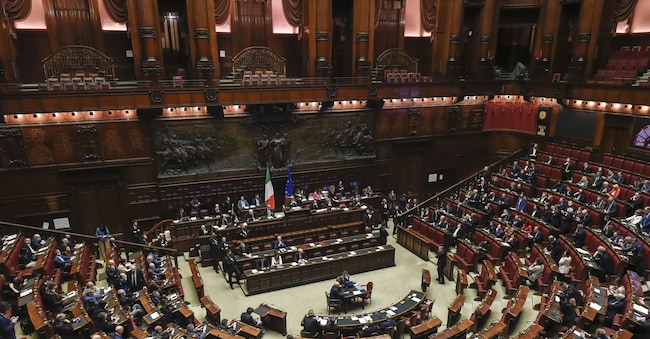
The centre-right leaders are preparing for the second round on electoral law. And whether it is very soon, perhaps even in the next few hours, or within a few days, the objective is clear. Technically correcting certain aspects of the reform - starting with the majority prize - overcoming risks and bogeys (first and foremost, that of inciucius that would lead to the dreaded technical governments) and opening up more concretely to dialogue with the oppositions. At that point - according to the centre-right's wishes - the bill (which has been the focus of dozens of hearings in the Constitutional Affairs Committee of the Chamber of Deputies for the entire month) could be given a boost so that it can proceed swiftly and in time for the 2027 elections.
The Dem Line
However, it is difficult to do this alone: with the centre-left it is a matter of reckoning and therefore negotiation - this is the line indicated at the top levels of the government - even if for now the 'no' to the proposal remains firm. Indeed 'inadmissible' in the words of Elly Schlein. Whether the new summit is to be held shortly - as has emerged in recent days - or later in the week depends essentially on the intersection of commitments and agendas between leaders and ministers. In any case, as soon as possible, there will be a more surgical confrontation on electoral reform. Necessary, after the first summit on 6 May. Concluded after an hour and a half with Matteo Salvini's reassurance: 'We will proceed straight ahead,' the Lega Nord leader said at the time. But not everything has been resolved and knots and differences remain on the table. Both internal to the coalition and with the opposing front from which, however, at this point one cannot disregard. It is probably in this sense that one should read the commitment of the Azzurro secretary Antonio Tajani to "go ahead by talking also with the oppositions" or the prediction of the president of the Senate, Ignazio La Russa: "If there is the political will it will be approved".
Majority Award
And the priority now is the majority prize: in the centre-right's text, it goes to those who exceed 40% of the vote, who thus gain 70 seats in the Chamber and 35 in the Senate. Too high a prize, denounce the opposition in chorus. It is "abnormal and distorts representativeness", according to Giuseppe Conte of the M5s, who cuts it short: "It is a reform to be rejected". Dario Parrini of the Democratic Party and vice-chairman of the Senate's Constitutional Affairs Committee, who sees in the rule a Trojan horse to "surreptitiously" introduce the reform of the premierate, which has long been at the stake, was also harsh. The other Dem Simona Bonafè attacks the majority precisely because of the new summit and the choice, therefore, to discuss it away "from the place where it should be discussed, that is Parliament". Deduction: 'They want to go it alone, by tearing themselves apart'. In reality, also to silence criticism, the centre-right will try to negotiate with its rivals. If it succeeds in limiting the electoral 'bonus' - is the reasoning that goes around - one of the fiercest arguments used by the left against the electoral law could be dropped. That is, that it is yet another move to seize 'full powers', as the right would have attempted to do with the referendum on justice. Consequently, by adjusting the prize to 40%, the majority could unblock the stalemate and, as a cascade, open other glimmers of agreement with its rivals. This change would also be useful to parry the risks of unconstitutionality feared by the oppositions. In addition to the fact that, in perspective, it may not be enough to guarantee governability: in the event that a coalition does not reach 40%, even if it obtains the extra seats, it may not be able to form a government on its own. In addition, there are the distinctions in the governing coalition.
Preferences
A League source admits that on the electoral law, apart from the necessary 'technical improvements', the political crux is on preferences. The League, which has always been a supporter of uninominal constituencies, fears the amendment hypothesised by FdI to restore them, because it disagrees. It is also turning its nose up at the proposal launched by Nazario Pagano, from the Forza Italia party, to remove the coalition list and award the prize in a proportional manner. Doing so,' he fears, 'would damage the smaller parties or those in decline in terms of consensus.

