Sahel

Mali, terrorists attack Bamako and other cities. Russian army and mercenaries withdraw from the north

Unidentified' groups launched an offensive on the capital and declared advances in the north. Bamako had already risked falling last October

from our correspondent Alberto Magnani

Aggiornato il 26 aprile 2026 alle 20:07

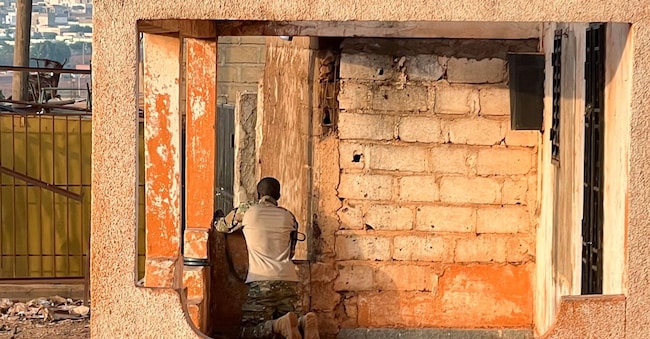
Un soldato maliano posizionato a Kita, durante gli attacchi del 25 aprile REUTERS

2' min read

Translated by AI
Versione italiana

2' min read

Translated by AI
Versione italiana

NAIROBI - Armed gangs of 'terrorists' and separatists launched several attacks on 25 April on the Malian capital Bamako and other locations in the north and centre of the Sahelian country, plagued by more than a decade of instability and ruled by the military junta that rose to the top after the double coup in 2020 and 2021.

The army reported in a note that 'unidentified armed terrorist groups have targeted a number of locations and barracks in the capital', with gunfire and heavy artillery strikes also recorded in the vicinity of Modibo Keïta International Airport. The airport had already been in the crosshairs with an attack on a training centre in its vicinity, launched in 2024 and claimed by the Islamists of Jama'a Nusrat ul-Islam wa al-Muslimin (Jnim).

Loading...

The Ap and Afp agencies report explosions or outright clashes in other areas of the country such as the military stronghold Kati, Sevare, Gao and Kidal. The last two have come under the control of the Tuareg Azawad rebels: 'From Gao to Kidal, administrative infrastructures and military positions pass under the banner of honour and freedom,' exulted separatist spokesman Mohamed Elmaouloud Ramadane on Facebook.

In a statement issued in the evening of 25-26 April, Jnim formally attributed the attack to itself and spoke of an offensive conducted 'together' with the Azawad separatists, confirming the reconstruction of a coordinated initiative between the groups.

The military have declared the restoration of 'control' over the capital on the day of the attacks, except to beat a retreat from the north together with Russian contractors.

The Mali spiral and the October escalation

Mali, a country rich in gold and other raw materials in the heart of the Sahel, has for years been under the grip of a jihadist insurgency fuelled by armed groups mainly affiliated with al-Qaeda or Islamic State.

The crescendo of attacks and victims favoured the overthrow of the old government with a double coup between 2020 and 2021 and the rise of Assimi Goïta, the general who has led Bamako for more than five years and has just removed the constraints on his mandates with a legislative intervention in 2025. The junta's fundamental objective is to eradicate the Islamist offensive in the country, the very raison d'être of the military governments that came to power successively in Burkina Faso (2022) and Niger (2023).

The results recorded so far demonstrate the failure of the counteroffensive led by the army and allies of the former private military company Wagner, now merged under the new label of Africa Corps and accused by humanitarian organisations of massacres similar to or worse than those blamed on the jihadists: the bloodiest case is the Moura massacre, also in northern Mali, when security forces and allies identified with the former Wagner claimed hundreds of civilian victims.

Armed groups of jihadist affiliation had already shaken the Goïta junta in the autumn, by laying siege to the capital Bamako and imposing a fuel blockade with lethal consequences for the stability of an economy battered by years of violence and instability. The 25 April attack confirms its fragility.

--

Copyright reserved ©
  • Alberto Magnani

    Alberto MagnaniCorrispondente

    Luogo: Nairobi

    Lingue parlate: inglese, tedesco

    Argomenti: Lavoro, Unione europea, Africa

    Premi: Premio "Alimentiamo il nostro futuro, nutriamo il mondo. Verso Expo 2015" di Agrofarma Federchimica e Fondazione Veronesi; Premio giornalistico State Street, categoria "Innovation"

Loading...

Brand connect

Loading...

Newsletter

Notizie e approfondimenti sugli avvenimenti politici, economici e finanziari.

Iscriviti