
Malta elections, Abela's Labour makes poker but opposition halves gap
Early estimates give the Labour Party's fourth consecutive victory as certain
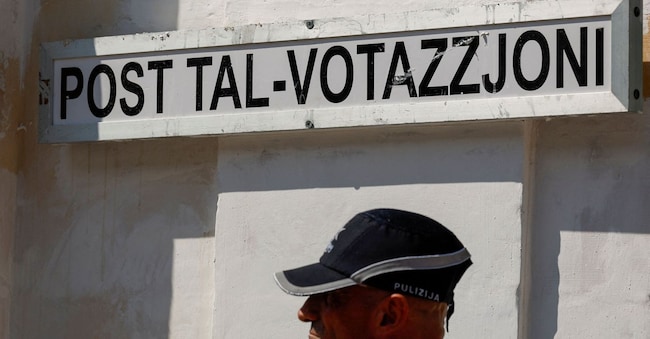
The polls had seen the historic victory, but not the narrowing of the lead. The Labour Party, since January 2020 led by Robert Abela, managed to win the legislative elections in Malta for the fourth consecutive time. But the centre-right opposition Nationalist Party, which since Joseph Muscat's 2013 triumph had lost by burning one leader after another, has since October relied on 30-year-old Alex Borg and has halved its disadvantage. And now it can speak of 'light at the end of the tunnel'.
The series of four consecutive electoral successes had never been seen in the history of independent Malta. It eluded even Dom Mintoff, the father of modern Malta who ruled under the British from 1955 to 1958 and then again from 1971 to 1984. In 2022, at the first electoral test two years after being chosen by the membership in the party's darkest hour overwhelmed by the scandals revealed by journalist Daphne Caruana Galizia and confirmed by the investigation into her murder that led to Muscat's resignation, Robert Abela had won 44 seats against the 35 of a Nationalist Party led by Bernard Grech, successor to the equally defeated Simon Busuttil and Lawrence Gonzi.
This time he racked up the poker, but the margin in terms of seats will be smaller. However, he claimed victory as early as 11.35 a.m. on the basis of the counting projections that began at 9 a.m., with a phone call to the public channel TVM: 'We have made history by winning for the fourth consecutive time. We stand united as one. I will be the prime minister of all citizens'. Some 40 minutes later Alex Borg, leader of the Nationalist Party (centre-right and in opposition for 13 years), acknowledged defeat: 'The people have spoken and we must respect their wishes. No one should be disappointed for voting for change. It is not the result we wanted, but it is a clear message and we will continue to work to be a strong alternative for the country'. And he did not fail to note that 'perhaps Abela also felt that people were beginning to want change and that is why he decided to bring forward the elections'.
Elections were officially presented in April, triggering a campaign lasting only five weeks praised by President Spiteri for how 'serene, calm and mature' it was. After Abela's announcement, the Labour people got the party started, with carousels and drinks in the squares. A series of concrete electoral promises (including a EUR 1,000 superbonus to all workers provided they have been on the island for at least five years, a EUR 5,000 baby bonus per birth, pension increases, reliefs and concessions) certainly had an impact on the reappointment at the expense of the public debt, which had already risen by a billion in a month. But with the economy growing at the rate of 4-4.5% per year, the public accounts in Malta always add up.

