Man-made flood in Dubai? How cloud seeding works
The National Meteorological Centre in Dubai said it had 'seeded' clouds from 14-15 April


3' min read
3' min read
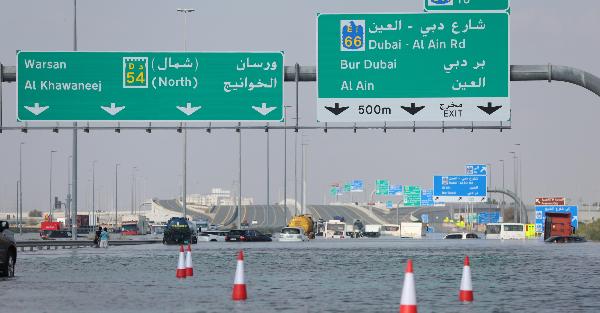
Over 140 millimetres of rain fell in 24 hours in an area that on average receives 95 millimetres in a year. The violent cloudburst that hit Dubai on 16 April left meteorologists stunned. Roads flooded, cars swept away, one of the world's busiest airports forced to close for half an hour, residents stranded in their homes and offices. In Al-Ain, 100 kilometres north of Dubai, as much as 256 millimetres of water fell in 24 hours.
It was indeed an extreme phenomenon and experts are questioning the causes. The debate is focusing on an activity that the United Arab Emirates (and others) have been using for some time: 'cloud seeding', literally 'cloud seeding'.
What is cloud seeding
.Seeding is done using aircraft that inject salt or silver iodide particles into the clouds to form ice crystals that condense into rain or snow, depending on the altitude. According to the World Meteorological Organisation, under optimal conditions, seeding can increase the precipitation of a single cloud by up to 20 per cent.
Are the heavy rains in Dubai due to cloud seeding?
The United Arab Emirates has been using seeding since at least 2002 to deal with drought problems. The emirate's National Meteorological Centre, according to Bloomberg Agency, said it sowed clouds on 14 and 15 April, but not on 16 April, the day of the flood. The meteorological centre did not confirm the information to other media. If this technique was used on the eve of the cloudburst, it is less clear to what extent it contributed to the unprecedented amount of rain that fell on the Gulf's financial and commercial hub. According to experts questioned by the BBC, if cloud seeding did play a role, it was a marginal contribution and it is therefore wrong to place the main responsibility on it.
How effective is cloud seeding?
.Cloud seeding does not work from scratch: chemicals must be injected into existing clouds. It has proven effective when targeting rain clouds in mountainous areas - in other words, when it aims to increase rainfall. By contrast, there is conflicting scientific evidence regarding its effectiveness on clouds that may not bring rain, in flat regions and during droughts.