
Mandelson-Epstein case, Starmer avoids parliamentary enquiry
Majority rejects investigation, but opposition insists on omissions and loopholes in the controls over the appointment of the former British ambassador to the US

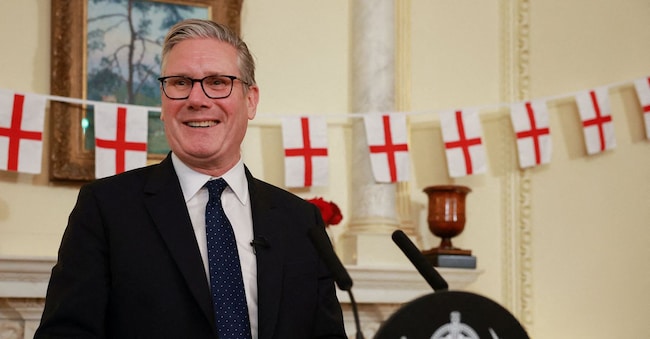
Keir Starmer avoids parliamentary inquiry, but does not close the Peter Mandelson case. The House of Commons rejected by 335 votes to 223 the Conservative motion calling for the prime minister to be referred to the Committee of Privileges, the body charged with assessing whether a member of the government has misled Parliament. Labour, on the strength of its large majority, blocked it, but not without a few cracks: 15 Labour MPs defied the party line and voted in favour of the investigation. Last week, in Westminster, the PM had apologised 'for a wrong decision' and admitted an 'error of judgement', assuring that 'if I had known then what I know now I would never have appointed Mandelson'.
It is precisely his political judgement, the vetting process on the appointment of the former minister in the governments of Tony Blair and Gordon Brown as British ambassador to the United States, and the correctness of the information provided to the Commons that have ended up at the centre of the controversy. The opposition, led by Conservative leader Kemi Badenoch, accuses Starmer of claiming that the full procedure was followed for the appointment, when in fact doubts and criticisms had already emerged at the verification stage. The premier rejects the accusation and claims he was not informed of decisive elements, including the fact that Mandelson had failed a step in the security procedure in January last year.
Mandelson is one of the architects of New Labour, former European Trade Commissioner and for decades one of the most influential men in British politics. It was precisely this profile that made his choice for Washington politically sensible: Starmer wanted an ambassador capable of moving with the Trump administration.
It did not go unnoticed, however, her relationship with Jeffrey Epstein, the US financier convicted in 2008 of sex crimes involving a minor and who died by suicide in 2019 in a New York prison while awaiting a federal trial for sex trafficking. The contacts between the two had been known for some time, but in 2025 the publication of new emails - as part of the US Department of Justice's maxi-release - showed a deeper relationship than was apparent at the time of the appointment. Hence Starmer's decision to fire his man in Washington.
What weighed most heavily were some emails in which Mandelson, in 2008, seemed to encourage Epstein to fight for early release while the financier was about to be sentenced.


