Great Britain

Mandelson-Epstein case: top Foreign Office official falls. Starmer trembles

PM accused of lying to Parliament about former Labour minister's appointment procedures to ambassador post in Washington

by Nicol Degli Innocenti

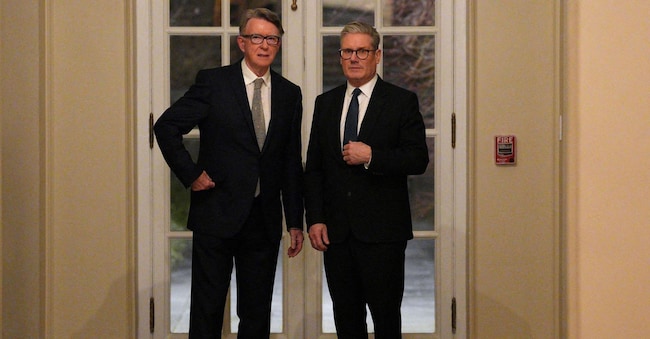
Keir Starmer e Peter Mandelson  via REUTERS

3' min read

Translated by AI
Versione italiana

3' min read

Translated by AI
Versione italiana

LONDON - The Mandelson scandal is once again rocking the British government. Opposition parties have called for the resignation of Prime Minister Keir Starmer, who is accused of lying to Parliament about the procedures followed in appointing the former Labour minister to the prestigious post of ambassador to Washington.

According to revelations in the Guardian, later confirmed by Downing Street, Mandelson had failed the required security checks (UK Security Vetting) and the Services had therefore given a negative opinion on his appointment. Despite this red flag, the Foreign Office decided to ignore their advice and approved the appointment. All this, according to the government, without informing the Foreign Secretary (then David Lammy, now Deputy Prime Minister) or Starmer himself.

Loading...

The official version is that the premier only found out about it last Tuesday and is 'furious'. He demanded explanations from the Foreign Ministry and reportedly went to Parliament this morning to explain the situation but the Guardian's scoop detonated the fuse before he could act.

The person responsible for the decision, Sir Oliver Robbins, the highest-ranking official in the Foreign Office, left the post with immediate effect. According to the government, he took full responsibility for a wrong decision. According to the opposition, he was chosen as a scapegoat to protect the premier.

Starmer is in the crosshairs of the accusations because on several occasions, both at press conferences and in Parliament, he had defended Mandelson's appointment to the hilt and had insisted that all procedures had been scrupulously followed. If, as Conservative Party leader Kemi Badenoch accuses, the PM actually knew and lied to MPs, he has committed a crime and must resign. If, on the other hand, as the government claims, he was in the dark, this is yet another embarrassment for a leader who has repeatedly shown a strange propensity to make the wrong decisions.

The story is infamous: Mandelson was then swept up in the Epstein scandal. The friendship between the Labour Party veteran and the American financier was well known even at the time of his appointment, as was the fact that relations between the two had continued even after Epstein's first conviction for paedophilia and exploitation of child prostitution.

The revelations contained in documents released by the US Department of Justice (Epstein Files) demonstrated not only the close and enduring friendship between the two, but also the fact that Mandelson when he was deputy prime minister in Gordon Brown's government had passed confidential information to the financier during the financial crisis in 2009.

Mandelson, who was arrested and later released on bail, is accused of abuse of office for having provided confidential and market-sensitive information to Epstein and the police continue to investigate him. Brussels has also opened an investigation because Mandelson in 2009, when he was deputy prime minister, had also informed the financier in advance of the EU's EUR 500 billion rescue plan.

Starmer admitted an 'error of judgement' in appointing Mandelson, but always insisted that he had followed the correct procedures and had simply been 'deceived' by the lies of the former Labour minister, who had assured him that he had nothing to hide. As Badenoch pointed out today, the PM before entering politics was Chief Prosecutor, a punctilious lawyer with dozens of years of experience. Yet he did not check that everything was actually in order when he wanted to appoint Mandelson as ambassador to the US, which was already controversial at the time even without taking Epstein into account, because the post is usually not political but reserved for a career diplomat.

If Robbins, a highly experienced civil servant, made the decision to ignore the services' warnings about Mandelson on his own, he will have to explain why he did so and why he did not inform his boss, the foreign minister, or the prime minister. The chair of Parliament's Foreign Affairs Committee, Labour's Emily Thornberry, has already said that she feels 'misled' and intends to demand and obtain credible explanations.

Copyright reserved ©

Brand connect

Loading...

Newsletter

Notizie e approfondimenti sugli avvenimenti politici, economici e finanziari.

Iscriviti