
Manoeuvre, Fratelli d'Italia withdraws amendment on strike notice
Senator Gelmetti after trade union controversy: complex issue, I will present a bill

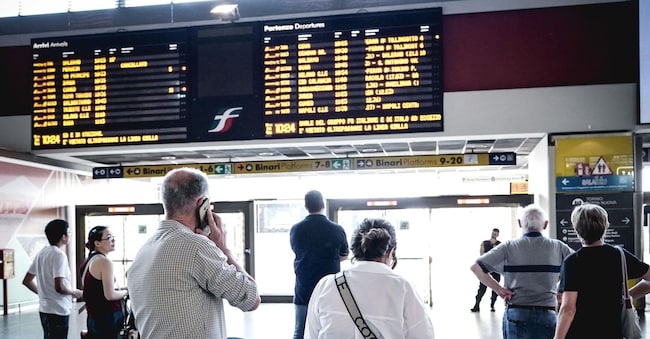
Fratelli d'Italia's retreat on the amendment that aimed to introduce a notice requirement in the event of strikes in the transport sector. This was announced by Senator Matteo Gelmetti, signatory of the proposal filed in the Budget Committee of the Senate where the budget bill is being examined.
Towards an Ad Hoc Bill
"We need to take action on the distortion resulting from the legislation that currently regulates strikes in the context of public transport. I am aware that this is a complex and very important issue. For this reason,' says Gelmetti, 'I consider it opportune to withdraw the amendment that I had presented to the Budget law, where for objective reasons the conditions for an in-depth and wide-ranging discussion are lacking, promising to present a more articulated bill on the subject, for which I am sure it will be possible to have the discussion that is now lacking.
The trade unions' alarm
The proposal, which had infuriated the unions, envisaged the obligation for transport workers to declare 'in advance', seven days in advance, their intention to join a strike in the sector. Filt Cgil, Fit-Cisl and Uiltrasporti had expressed in a united note their 'firm opposition' with a request for the 'immediate withdrawal' of the amendment, making it known that they were ready to take 'all necessary initiatives' to protect workers and their 'legitimate right to strike'.
Pd criticism
Workers' organisations in the sector had stressed the risks of a measure that 'distorts' the right to strike guaranteed by the Constitution and opens the way to 'questionable pressures and potential discrimination', with the risk of souring industrial relations. A harsh reaction had also come from the opposition. For Maria Cecilia Guerra, in charge of labour in the national secretariat of the Democratic Party, 'instead of guaranteeing the respect and renewal of collective agreements, and working to improve working conditions that are often at the limit of sustainability in the field of transport, the usual repressive response comes from the majority: to compress the right to strike. A right to strike that, in our country, as far as essential services are concerned, already balances the fundamental right to protest on the part of workers with the right to mobility on the part of citizens, with rules on advance notice and guaranteed time slots'.

