Industry

Mantua chooses the route for the Blue Highway

Logistics. From the relaunch of the waterway along the Po axis benefits for 1.4 billion The study promoted by Confindustria (with Veneto Est) to assess the impact

by Luca Orlando

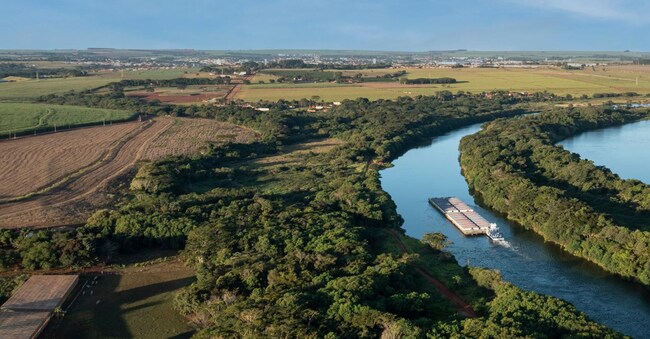
Il percorso. L’idrovia, entrata in funzione nell’estate del  2002, collega Mantova (sotto) al mare attraverso un percorso di 135 chilometri parallelo al fiume Po, attraversando le province di Verona e Rovigo

3' min read

3' min read

FTartar-Canalbianco. Names unknown to most and yet important, canals that identify a largely unexplored resource. This is the axis along which the Po-Veneto waterway basin develops, the so-called Blue Highway, a navigable stretch of the Po River that represents the only stretch able to guarantee navigability for stable commercial purposes, 365 days a year.

This is the subject of the study by The European House - Ambrosetti commissioned by various entities, including Confindustria Mantova and its province, with the aim of analysing the state of the art of river-maritime transport for the country system and quantifying the economic, employment and environmental benefits that could potentially be activated by optimising waterway transport for the area between Mantova and Rovigo and the neighbouring territories, with particular reference to the infrastructure of the Asta Navigabile.

Loading...

Although the volumes of goods transported are not comparable with those of the main European players (0.1 per cent, compared to an average of 20 per cent in five benchmark countries), thanks to the newly allocated funds and the opening of the connection to Chioggia, goods transported through the waterway system have nevertheless increased by 160 per cent since 2015.

How much is this asset worth? The extended supply chain of the waterway system in Northern Italy involves 25 economic macro-sectors and generates an added value of almost EUR 500 million for the territory (about 3% of the GDP of the provinces of Rovigo and Mantua). The effective grounding of planned investments - this is the background data of the report - could generate net economic benefits of 1.4 billion by 2030 attributable to the Italian waterway networks.

Economic but also environmental benefits: it is estimated that a 25 per cent growth in EU waterborne transport would help achieve European decarbonisation targets.

A move forward that would see Mantua, a province that hosts seven public and six private ports for the river transport of goods, in the front row. As a result, the Mantua port system is the natural terminal of the Fissero-Tartaro-Canalbianco-Po di Levante waterway, particularly at Porto Valdaro.

The Northern Italian waterway system can therefore play a key role in the development of the logistics system and, consequently, the manufacturing industry.

There are, however, many problems to be solved. The hydrobonus, due to a strong fragmentation of the application procedure, has disbursed less than 0.1 per cent of the 20 million euros of allocated funds; the absence of incentives for fuel for inland navigation leads to economic disadvantages compared to maritime transport; the distance of mixed navigation is limited to one mile from the coast; the low height of the bridges does not allow the passage of large vessels: increasing the clear height under the bridges to seven could allow vessels of five times the tonnage of today to pass through.

Overall, looking at the direct return from the growth in transported volumes and the indirect effects generated in the construction sector, the net economic benefits of the waterway system are estimated at 1.4 billion by 2030, with 3500 employees involved. Added to this are the environmental benefits, with a saving of 100,000 tonnes of CO2 emissions each year.

'Intermodality in logistics,' explains Fabio Viani, President of Confindustria Mantova, 'represents a strategic development lever for the manufacturing industry in northern Italy. In particular, we strongly believe that the Blue Motorway, the navigable line Mantua, Rovigo, Chioggia, Venice, is an unmissable opportunity for our economy, as an integrative and sustainable mode of transport for goods. With this study we wanted to provide the territory with an authoritative, scientific guideline, certified by an important partner such as Ambrosetti. We are handing these data over to all institutions so that they can represent a shared knowledge base on the economic opportunities that can be activated thanks to the promotion of the waterway system and river-maritime transport, with the aim of building a territorial work path of growth and development".

"The Province of Mantua was the first institution to believe in the value and potential of the Valdaro port and the Fissero-Tartaro-Canalbianco waterway," adds Carlo Bottani, President of the Province of Mantua, "and this 'motorway on water' can truly change the future of our territory. Shifting from intermodal to trimodal means significantly reducing emissions and thus generating benefits for the environment, but also increasing and enhancing the competitiveness of Mantuan companies in both imports and exports. So that of the waterway is one of the main objectives of our mandate as an administration, but I believe more generally for the entire province"..

Copyright reserved ©
Loading...

Brand connect

Loading...

Newsletter

Notizie e approfondimenti sugli avvenimenti politici, economici e finanziari.

Iscriviti