
Mantua ranks highly for restricted traffic zones, cycle paths and trees: seven times in the top ten

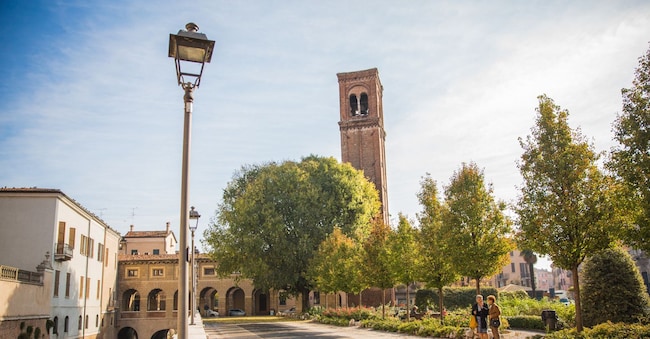
In a sense, Andrea Murari is on home turf: he was elected mayor of Mantua in May after 11 years as councillor for the environment. Among the provincial capitals, ‘his’ city has made its mark thanks to seven top-ten rankings across the individual indicators.
The Lombardy city has secured three top-three placings (second place for the extent of its restricted traffic zones, third place for both cycling infrastructure and the number of trees on public land), plus an eighth place for its pedestrianised areas, two ninth-place finishes – for the capacity of renewable energy installed on public buildings and the low rate of water wastage – and a tenth-place finish for waste sorting. Furthermore, in the public transport rankings, Mantua achieved (among the 47 ‘small’ cities, i.e. those with fewer than 80,000 inhabitants) fifth place for passenger numbers and eighth place for the services provided.
“This result,” says the mayor, “has been achieved despite the inevitably poor air quality figures, which are, however, showing signs of improvement. Like all cities in the Po Valley, we live in a very large, heavily urbanised basin, which is affected by unfavourable weather and climatic conditions. When it comes to air quality, as with other issues, everyone must play their part; both coordinated sub-regional management and government investment are vital. We need resources to boost renewable energy production, and we must strive to further expand local public transport: we have a rather high number of cars on the roads despite the renewal of the public transport fleet and the free park-and-ride facilities with shuttle buses – which are also free – that take passengers into the city centre.”
“The comparison that should matter most to us,” concludes Murari, “is not with other cities but with ourselves, because we need to keep improving on the results we have achieved. In this regard, we are pleased that our city has recorded the best internal migration balance over the three-year period 2023–2025 (see *Il Sole 24 Ore* of Monday 24 August 2026, ed.) and, at the same time, is making its mark in environmental terms: business investment and job creation are on the rise, whilst we continue to focus on sustainability as a key factor in competitiveness.”
It should be noted that Mantua achieved first place without securing the ‘bonus’ of two additional percentage points, awarded by Legambiente for five specific areas that take more than one indicator into account. For example, Bergamo and Milan each received three bonuses, sharing those for adaptation policies and energy.

