
Manzoni hunting French grapes for the villa in Brusuglio
A book by the Centro Studi Manzoniani brings to life the writer's passion for the vineyard: he studied essays and cultivated precious knives

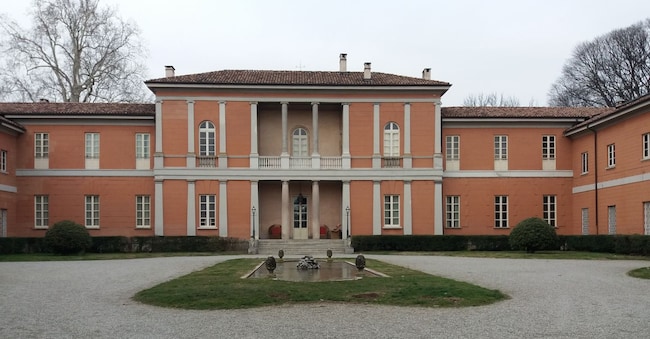
Chiselling words is like choosing the right moon to prune a dry shoot or enough water for a field cherry tree. Words like the slow rhythms of the fields feed on detail and passion. And Alessandro Manzoni, who has polished the Promessi sposi for decades, giving us the high road of our language, knows this. He is as millimetric in his words, rinsed in the Arno, as he is in his vineyard in Brusuglio and not a day goes by without checking the shoots or tending the vines and grapes because, with Virgil (Georgiche, II, vv. 467-468), he knows that in the countryside 'at secura quies et nescia fallere vita, / dives opum variarum' (peace is secure and life, rich in a world of resources, knows no deceit). After 1810, on his return from Paris, he dedicated himself body and soul to the cultivation of vines and, as a 'farmer in Brusuglio', he began a long journey of education, as witnessed by the many essays still present in his country library and brought back from France. It is the Manzoni you do not expect and who emerges, a scrupulous and careful vine-grower, from the pages of "Il s'est fait vigneron" - Ai tralci di Alessandro Manzoni, edited by Angelo Stella, Jone Riva and Mariella Goffredo for the National Centre for the Study of Manzoni, which continues to enhance the value of Manzoni's papers as it has also done with other precious volumes such as Recipette da casa Manzoni (pp. 104, € 12) or Il Panettone che è di Milano (pp. 56, € 10).
In The Betrothed, there is the innkeeper of the Full Moon but no wine is specifically mentioned; whether they are quality drinks or not only emerges from the person serving them or the type of container: don Abbondio's flask and don Rodrigo's ampoule. This choice is peculiar because, on the other hand, the writer became intrigued and made wine-growing his everyday life like writing, he studied the manuals of the time, so much so that his friend Tommaso Grossi almost sings to him in a letter of 1830: 'you are the learned man that you are, who has worn out your eyes and stomach, wasted months and money, angered relatives and friends, by dint of buying, reading, meditating, ruminating, and digesting treatises and treatises and treatises on vines and wines'. Manzoni cared little for it, he thought of the 'maglioli' (elsewhere called 'barbatelle') of uccellina, the wild vine with small berries that sparrows like, or the pignola vine or French vines, hoping to make Italian wines from them, and it was his mother Giulia Beccaria who wrote to her friend Euphrosine Flanque-Planta, in the summer of 1831: 'Vous saurez qu'il s'est fait vigneron: il souhaite passionnément de planter une couple d'arpens s'il pouvoit en Pineau noir de Bourgogne'. But it is difficult to find the rooted cuttings on the Italian market and from Paris they ask for exaggerated figures. So the friend managed to get the crossettes (the knots, cfr) to Brusuglio and Manzoni was overjoyed. This is how his mother describes him in a letter dated 1832 thanking Euphrosine for sending the cuttings: 'Alexandre est ravi, reconnoissant dans toute l'entendue du mot. Il dit que ces 32 m[ille] crossettes lui on fait plus de plaisir qu'à Napoleon 32 mile sodats arrivés la vieille d'une bataille'.
Giulia may have been exaggerating in comparing the rooted vines to Napoleon's soldiers, but her son Alessandro was well acquainted with the Osellina and Pinot grapes of the Lombardy countryside, the Pinots of Sciampagna and Burgundy, and cultivated them, giving us an image of the plains - Brusuglio is located between Milan and Monza - that is unusual today: at the time, vineyards reigned supreme and there were those who cultivated wisely, searching abroad for new qualities to make them bear fruit in Italy. In addition to his love for his vineyard, Manzoni had a general love for a good glass of wine if he wrote to his son Pietro in July 1855: 'My Pietro, please send me 12 bottles of Val Pulicella as soon as possible. Yesterday we ran out of wine and today I asked Sogni for a bottle'. The writer's oenological culture is wide and varied, as demonstrated by the Manzonian wine records presented in the book and already reported by Fausto Ghisalberti in the essay Il Manzoni georgofilo e i suoi appunti inediti sulla nomenclatura botanica (Milan, 1957).
Between Pineau and Griset Blanc, however, there are those who, like Meneghino, reject fine foreign wines and in the Brindes per Francesco I (1815), write: 'Vin nostran, vin di noster campagn, / ma legittem, ma s'cett, ma sinzer, / per el stomegh d'on bon Milanes / ghe va roba del noster paeser' (vv. 95-98). Who knows if Manzoni-Columella agreed?
"Il s'est fait vigneron" - To the vines of Alessandro Manzoni, edited by Angelo Stella, Jone Riva and Mariella Goffredo, Centro nazionale Studi Manzoniani, pp. 60, € 15


