Discovering the Marche: from the Macerata area to the roundabout of Senigallia with the rhythms of Summer Jamboree
Inland there are villages rich in history like Macerata and Tolentino, on the coast the joy of a unique festival now in its 25th edition

6' min read
Key points
6' min read
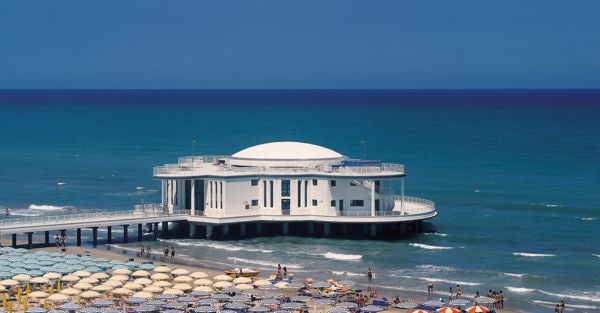
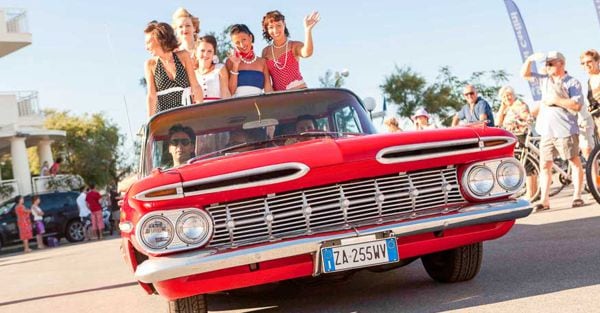
On the one hand, the Conero coast to Senigallia, which in these weeks revives the glamour of the 1950s with its Summer Jamboree now in its 25th edition; on the other, the charm of the Macerata area, rich in museums, sacred places, breathtaking landscapes and ancient villages, and its little Tibet. after the euphoria and musical rhythms, this corner of theMarches is an invitation to an alternative holiday, far from the crowded destinations, immersed in art, nature and genuine flavours, to be discovered with its authenticity, history and spirit of rebirth.
Macerata capital of opera
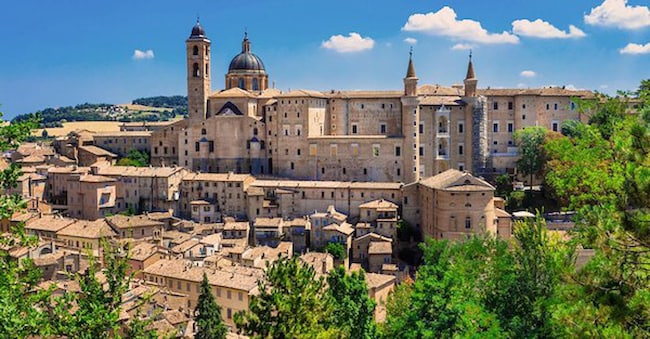
Summer in Macerata means music. The Sferisterio - with its famous opera season - makes Macerata until 10 August 2025 the capital of opera with the 61st edition of the Macerata Opera Festival, one of the most eagerly awaited events of the Italian cultural summer. In the scenic setting of the Sferisterio, a unique neoclassical masterpiece, opera blends with the architecture and magic of the Marche nights to give spectators an unforgettable experience. But that's not all there is to Macerata If the Ricci Museum in Macerata preserves works by Balla, Boccioni, Fontana and Morandi, the Canvas Museum, -the Palazzo Bonaccorsi (with its beautiful Carriage Museum) and the Academy of Fine Arts, offer lesser-known but very interesting gems, such as the Palazzo Ricci, with its contemporary art collection that includes incredible works by Fontana, Morandi, Balla, Carrà, Schifano, etc. And, again, innovative projects such as Intreccio Vivo, an initiative involving young craftsmen in the rediscovery of ancient weaving techniques, offering immersive experiences for tourists and guests of local hotels.
Tolentino between ancient art and contemporary design
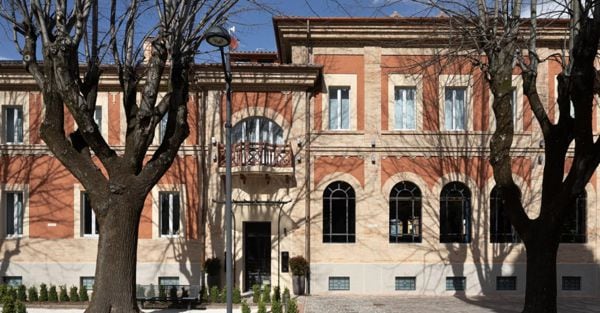
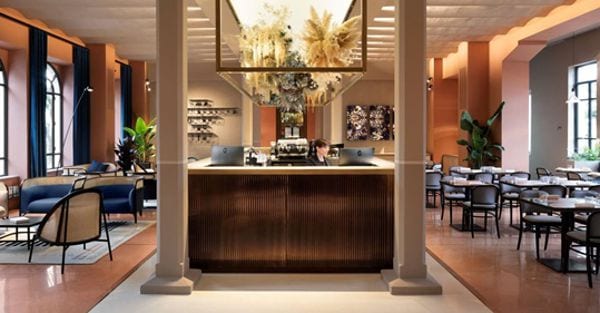
.In an area that was hit hard by the earthquake and is proudly restarting, one of the villages to be rediscovered is Tolentino, nestled between crystal-clear coastlines and mysterious mountains, rich in breathtaking landscapes, ancient art, contemporary design and widespread industriousness: after the 2016 earthquake, the Macerata area is starting up again and, turning reconstruction into an opportunity for growth and enhancement, is betting on hospitality. The town is also the ninth stop on the Via Lauretana, (220 km linking Cortona in pilgrimage to the Sanctuary of the Madonna of Loreto), but above all it is a central node in the industrial history of Italian design, first with Nazareno Gabrielli and then with Poltrona Frau. Also famous are its Basilica of San Nicola with its frescoed chapel (currently undergoing extensive restoration), the precious Cathedral of San Catervo, the Miumor - Museum of Humour in Art (unique in Italy and among the few in the world) - the Castello della Rancia and the Ponte del Diavolo (Devil's Bridge). A must-see is the Poltrona Frau Museum, set up by Michele De Lucchi - which tells the story of one of the most prestigious brands of Made in Italy. Also on the initiative of Franco Moschini (the recently deceased 'Mr. Poltrona Frau'), the Politeama Theatre, dating back to the early 20th century, was restored again by Michele De Lucchi. Not to be missed is Interno Marche, the design hotel-museum housed in the restored Villa Gabrielli, former headquarters of Nazareno Gabrielli and Poltrona Frau's factory: 30 rooms, each one different from the other, dedicated to the icons of Italian and international design of the last 60 years (De Lucchi, Aulenti, Magistretti, Lissoni...). And, inside the hotel, the L'Opificio Bistrot restaurant led by chef Alessandro Campetella. Interno Marche is the brainchild of Franco Moschini, a former Compasso D'Oro for his career, as an operation of "restitution" and promotion of the territory. The team that realised the project was entirely local, starting with the team of young engineers and architects, ORA Studio, flanked by strategic consultants, restorers, geologists, agronomists, 3D designers, light and interior designers, photographers for a total of about 2,000 professionals and technicians engaged for over three years in a project that respected not only architecture but also the environment and territory. Guiding and coordinating the project is the Design Terrae Foundation, also promoted by patron Moschini, and active in the promotion of "beautiful, good and well made", which has always been the entrepreneur's motto.
San Severino and the hat district
Not far away is San Severino Marche, a small jewel of the Marche region with its oval square and medieval village that houses the Museo dell'Arte Recuperata, a collection of works rescued from churches after the 2016 earthquake and restored with great care.
The curiosities? The hat district - and its museum - in Montappone, world-famous for this artefact, and the Museo della Tela (Canvas Museum), dedicated to the art of weaving where Juliette Binoche learnt to weave to play the role of Penelope in the film, released in January, 'Itaca. Il ritorno" directed by Uberto Pasolini.