
Marche, Gulf crisis hits footwear exports
The slowdown in the district of Fermo Macerata: -4.4% in the first 9 months of 2025

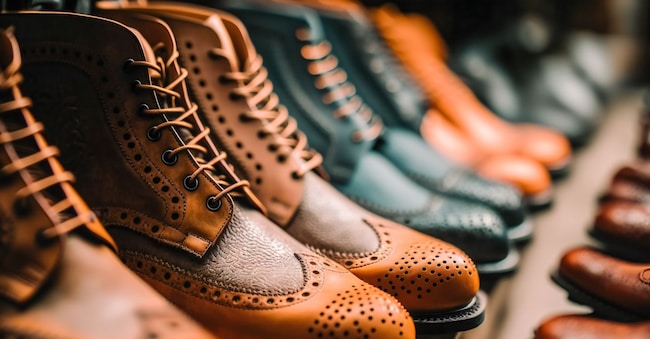
Twenty-four months marked by a minus sign, the first three months of this year still slowing down due to the paralysis in the Middle East: for the Fermo-Maceratese footwear industry, the light at the end of the tunnel is receding. The litmus test is precisely sales abroad, a market that weighs on average 60% of the sector's overall turnover (with peaks of 80% for the most structured companies): -4.4% in the first 9 months of 2025, at 930 million, with an even worse year-end estimate.
Assocalzaturifici's analysis is merciless. Looking at the first five outlet markets, which weigh for almost half of exports, three have negative signs: France, the first customer by far, has made -3.6%, the United States -20.7%, and the Netherlands -0.4; Germany, second by weight of purchases at +3.7%, and Belgium at +22.4%, the only positive data, because they are lower in the export ranking, hold up. Those to China fell by 27.8%, marking an almost definitive zeroing of luxury sales, and those to Russia by 22.4%.
That the climate is gloomy within the district is confirmed by the export figures to the United Arab Emirates: last October it was +28.3% (for just over 17 million), but now that market, on which local shoe manufacturers had hopes, is worth practically zero. "Our supplies destined for the Arabian Peninsula are at a standstill, with no way of knowing when and how to unblock them," says Alberto Fasciani, founder of the shoe factory of the same name, which supplies equestrian footwear to the Qatar Al Thani family, one of the most influential in the Middle East. Blocked sales, blocked supplies: "A container used to reach us in 30 days, today in no less than 12 weeks," stresses Germano Ercoli, founder of Eurosuole and Goldenplast, who points out the criticality of another market: "Our sales in Ukraine of polyurethane and thermoplastic compounds have dropped by about 3%.
This is the fifth crisis for the district, after the one in the mid-1970s, the great world recession of 2008, the earthquake of 2016 and the pandemic of 2020. In thirty years, more than 10,000 jobs and a thousand companies have been lost. But despite the crises, this area in the centre of the Marche continues to host the largest concentration of footwear and accessories production in Europe: just under 3 thousand companies (two-thirds in the province of Fermo and the rest in the Macerata area) and 20 thousand employees, with a production value close to 1.5 billion.
The Femca Cisl of the Marches speaks of an economic situation that is 'quite complex for an area that has a footwear traction', where the impact on employment levels has been limited 'thanks to solidarity contracts and the CIGS (about 8 million hours in industry alone in 2025, ed.)'. Much is expected from the Permanent Table for Fashion also strongly desired by the trade unions, whose first action will be dedicated precisely to the capacity of the social partners, through training courses dedicated to increasing the skills of those who trade unions in defence and for the relaunch of the sector.

