Film professions: the artist-director-producer

Marco Perego Saldaña: from visual art and independent cinema to challenges for AI

His creative journey, his commitment to arthouse cinema and his reflections on the impact of AI on the future of film culture.

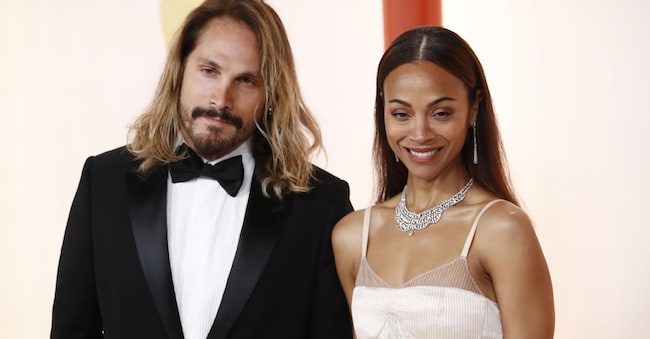
Marco Perego Saldaña e la moglie Zoe Saldaña Perego (EPA)

8' min read

Translated by AI
Versione italiana

8' min read

Translated by AI
Versione italiana

Who is Marco Perego Saldaña

Marco Perego Saldaña is an Italian artist, painter, producer and screenwriter who lives in Los Angeles. Born in Salò, in the province of Brescia, he moved to the United States at the age of twenty, where he made a name for himself as a visual artist, painter and sculptor. Able to move between different forms of expression and disciplines, bringing together the visual arts, writing, directing and production, Marco Perego married the American actress Zoe Saldaña in London in June 2013, who won the Oscar for Best Actress in 2025 for Emilia Pérez, and whose surname he adopted (becoming Perego-Saldaña) as a symbol of equality and unity. Among the films he has co-produced are Fjord by Cristian Mungiu and Minotaur by Andrej Zvjagincev, winners of the Palme d’Or and the Grand Prix du Jury respectively at the Cannes Film Festival.

His works have been exhibited at MAMbo in Bologna, the Andy Warhol Museum in Pittsburgh and the Venice Biennale. His move into film stemmed from a desire to explore new narrative and visual possibilities. He made his debut as a writer and director with The Absence of Eden (2023), produced by Martin Scorsese and starring Zoë Saldaña, before directing Dovecote (2024), a short film set in the Giudecca women’s prison in Venice, which was presented at the 81st Venice International Film Festival. He is currently filming a movie in Italia, written by him and Alex Dinelaris and shot by Janusz Kamiński, based on the story of his mother, who suffered from aphasia for three years. In the film, his mother, played by Valeria Golino, travels to America to visit her son – played by Lorenzo Zurzolo – and it is there that she is struck by the illness. A film about women and their ability to express themselves. The cast also includes Isabella Rossellini.

Loading...

*Il Sole 24 Ore* met him at the Catholic University for the open lecture Directing and Producing in Hollywood and in Europe —part of the programme for the Master’s in International Screenwriting and Production (MISP) and the Master’s degree programme in The Art and Industry of Narration, both directed by Armando Fumagalli.

From artist to producer and director

Marco Perego Saldagna, you are an artist, director and producer. When did you decide – if you ever did – to become a film producer?

I am a contemporary artist and I decided to make these films because my most important mission is to ‘protect culture’. Over the last two years, there have been two or three AI-generated songs on Spotify that have ranked amongst the top twenty most-streamed tracks. This led me to reflect on the future of music; perhaps in five years’ time, an AI-generated song will win a Grammy. And from there, this question arose spontaneously: but what will happen in the world of cinema? Artificial intelligence is a tool that will help to lower the costs of many major film productions, such as Avatar or Doom. But I fear that AI will inevitably lower standards, leading to greater mediocrity. So I asked myself: ‘What will happen to these great filmmakers who make “pure cinema”?’ This is my community of artists, filmmakers and producers. So, through my company Leaf, which I founded together with Michael Cerenzie, I’ve tried to help my community produce films of “pure cinema”. Last year we produced eight of them, two of which were Russian, one Romanian, one Argentine – Nuestra Tierra by Lucrecia Martel – as well as films by the Mexican Carlos Reygadas, the American James Gray and my own Italian film. We try to take a global perspective, using cinema to build bridges between different cultures.

Would you describe the independent film industry as sustainable? 

The sustainability of independent films is a major issue. Culture at the moment tends, particularly in the context of cinema, to be more focused on entertainment and less on auteur cinema, whilst culture, film and art reflect the society in which we live.

There’s no doubt that, culturally speaking, we’ve been going through very difficult times in recent years. I believe that cinema and art have a tremendous potential to reach thousands of people on a grassroots level, without coming across as patronising. One of the films that has moved me the most recently was the Iranian film The Seed of the Sacred Figby Mohammad Rasoulof, which was in competition at Cannes alongside Emilia Pérez by Jacques Audiard, for which my wife won the Oscar for Best Actress. This film has finally convinced me to support and protect my community of true artists. I think directors such as Alejandro Iñárritu, Guillermo del Toro and Alfonso Cuarón set an example that networking makes the individual better.

Directorial debut

 How did you come into contact with Martin Scorsese, who was the executive producer of your film Absence of Eden?

Through his manager, Rick Yorn, who is also my manager and my wife’s, and is a very dear friend of the family. The screenplay, now part of the Academy Museum’s permanent collection, is a poem about illegal immigration. The script grew out of a project I’d worked on in 2015, based on the tragic news story in which 714 children died whilst trying to travel from Syria to Italia. For about a year, I collected 714 pairs of shoes and filled them with concrete. So, I decided to use another form of expression – that of cinema – to convey this tragedy. My parents ran a café when I was very young, and at the back there was a shop selling VHS tapes. As a solitary, very thoughtful child, I used to rent them, and cinema helped me enormously to fill the void of my loneliness and to strengthen my artistic inspiration. So the transition from cinema to art was almost natural.

Loading...

When I first started thinking about making a film, I prepared myself by watching one film a day, from Monday to Friday, without fail. Yesterday, for example, I watched Rocco and His Brothers by Luchino Visconti.

Martin Scorsese watched my film Absence of Eden with editor Thelma Schoonmaker, gave me lots of advice and became its executive producer. Scorsese is a great role model because he helps so many filmmakers.

During a talk at the Locarno Film Festival, you spoke about artificial intelligence. You said you weren’t afraid of it, but that you would use it, that you would regard it as a tool...

I use it, and I also used it for an installation I created at the Pompidou-Metz Museum and the Jeffrey Deitch Gallery in Los Angeles. It’s called The Being. The installation is a multimedia network comprising screens, audio systems, scent diffusers and films that interact with the presence of visitors. An AI system, connected to the solar system, changes in tandem with it; it records the visitor’s breathing and adapts accordingly. Here, I used AI as a tool.

But right now, when everyone’s talking about AI, I’m making highly personal films. I’m always a bit of a maverick – if everyone’s heading in one direction, I go the other way.

Films that are too long and the producer’s ego

 Also during this lecture, she said that producers should try to put their egos aside...

This is the toughest challenge. Independent cinema needs a great deal of support, and I try to provide it in every way possible – not least because I am a director myself. So I know how to handle every aspect of production and filmmaking. Even if the film isn’t a success, it doesn’t matter; I am the filmmakers’ champion.

 Lately, films have been coming out that are far too long – in the sense that if they were half an hour shorter, they’d be masterpieces. Do you think producers have a role to play in ensuring films are the right length?

I don’t agree with him on this, because form follows function, that is, form serves the purpose. When the director sets up the camera, he knows what he wants to achieve. If he wants to make a four-hour film and that is his idea, his vision, you have to support him. He is taking a leap of faith, and the producer must do the same. Even if he wants to do it in a single long take, he will have his reasons.

Italia and the international forum

As a director and producer, you work on two fronts: the Italian and the international. Do you see a difference between them?

No, I’m Italian and very proud of it, but I’m truly grateful to America for giving me so much. I’m still 100 per cent Italian – you only have to hear my accent when I speak English. I’ve been in the US for twenty years and my three children can’t understand me when I speak Italian.

But I try not to generalise. I think travelling around Italia is just as lovely as travelling around the United States.

 So you don’t see a distinction between the two worlds?

I simply believe that every single experience is unique, and I think that each of us is truly unique; I truly, deeply believe that the authenticity of coming here to shoot a film in Italia creates a different feeling, depending on the story you want to tell. The same applies to the United States: the story I want to tell, set in the United States, would be very special in a different way.

Can you tell us about the project you’re currently filming in Italia?

I wrote a film with this brilliant writer called Alex Dinelaris, who also wrote the screenplays for Digger and Birdman , both directed by Iñárritu.

It weaves together the stories of my mum and her mum. In 2004, my mum lost her voice for about three years; she suffered from aphasia, which is a language-related stroke caused by emotional issues. The film is a portrait of this woman who travels to America to visit her son and loses her voice. She is played by Valeria Golino; it was an honour to work with her. The other actors are Isabella Rossellini and Tommaso Ragno, and it was shot by Janusz Kaminski, that brilliant director of photography behind most of Steven Spielberg’s films.

In *Absence of Eden*, you worked with your wife, Zoe Saldaña. What was it like working with her? 

I’m learning a great deal from her and I feel happy and grateful to be doing so alongside her. Zoe is one of the finest actresses of our generation. With her, I’m like a sponge: without saying much, Zoe teaches me everything, and what she has conveyed to me most of all is vulnerability. She is capable of being very vulnerable, and vulnerability is an incredible quality that society sometimes tends to regard as a flaw. This film is about people – about persecuted immigrants.

How did the idea come about?

From the sculpture The Being, which I mentioned earlier. I wanted to continue the dialogue on immigration, moving from visual art to cinema, because I am an immigrant, and my wife is Latina – a second-generation immigrant. Zoe and I have three children who have dark skin... My wife and I spent three years on the border with Mexico working with various charities. My idea, in fact, was to create a poem about illegal immigration.

Advice for young filmmakers

What advice would you give to young artists, directors and producers?

Not to listen to anyone.

How do you do that?

I try to listen to everyone.

Copyright reserved ©
Loading...

Brand connect

Loading...

Newsletter

Notizie e approfondimenti sugli avvenimenti politici, economici e finanziari.

Iscriviti