
Marco Pannella ten years after his death: a video podcast in four episodes reveals the radical leader
A multimedia project recounts the life, commitment and political legacy of Pannella, with unpublished testimonies and evocative images. Available from 29 April on the Sole 24 Ore website, on Radio 24, on 24orepodcast.com and on all audio platforms

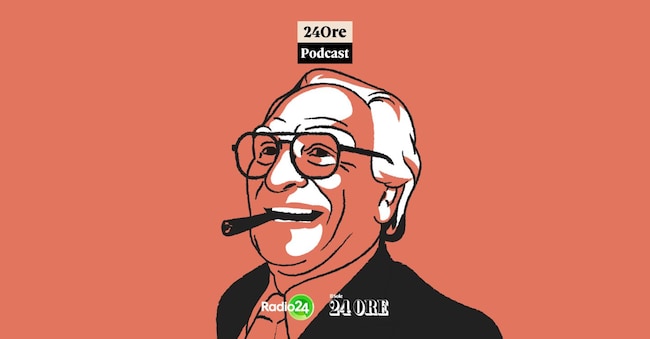
Ten years after the death of Marco Pannella, the historic radical leader and central figure in Italian political and civil history, the video podcast "Marco. Do you know who Pannella was?", a project in four episodes devised and conducted by Daniele Bellasio, deputy editor of Sole 24 Ore, and Simone Spetia, voice of 24 Mattino on Radio 24, with the participation of Sergio Rovasio, a historic radical exponent and for many years Pannella's personal secretary.
The video podcast offers a profound and articulate account of Marco Pannella, going beyond the best known image linked to the great referendum campaigns on divorce and abortion, to restore the complexity of a protagonist capable of influencing the customs, political language and democratic culture of Italia. An innovator outside the box, endowed with a unique communicative power, who made his body, speech and personal testimony central tools of political action.
Within the video podcast, the sometimes unpublished account of one of the most controversial figures in recent history is enriched by evocative images, including photos, memorabilia, and newspaper clippings, set in Turin, one of the central cities for the Radical Party and which has already dedicated, with a plaque, the pedestrian promenade along Corso Siccardi, where the Party had its headquarters in the 1970s.
The project is divided into four episodes, in a single issue, each dedicated to a symbolic dimension of Pannella's personality and actions, and is enhanced by the use of unpublished audio from interviews conducted by Daniele Bellasio in November 2006 and published in il Foglio.
The episodes
The first episode, The Eyes, is dedicated to Marco Pannella's visionary capacity, to his long look at the transformations of the country and Italian society. A politician capable of anticipating themes and conflicts that would emerge forcefully only years later, reading the present with lucidity and imagining the future without renouncing a poise and self-discipline that he himself liked to define as a 'man of the 19th century'.


