Margaret Bourke-White, the woman who photographed the 20th century
The exhibition in Reggio Emilia traces the career of the woman who managed to portray the most significant events and personalities of the last century

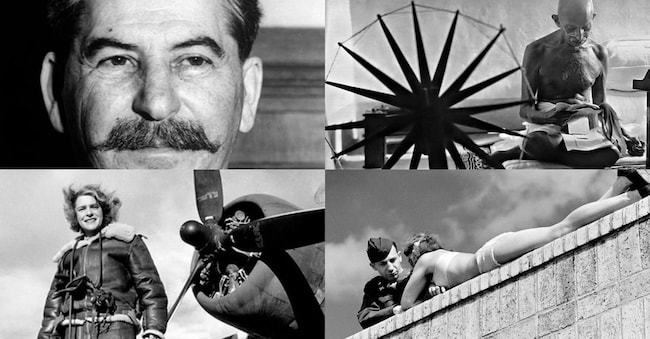
A lifetime of firsts was Margaret Bourke-White's. She was the first accredited US woman photographer during the Second World War and the first authorised to fly combat missions. She was one of the first to capture the death camps in Europe and was the last person to interview Gandhi, six hours before he was killed. Margaret Bourke-White immortalised historic moments and gave a new and modern interpretation to the events of those years with an original perspective and technique that favoured posing over direct shooting, managing to transform even the most humble subjects into iconic characters.
Fondazione Palazzo Magnani
In the exhibition that the Fondazione Palazzo Magnani dedicates to the American photographer, it is evident how Bourke-White was an example of a revolution in journalistic publishing at the time, a male environment in which she earned a position of excellence with natural determination.
"Life"
The exhibition opens, in the frescoed rooms of the Cloisters of St. Peter's, with one of the iconic moments of Bourke-White's career, that of the first shoots for "Life" inaugurated on 23 November 1936 when the famous American magazine, for its debut issue, chose one of her shots of the Fort Peck dam, in the state of Montana in the United States, where work had just been completed, a celebration of the ideals of economic revival of the New Deal and a turning point for the female gender in a hitherto male and macho environment. The assignment was the culmination of experience gained in the 1920s, in which the artist, moving between New York and Cleveland, produced several reportages on American industries, a selection of which is exhibited in the sectionThe Enchantment of Factories and Skyscrapers. The real turning point in Bourke-White's career came in 1929, when publisher Henry Luce invited her to contribute to the birth of the illustrated magazine 'Fortune'. And she herself was the subject of an iconic shot, reminiscent of Cubist and Expressionist visions and the work of her colleague Oscar Graubner, as, crouched and clinging unprotected on one of the great gargoyles of New York's Chrysler Building, she captures the city below from above.
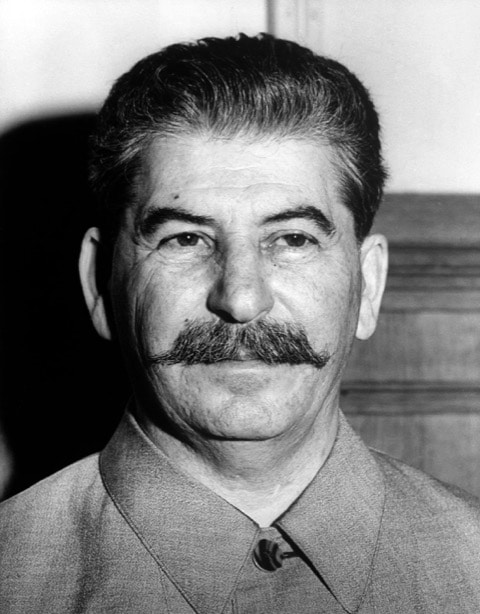
After the Retracting Utopia in Russia section, which offers a distillation of Bourke-White's reportages in the Soviet Union with images of the factories and workers that were to make the country a world power, as well as a portrait of the communist leader Stalin, we move on to Sky and Mud, the photographs of the war, and The World without Borders: the reportages in India, Pakistan and Korea, sections that cover the years of the great conflicts: from the European, Soviet, African and Eastern fronts from the Nazi concentration camps, above all Buchenwald, where the photographer entered the day after the liberation of the prisoners, to the testimony of the American advance in Italy, with images taken in the Apennines of Emilia.