Fashion and history

Marie Antoinette, history and style of a queen between elegance and tragedy

A major exhibition at the Victoria & Albert Museum in London tells the story of France's most famous queen with dresses, jewellery and period pieces, without prejudice and investigating her influence on contemporary fashion

by Nicol Degli Innocenti

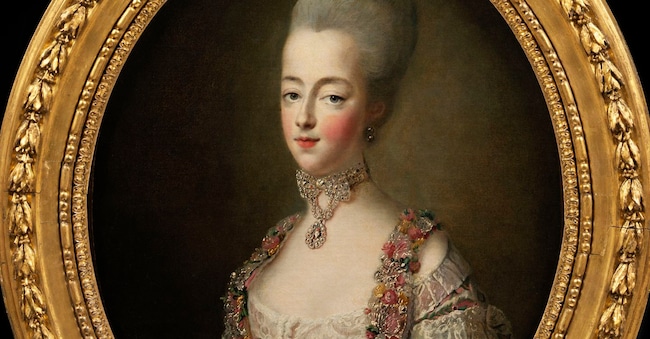
Marie Antoinette ritratta da François Hubert Drouais nel 1773.

4' min read

4' min read

Marie Antoinette Queen of France for just under 20 years, queen of style and fashion for centuries. She died at the age of 37 on the guillotine, but lived on as a symbol and remains an eternal inspiration for designers, artists, filmmakers and stylists. The Victoria & Albert Museum in London today dedicates an exhibition to the Austrian archduchess who became one of the most talked-about, misunderstood, persecuted and misunderstood queens in history.

Commendable because it avoids the apocryphal clichés of history (such as the infamous but never uttered phrase, 'if they have no bread, let them eat brioche') the exhibition is equally admirable in presenting the 'real' Marie Antoinette. The first part of the exhibition, by far the most extraordinary, takes us back to her time, with dresses, jewellery, furniture, fans and other objects that belonged to the queen, such as her jewellery box, her favourite armchair or her harp, some of which had never been exhibited. Many objects, which were lost in the chaos of the French Revolution, are brought together here for the first time.

Loading...
A Versailles riaperti gli appartamenti privati di Maria Antonietta

'All eyes will be on you', wrote Empress Maria Theresa to her 14-year-old daughter, who was sent to marry the dauphin of France. And so it was: curious eyes, envious eyes, malevolent eyes. The young princess, however, instead of following the rules and conforming to the fashion of the time decided to create her own style. Versailles became her stage, on which she showed off extraordinary dresses, silk creations embroidered and adorned with ribbons and bows, hairstyles that became increasingly complex and sophisticated, silk shoes decorated with diamond buckles.

The V&A shows a whole series of dresses of the era, in iridescent silk à la française, more voluminous à la polonaise, more sober striped à l'anglaise. And the jewellery, diamond cascades, the voluminous hair styles with padding and decorations, the precious fans.

“Marie Antoinette Style”, storia, eleganza e tragedia della regina più celebre

Photogallery19 foto

Then came the change of style: Marie Antoinette, who had found her refuge in the faux bucolic world of the Petit Trianon, decided to opt for a simpler look: a ribbon in her loose hair, a straw hat, a white muslin dress. The same she wore in a 1783 portrait by Elizabeth Vigée Le Brun that caused a great scandal at the time ('the queen in déshabillé!' cried the well-wishers) but the chemise à la reine became the height of elegance. So did her choices for the interior, such as porcelain decorated with flowers or toile de jouy. The example of the queen, an influencer ante litteram, was followed by all.

In addition to her role as a master of style, the exhibition also reveals lesser-known aspects of the queen, such as her passion for music, her ability to play the harp and the piano and the support she gave to composers and musicians of the time, including the knight de Saint-George, a mulatto son of a slave, or her determination to breastfeed her children instead of handing them over to a nurse, an example later followed by the women of the court.

From the pastel colours, iridescent silks and diamonds of the first rooms, one passes through a blood-red corridor to a dark circular room that recalls the end of Marie Antoinette, the victim first of the gossips and then of the revolution. On display is the simple white cotton chemise that the queen wore in prison, her last desperate message written on the morning of her execution ("My God, have mercy on me, my eyes have no more tears to cry for you, my poor children, goodbye, goodbye...."), a lock of her blond hair in a crystal locket together with her son's hair, and a very rare and chilling find, the blade of the guillotine that cut off her head on 16 October 1793.

The second part of the exhibition deals with the first expression of what became the cult of Marie Antoinette, when Empress Eugénie in 1867 organised the first exhibition dedicated to her at the Petit Trianon and imitated her style in her clothes and furnishings.

The third part is devoted to modern interpretations of the Queen's style in more than thirty films, television series or fashion collections. From Sofia Coppola's famous film (with shoes created by Manolo Blahnik, sponsor of the exhibition and avowed ardent admirer of Marie Antoinette) to the recent Netflix TV series, and also on the catwalks of numerous designers, from Moschino with its cake dresses to Vivienne Westwood with its reinvented crinolines, from Dior's 2006 French Revolution-inspired collection to the Petit Trianon dress created by Karl Lagerfeld for Chanel to the 18th century-inspired floral dress created by Alessandro Michele for Valentino Haute Couture 2025. At the centre of the last room of the exhibition is the Marquise Masquée, a spectacular 1998 gown by John Galliano for Dior inspired by the queen. "We had a beautiful dream," wrote Marie Antoinette shortly before her death. The beautiful dream continues, in the rooms of the V&A.

"Marie Antoinette Style", V&A South Kensington, London, until 22 March 2026. www.vam.ac.uk/exhibitions/marie-antoinette

Copyright reserved ©

Brand connect

Loading...

Newsletter

Notizie e approfondimenti sugli avvenimenti politici, economici e finanziari.

Iscriviti