
Marilyn Monroe, 100 years of Warhol's diva
The father of Pop Art made it an icon. And vice versa: he was still unknown when he started painting it

-Collage-U27624625377bpt-U05064726236kkA-1440x752@IlSole24Ore-Web.JPEG?r=650x341)
Key points
If there is a face that irremovably embodies the 20th century of art, it is that ofMarilyn Monroe (born Norma Jeane Mortenson Baker, 1926-1962), who would have been 100 years old on 1 June 2026. Or rather: the icon thatAndy Warhol (1928-1987) made of her, starting with a close-up of the actress from the film 'Niagara' (1953; the shot is by stage photographer Gene Kornman). The tragic death of the diva marked a caesura in the life of the artist, who was still relatively unknown at the time: from that moment and for the next two years, Andrew Warhola Jr. began to reproduce her face obsessively, using the silkscreen technique, which was new to him at the time: he dedicated over 50 works to her.
Among the earliest is the 'Marilyn Diptych' (1962), which can be found at the Tate Modern in London: half in colour, half in black and white, it shows the diva's face fading away, a metaphor for post media exploitation exhaustion. Then there is 'Gold Marilyn Monroe' (1962), glittering like a Byzantine icon (precisely): the architectPhilip Johnson (1908-2005) bought it the same year and donated it to MoMA. Also dating from 1962 is 'Marilyn Monroe's Lips', a work preserved at the Smithsonian in Washington.
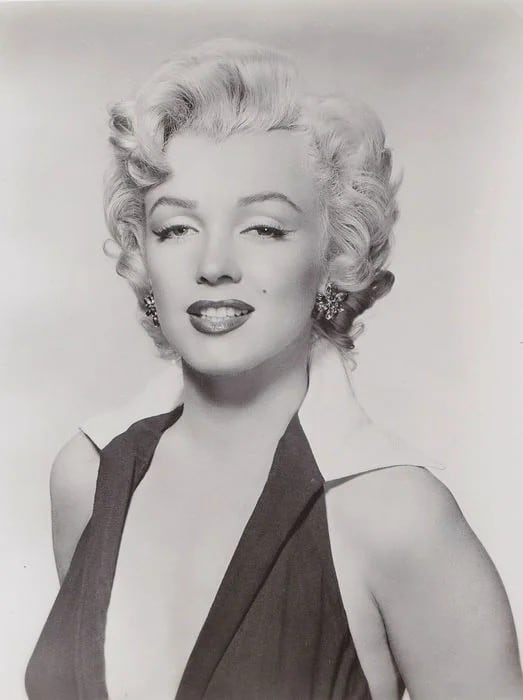
Andy Warhol's portraits of Marilyn, the most expensive works of art of the 20th century
But it is also market success, as well as museum success, that sanctions the status of the Warholian portrait. It is, in fact, a Marilyn by Warhol that is the most expensive work of the 20th century (and the second most expensive ever, after the 'Salvator Mundi' attributed to Leonardo): the 1964 'Orange Marilyn'. It was part of the magnificent personal collection of the Condé Nast tycoon Samuel Irving Newhouse Jr. (1927-2017), also the star of last May's successful auctions. The heirs hastened to sell it in 2018 to Kenneth C. Griffin, founder and ceo of the hedge fund Citadel Llc; and the timing proved them right: in private negotiations, the financial billionaire paid what was then $225 million (the exact figure is actually unknown: it is known that it was in the region of $200-250 million). Today, taking inflation into account, $225 million would be around $284-292 million. The figure far exceeds the 236 million paid last year for Gustav Klimt's 'Portrait of Elisabeth Lederer' at Sotheby's. How can we forget the 'Shot Sage Blue Marilyn', whose $195 million at Christie's auction in May 2022 would today be around $221 million. The buyer in that case was one of the world's most powerful art dealers, Larry Gagosian (it is not known whether for himself or for a client).
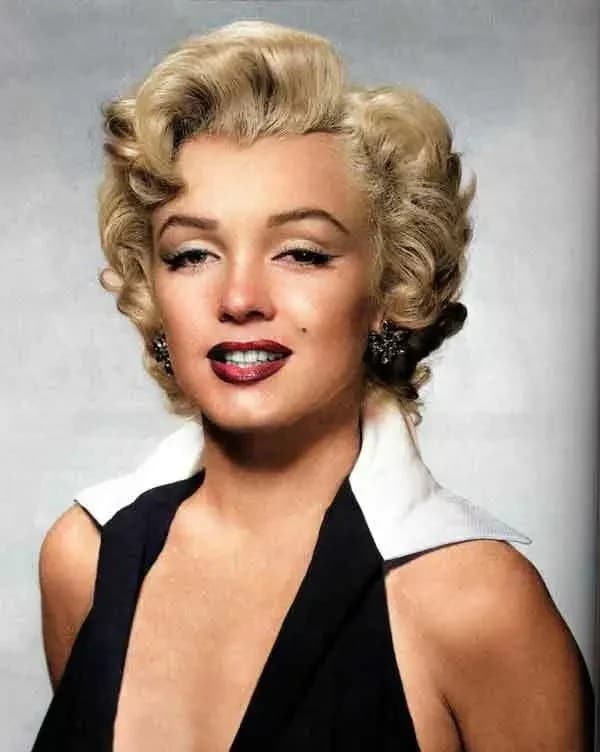
The shooting anecdote
There is an event that unites both works, the orange and the sage green. In 1964, the controversial performer Dorothy Podber (1932-2008) visited Warhol's Factory. Seeing some of Marilyn's colourful portraits, she asked Warhol if she could 'shoot them'. He agreed: after all, that verb in English means both 'to photograph' and 'to shoot'. Too bad Podber was referring to the less peaceful meaning of the word: he pulled a pistol out of his bag and shot the Marilyn paintings right between the eyes; of the five works, only the 'Sage Blue' was saved (hence its name); the others were restored and are collectively known as the much sought-after 'Shot Marilyns'. The 'Shot Red Marilyn' was sold back in 1989 for 4 million dollars, then a record price for a Warhol.
The symbolic value of silkscreen printing, plus some coincidences
The silkscreen technique allowed the father of Pop Art to obtain "the same image, slightly different every time", as he wrote. For Marilyn's paintings, Warhol applied paint to the canvas before screen-printing: the background colour, with the contours of her head and shoulders, eye shadow, lips and face. The difference was the slight misalignment that occurred each time between the colour and the screen-printed image, and the occasional splotch of paint. Each image required five frames: one for the replica of the photographic image and the other four for the areas of colour. The obsessiveness of the iconographic reproduction, all but perfect, constitutes a kind of humanisation of the diva in a context of devouring adoration.

