Santander

Marisol: between a museum revival and market opportunities

The exhibition at the Botín Centre puts one of Pop Art’s most original figures back in the spotlight. The large sculptures are priced at over 300,000 dollars, whilst drawings and works on paper are more affordable.

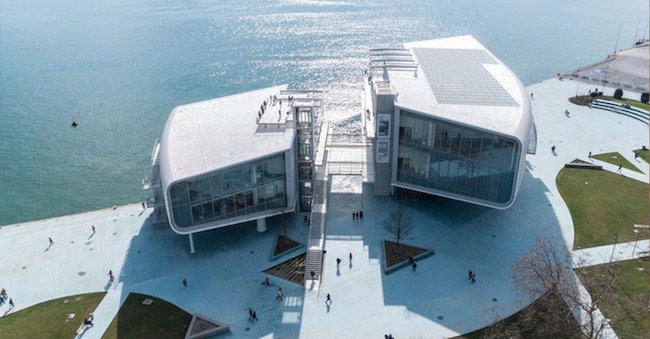
by Maria Adelaide Marchesoni

Centro Botín a Santander

6' min read

Translated by AI
Versione italiana

6' min read

Translated by AI
Versione italiana

“How can you leave just now, when everything is about to begin?” The question that the gallery owner Leo Castelli put to Marisol in the late 1950s hung in the air until, decades later, it became the title of the exhibition that the Botín Centre in Santander is now dedicating to her: ‘Marisol: When Things Are Just Beginning’, curated by Laura Vallés Vílchez (until 25 October).

A phrase that encapsulates the paradox of Marisol Escobar (1930–2016), a Venezuelan and American artist born in Paris, who was able to step away from the limelight at the very height of her success, choosing time and again to take the risk of reinventing herself rather than the security of established fame.
Loading...

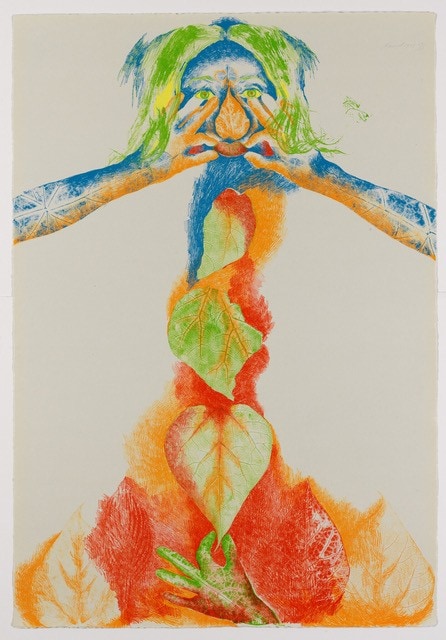
« Catalpa Maiden About to Touch Herself», 1973, di Marisol. Litografia colorata a mano. Edizione di 1/24Courtesy: Collezione Buffalo AKG Art Museum lascito Marisol. Centro Botín

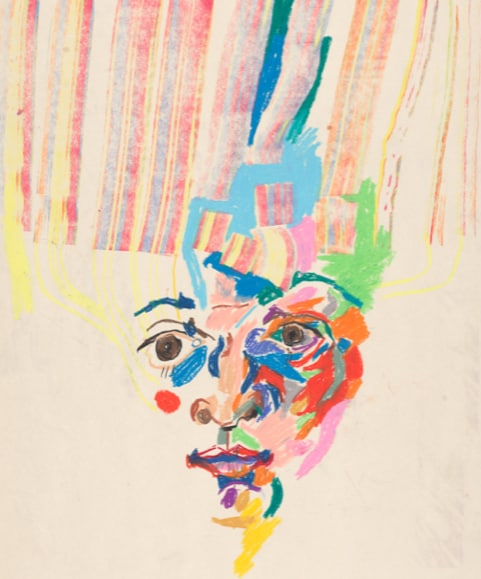
The exhibition, organised in collaboration with the MAC/CCB in Lisbon and the Buffalo AKG Art Museum – which, since 2016, following a donation by the artist, has housed over 100 sculptures, 150 works on paper, his personal archives and his New York loft – presents the true common thread running through the artist’s work. In the more than 100 drawings created between 1950 and 2016 – the year of the artist’s death – themes emerge that run through his entire body of work: identity, the mask, memory, celebrity, gender, politics and cultural belonging. The artist’s face recurs constantly, transforming into a self-portrait, an icon or a disguise.
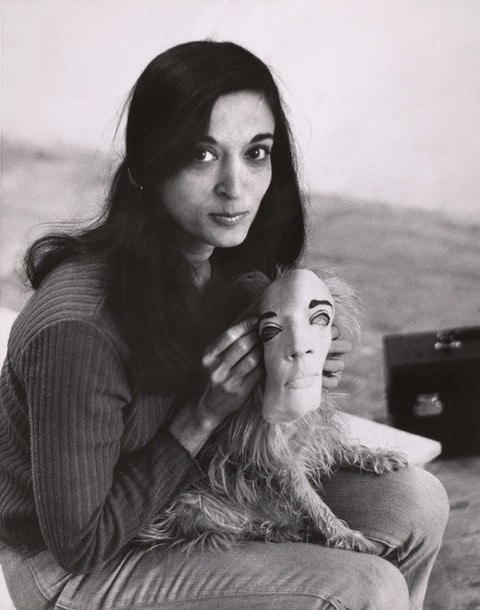
«Ritratto con il cane», circa 1960 di MarisolCourtesy: Don Cyr, Collezione Buffalo AKG Art Museum lascito Marisol, Centro Botín

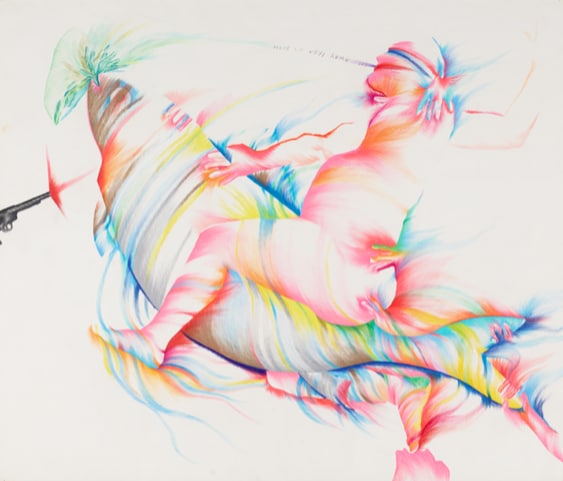
The exhibition opens with a film shot by Andy Warhol in the early 1960s, when Marisol was already a prominent figure on the New York art scene, and Warhol was still taking his first steps towards international fame. Among the most significant works is ‘Get Away From My Fish’ (1975), a huge coloured pencil drawing in which a figure rides a gigantic fish whilst shouting the title phrase – a work which the curator interprets as an assertion of independence, almost a declaration of autonomy from the expectations of the public and the art market.
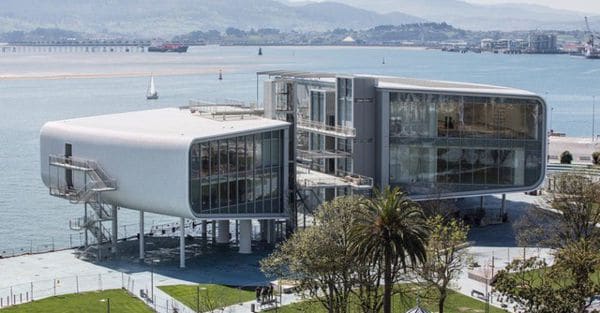
Centro Botin

The Botín Centre

The retrospective fits perfectly with the mission that the Botín Centre has been pursuing since it opened: to make Santander not just a tourist destination overlooking the Bay of Cantabrian, but a hub of cultural production capable of engaging with major international institutions.
Since 2017, the Botín Centre, supported by the Fundación Botín, a philanthropic institution linked to the founding family of Banco Santander, has invested in curatorial research and in highlighting lesser-known aspects of the work of established artists, transforming the exhibition into a tool for knowledge as well as for public engagement.

“The Botín Centre is a philanthropic project run by the Fundación Botín,” explains María Cagigas Gandarillas, head of communications at  Fundación Botín – funded mainly from its own resources, which is why we do not measure success solely in terms of visitor numbers; our mission is to improve people’s lives through the arts, fostering an ongoing relationship with the public and contributing to the development of creativity in Cantabria”.

«Get away from my fish», 1975, di Marisol. Pastelli colorati su cartaCourtesy Collezione Buffalo AKG Art Museum lascito Marisol, Centro Botín

Without going so far as to talk of a ‘Bilbao effect’, it should nevertheless be emphasised that the Botín Centre has given new impetus to the local cultural ecosystem, attracting a steady annual audience of around 180,000 visitors (184,727 in 2025, up 4.5 per cent) in a region still relatively untouched by tourists, despite its (small) airport. “Thirty-six per cent of exhibition visitors,” continues María Cagigas Gandarillas, “are residents of Santander and Cantabria, a figure that confirms our ability to build a lasting relationship with the local community. At the same time, the Botín Centre’s international reach is growing, with visitors coming from all over Europe.”

The building itself, designed by Renzo Piano – inaugurated on 23 June 2017 at a total cost of around 100 million euros, fully funded by the Fundación Botín – represents the physical embodiment of the project. Nestled between the Pereda Gardens and the Bay of Santander, the Botín Centre was conceived as a place connecting the city with the sea, but also bridging the local and international spheres. Its presence has helped to redefine the contemporary image of the Cantabrian capital, complementing its traditional maritime heritage with a growing cultural identity. In 2027, the city will enrich its cultural offering with a centre affiliated with Madrid’s Reina Sofía Museum, just a stone’s throw from the contemporary art centre, which will house the entire archive of the collector José María Lafuente (born in 1957), son of one of the region’s most influential entrepreneurs.

«Untitled», ca 1971, di Marisol. Pastelli a olio e matite colorateCourtesy Collezione Buffalo AKG Art Museum lascito Marisol, Centro Botín

Resources for philanthropic activities

The Fundación Botín’s commitment to investment and philanthropic activities amounts to between 15 and 20 million euros, with the largest share of the budget usually allocated to the running and management of the Botín Centre, which has annual requirements in the region of 10 million euros. Among the foundation’s other initiatives, it invests millions of euros each year in projects in the fields of science, education and rural development. In 2025, the total resources allocated to philanthropic activities amounted to 16.7 million euros (15.9 in 2024), of which 11.3 million went to the Botín Centre (10 million in 2024).

Ticket sales cover only a marginal proportion of the exhibition costs, and the budget is entirely funded by the Fundación Botín, which allocates a sum of money to cover these costs (transport, insurance, conservation, fees, publications, etc.) for the exhibition projects in the annual programme. The budget for each exhibition includes all the costs necessary for its realisation. For example, with the aim of optimising resources and the budget, the exhibition dedicated to Marisol was co-produced with the MAC/CCB in Lisbon, with which the costs of framing and transport were shared. The Buffalo AKG Art Museum was a key partner, as the works come from the artist’s estate, of which the museum is the custodian. To facilitate this collaboration, a contract was signed and a substantial fee was paid. Ultimately, organising co-produced exhibitions and ensuring that the majority of the works come from a single lender certainly reduces costs, making the exhibition more sustainable.

The artist and their market

Throughout her life, she gained widespread international recognition, with major exhibitions in Europe and the United States, including representing Venezuela at the 1968 Venice Biennale and taking part in Documenta IV, where she was one of only four women amongst the 149 artists present. Although her artistic practice developed in parallel with Pop Art, she never fully embraced its principles, creating instead deeply personal works, often imbued with feminist and political undertones.

Whilst the exhibition at the Botín Centre captures the complexity of Marisol’s artistic exploration, the art market offers another perspective on her legacy. Despite growing institutional interest, her prices remain relatively modest compared with other leading figures of American Pop Art. Her large polychrome sculptures from the 1960s – the works that best encapsulate her personal reinterpretation of Pop Art – represent the top end of the market and are also the rarest to appear at auction: in 2025, ‘The Blacks’ (1961–62), one of her most important early sculptural works, was sold for $317,000 (estimate $300,000–400,000), confirming the growing interest in works from her most celebrated period.

However, unlike many artists of her generation, Marisol’s market is not based solely on monumental works. A significant proportion of her output consists of drawings, engravings, collages and works on paper – a lesser-known body of work that is nonetheless essential to understanding her practice. These works continue to offer a relatively affordable point of entry: at auction, simpler drawings and prints can still fetch figures in the region of a few thousand dollars, whilst more elaborate drawings and unique works generally reach prices ranging from several tens of thousands to over 50,000 dollars, depending on their date, provenance and subject matter.
Specialist galleries tend to offer drawings and collages in a price range roughly between 20,000 and 100,000 dollars, whilst lithographs and other editioned works require an investment of a few thousand dollars. This range highlights a distinctive feature of the artist’s market: although she is now regarded as an indispensable figure in the reinterpretation of Pop Art from a female perspective, Marisol has not yet experienced the financial re-evaluation that has characterised many female artists rediscovered over the last ten years. For some collectors, this gap now represents one of the most interesting opportunities on the post-war art market.

Copyright reserved ©
Loading...

Brand connect

Loading...

Newsletter

Notizie e approfondimenti sugli avvenimenti politici, economici e finanziari.

Iscriviti