
The maritime economy: 1.1 million people employed and projected growth of 7.1 per cent
Meloni: “We will continue to invest in supply chains, new technologies, the underwater sector and the protection of strategic infrastructure”

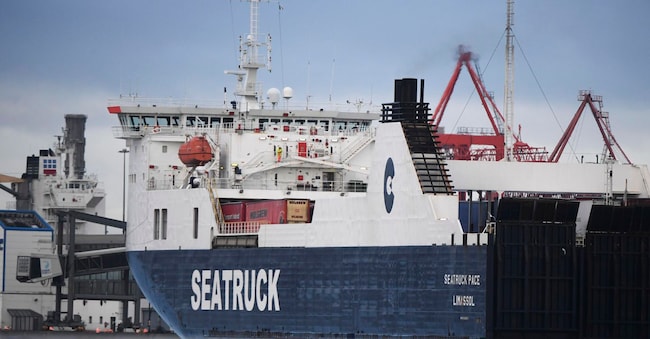
“Thanks in part to the many measures approved in recent years, the added value of the maritime economy grew by over 22 per cent between 2022 and 2024, reaching nearly 79 billion euros (78.9, ed.)”. This was emphasised by the Prime Minister, Giorgia Meloni, in a video message during the fourth edition of the ‘Risorsa Mare’ International Forum in La Spezia, citing figures from the Blue Book, presented by the Teha (Ambrosetti) group, which also draws on data collected by the Tagliacarne research centre.
“We certainly do not intend to stop there,” added the Prime Minister, “we want to continue investing in supply chains, new technologies, the underwater sector and the protection of strategic infrastructure. It is our task to transform Italia’s natural vocation – namely, to be a natural hub in the Mediterranean and a bridge between Europe, Africa and the East – into growth, employment and security.”
These remarks were echoed by the Minister for Maritime Policy, Nello Musumeci (whose ministry organised the meeting, together with Teha), who emphasised that ‘we need to work to broaden the dialogue on maritime issues. Today, the blue economy employs one million Italian citizens – mainly young people – and 250,000 businesses, and accounts for around 12 per cent of gross domestic product’. He continued: “Over the past four years, we have striven to emphasise that the sea represents the greatest natural infrastructure upon which to build projects for growth and development. And the figures have proven this: all eight sectors of the blue economy are growing.”
Now, he said, ‘we must adapt to a changed geopolitical context. We must be prepared for any eventuality, in the knowledge that freedom of movement is not eternal. That is why port reform can be a valuable tool for competing with other Mediterranean countries, but above all for developing the interconnection between the port and the hinterland, between the coast and inland areas, so that the benefits can be spread across the region and not limited solely to coastal infrastructure’.
According to figures from Teha, the added value of the maritime sector has ‘a multiplier effect of 1.8’ and ‘has generated a total of €224.8 billion in the Italian economy (data from Tagliacarne – Unioncamere – OsserMare). Furthermore, with over 1.1 million people in employment and projected growth of 7.1 per cent by 2025, the sector remains one of the most dynamic and strategic for the country’s development, particularly in the South.”


