The 'marketing' of the popes from coins to medals
Numismatic collecting of papal coinage includes medals, which are endowed with a greater art content than coinage

4' min read
Key points
4' min read
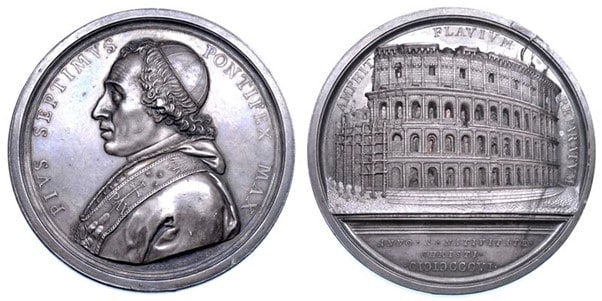
Papal medals, true masterpieces of engraving art, made their appearance at the beginning of the 15th century, with Pope Martin V (1417). In collecting, they represent an elitist and cultured niche within numismatics. Medals, even more than coins, were a means of communication and propaganda: unlike the latter, the former were able to emancipate themselves from the strict regulations of the mint. According to tradition, coinage was born around the 7th century BC in Lydia, byKing Croesus. At the birth of Christianity - thus by definition in year zero - it had been in circulation for centuries. "At a certain point, sovereigns realised that currency could also be used in its non-economic function, i.e. communication," observes Paolo Crippa, director of the numismatics department of Cambi Aste and owner of Crippa Numismatica. This intrinsic 'marketing and advertising' property of the potentates was increased with the advent of medals, in the creation of which artists could enjoy greater freedom than in the production of money. The popes, always great communicators, with their wealth accustomed to availing themselves of the services of the best architects and artists, also lavished resources on the manufacture of medals. Which, as true objets d'art, bear the engraver's signature. "The mint master had to rigidly adhere to the rules of minting; the coin, to be considered authentic, had to bear very precise characteristics, counting on the purity of the metal of which it was made and its weight".
But at a certain point, possessing a simple means of payment was no longer enough for the wealthiest and most powerful families. So, 'whoever had the financial means, rushed to have family medals made by the most fashionable artists, to then give them as gifts on occasions of travel, diplomatic relations'. Production flourished. "A medal from the Italian school of the 16th century is more valuable than those from schools of other nationalities," Crippa continues. With the influx of precious metals into Europe following the discovery of the Americas (1492), medals became larger and more opulent (especially in the Baroque period). The refined medals of the pontifical school were (and are) both annual and extraordinary, i.e. minted annually or on the occasion of trips of the pontiff or special events in general.
The "who" and the "what"
.For both coins and medals, the obverse featured the 'who': the effigy of the lord or the pope; in other words, the affiliation. On the reverse, the 'what' or the 'second communication', chosen from a wide variety of subjects: there were allegorical figures, religious figures, depictions of events including family events, hunting scenes, and the most varied symbolism.
Medal and coin collecting
.The coin collector follows a more investment-oriented purchase logic. Coin collectors already existed in antiquity: 'Roman emperors collected Greek coins, for example,' Crippa reveals. The medal collector, on the other hand, 'mainly follows the cultural aspect' and can be classified as a 'pure collector'. For example, someone who only likes fine arts and certain artists can collect medals.
Numismatic collecting has a broader spectrum: 'It can appeal to the middle schooler as well as the centenarian. Medallion collecting, on the other hand, is more mature, exclusive, culturally elitist". Proportionally, coins cost more than medals, and you can still come across very interesting valuations: you might be able to buy a baroque medal at auction for a few hundred euros.
Quotations and Auction Transfers of Coins and Medals of the Popes
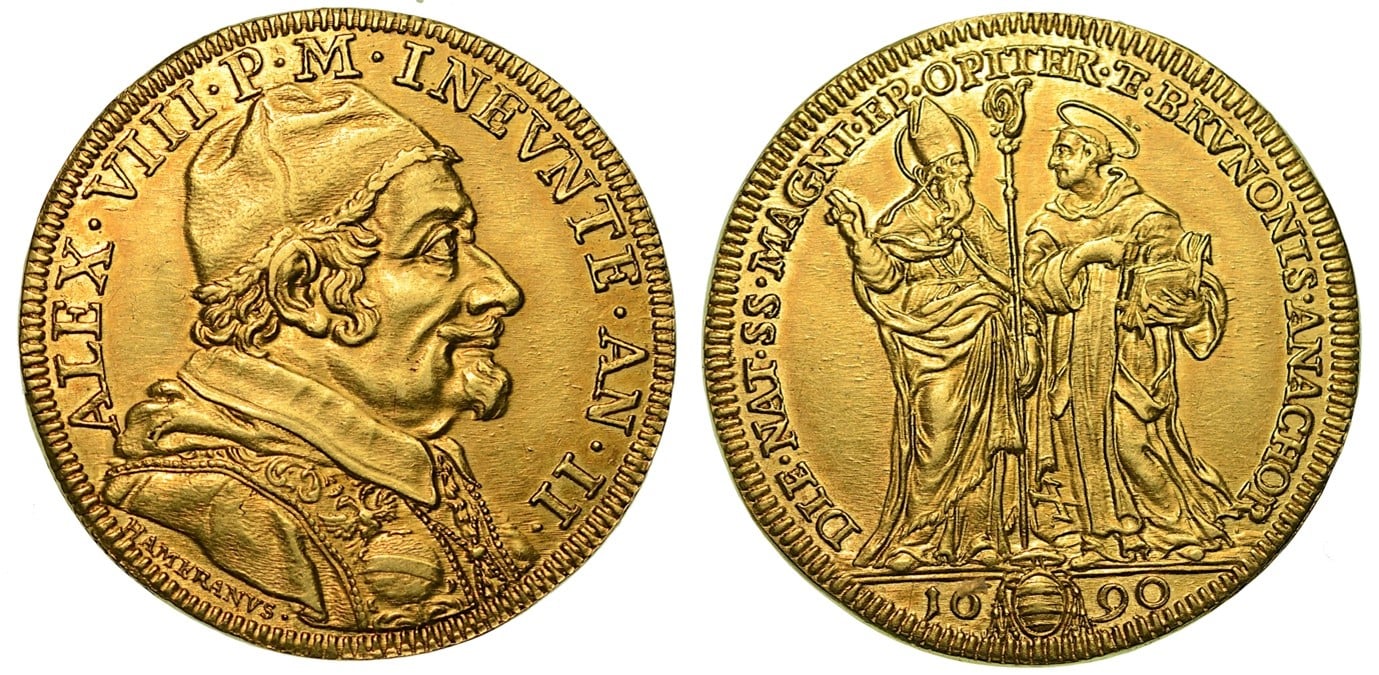
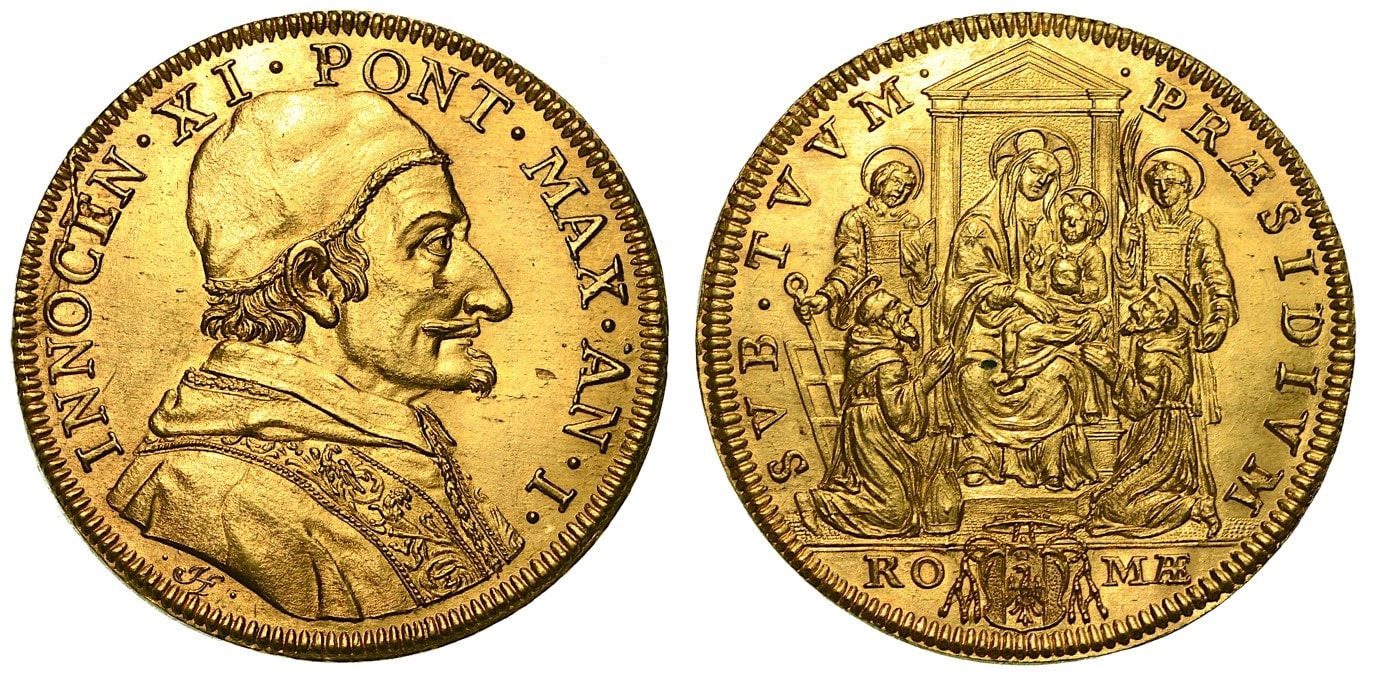
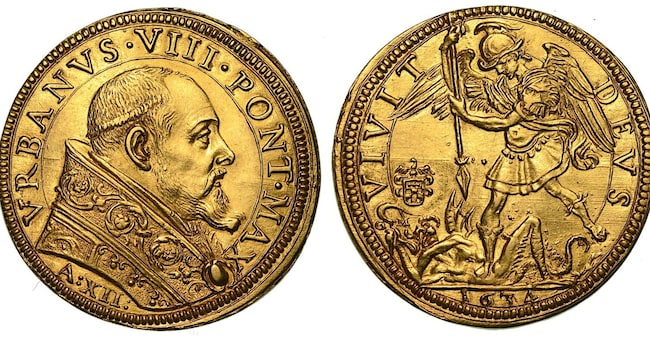
With regard to papal coins, Cambi Aste in cooperation with Crippa Numismatica set several records on 9 February 2022. A gold quadruple of Urban VIII from 1634 achieved a realisation of 162,500 euros including rights, from an estimate of 35,000 euros, thanks to its exceptional state of preservation. A gold quadruple of Alexander VIII from 1690 also had a multiple appreciation: starting from an auction base of €30,000 it fetched €150,000. In the same auction,Innocent XI (1676) fetched €137,500, again with fees, from an initial valuation of €35,000.