
Mars, NASA's Escapade probes launched
After a one-year delay and two further postponements due to bad weather and a geomagnetic storm, the launch took place from Cape Canaveral with the New Glenn rocket of Jeff Bezos' private company Blue Origin

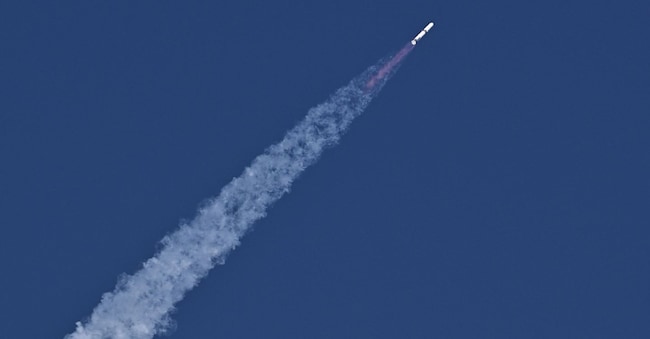
The Escapade probes of Nasa, destined to reach Mars, have been launched. After a one-year delay and two further postponements due to bad weather and a geomagnetic storm, the launch took place from Cape Canaveral with the New Glenn rocket of Jeff Bezos' private company Blue Origin.
Twice the countdown was stopped, for reasons not currently disclosed by Blue Origin. The first stop occurred when there were 20 seconds to launch, then a new launch time was set at 21.45 Italian time, a 45-minute delay from the start time of the launch window. The counter then restarted, but stopped again at 17 minutes.
Then the new time set at 21.55 Italian time, the countdown resumed and finally the New Glenn rocket was launched. Once the two Escapade probes (Escape and Plasma Acceleration and Dynamics Explorers) have reached their observation point one and a half million kilometres from Earth, i.e. the second Lagrange point (L2), they will have to collect data to understand why Mars' atmosphere is almost completely uncovered.
This is the first NASA mission to Mars in the last five years. The last one, in 2020, had taken the Perseverance rover and the Ingenuity drone-helicopter to the red planet.
About seven minutes after launch, the rocket named 'Never Tell Me the Odds' re-entered, landing on the Jacklyn platform, named after Bezos' mother, in the Atlantic Ocean.

