
Master's in the Netherlands, the complete guide: courses, costs, work, salaries. And stories
How to choose between 1300 English degrees: from teaching to costs and outlets. With stories from Italian students and professors in Twente
by Enrico Marro
9' min read
Key points
9' min read
What if the perfect recipe for a good university preparation and finding a job was a bachelor's degree in Italy and a master's degree in the Netherlands? So a solid theoretical preparation in our country and a plunge into the practical projects and teamwork that is the 'trademark' of the Dutch?
This is the opinion of several Italian students, alumni and lecturers in the Netherlands, who have found work in the Land of Tulips. But before we dive into the world of the Netherlands' 1300 master's degrees in English, let's see how the Dutch system works.
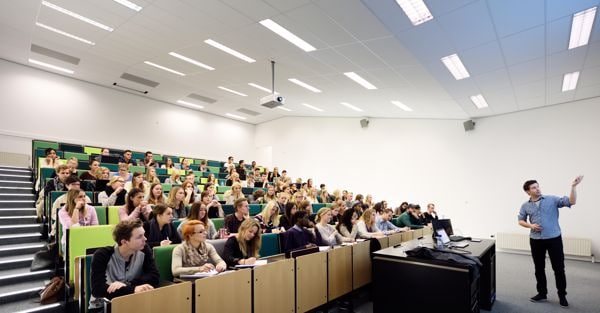
In Olanda esistono 13 tradizionali università di ricerca (dal taglio accademico) e 41 atenei “professionali” di Applied Science.
Foreword:In the Netherlands, the master's degree generally corresponds to our 'laurea magistrale', i.e. the course of study that can be taken after the bachelor's degree (the 'triennale'). With some exceptions, these are therefore not 'second-level masters', which are widespread in Italy as a necessary crutch to find a job but are not very common abroad, where one is generally already hired after a three-year degree.
Type of university: research or 'professional'?
Another important thing. In the Netherlands (as well as in Germany, Switzerland, Austria and Scandinavia), international students have access to master's degrees in two types of universities: the 13 traditional research universities, those with an academic slant similar to the Italian ones, and the a good 41 professional universities, which best train precise profiles that can immediately find an outlet in the labour market (not all of them have master's degrees, but most do).
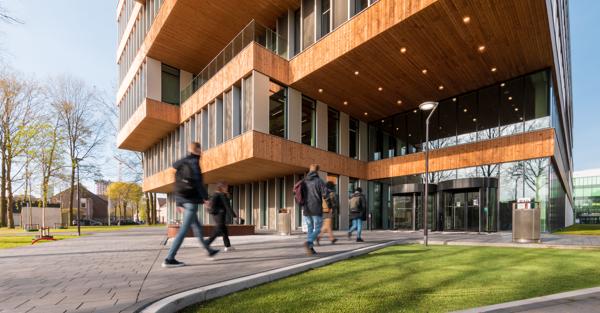
Una sede di Fontys, una delle maggiori università di Applied Science olandesi.
The professional universities in the Netherlands are called Universities of Applied Science and have a limited number of master's degrees compared to traditional universities, because a large proportion of students find work immediately after their bachelor's degree.
Four of the 13 research universities, on the other hand, are technology-oriented, i.e. the Dutch version of our polytechnics in terms of teaching quality and links with the world of industry: they are the University of Twente, the Tu/e in Eindhoven, the universities of Delft and Wageningen.
Type of master
In the Netherlands there are many types. "In addition to the normal masters in research universities, we have the "professional masters" in Applied Science universities, which have a more practical focus and concentrate on skills development," explains Lonnie Holders, founder of the guidance company Goingdutch, former marketing manager at Saxion University and alumna of the University of Twente.
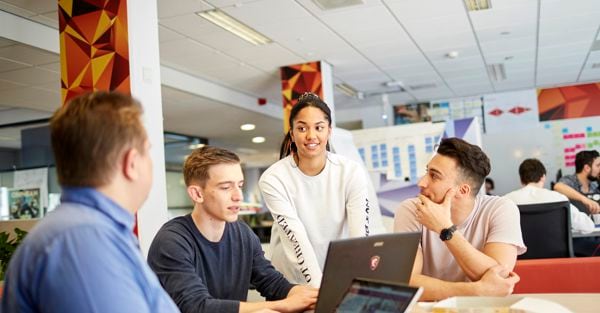
Nell’anno accademico 2023/24 gli iscritti stranieri agli atenei pubblici olandesi erano 128mila (+5,4% rispetto all’anno precedente): il 26,4% frequenta master nelle università di ricerca e appena il 3,1% master in quelle di Applied Science.
"Then there are the research masters, where you sometimes study on your own with a tutor to guide you, a valid path for those who want to do doctorates (Phd). And finally the executive masters, the refresher courses for those who already have some years of work experience'.
Internships are very common, in companies but also in universities for those who prefer a more academic focus.
Some numbers
In the academic year 2023/24 foreign enrolments at Dutch public universities numbered 128,000 (+5.4% compared to the previous year). 26.4% are attending master's courses at research universities and just 3.1% master's courses at Applied Science universities, where, however, the largest growth in enrolments (+8.7%) was recorded in 2023/24 compared to the previous year.
DOVE SONO ISCRITTI GLI STUDENTI INTERNAZIONALI IN OLANDA
The Tricolour Community
.And the Italians enrolled in the Netherlands? According to Nuffic data there are 8,227, second only to the Germans (21,362) in the 2023/24 ranking of internationals. In the past year alone, 583 more Italian students have arrived in the Netherlands: in just ten years we have gone from fifth to second place in the top ten internationals, quadrupling the number of enrolled students (from two thousand to over eight thousand).
STUDENTI IN OLANDA, LE CINQUE NAZIONALITÀ TOP
The choice of destination city
.This is very important, depending on the career you want to pursue. Do we want to become researchers in a university or work in a company? In the second case, the advice is to choose economically brilliant cities or districts, particularly in the sector we have chosen. And masters with a good connection to the world of work.
LE UNIVERSITÀ OLANDESI PIÙ INTERNAZIONALI
The rankings
.To be checked, but not obsessively. Also because theposition of a university in the rankings depends on several factors, some of which may not be relevant to us (do we care about patents? Or company placement? Or both?). There are good universities with excellent outlets in the professional world that do not appear at the top of the rankings.
Certifications
.Especially important for business schools. There are three main 'seals' to look out for: Equis (a standard promoted by the Brussels-based European foundation for management development), the American Aacsb standard and finally Amba, a quality certification promoted by the London-based Association for MBAs. There are very few business schools that have been awarded the triple seal of quality, the 'triple crown': just a hundred out of the more than 13,000 that exist in the world.
The duration
.International masters courses do not necessarily last two years: there are also courses ofone year or one and a half years, full or part time, but the type of final degree (master certificate) is exactly the same.
The entry requirements
.It varies depending on the destination, with the indispensable three-year degree. Let's take another look at the case of the Netherlands: 'To get in, you need a bachelor's degree with a good grade point average (75-80% mark),' Holders explains, 'an English certificate, a motivational letter, a CV, an extract of the thesis from the three-year degree, maybe references.
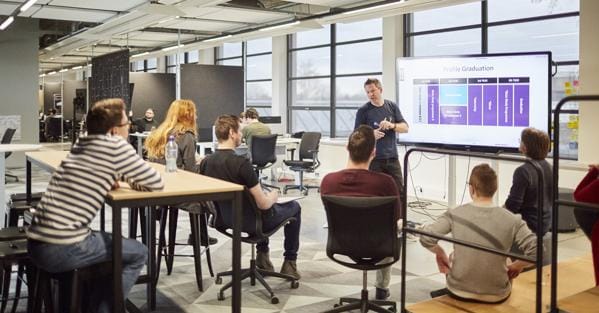
Per accedere ai master olandesi in generale sono necessarie la laurea triennale con una buona media nei voti (75-80% di punteggio), il certificato di conoscenza dell’inglese, una lettera motivazionale, il curriculum, un estratto della tesi della triennale, magari delle referenze.
Applying for a master's degree abroad is challenging: you have to move in good time, bearing in mind that many programmes start twice a year (either in September or February). But nothing is impossible.
Case history: the University of Twente
Now let's dive into the details of one of the four 'technological' research universities most popular among Italians: that of Twente, where we find at least one tricolour student present in each of the more than thirty master's degrees.
Fondata nel 1946, l’Università di Twente ha più di 12mila studenti, di cui 5mila iscritti ai master. Gli internazionali sono oltre 4mila, provenienti da 115 nazioni.
Let's take a look at some numbers here as well:The University of Twente is young (founded in 1961), fairly contained in size (12,492 students in total, of which 5,042 are enrolled in master's programmes), very international (foreigners total 4,291 from 115 countries).
MASTER E BACHELOR ALL’UNIVERSITÀ DI TWENTE
An American-style campus
.If one third of the students are international, it is also because this university is concentrated in one huge American-style campus: as big as twenty football pitches, it hosts bars, restaurants, supermarkets, doctors, hotels, sports facilities of all kinds and even bike mechanics (are we in Holland or not?). It also manages to accommodate some three thousand students in various facilities, with rents per single room ranging between 250 and 450 euros.
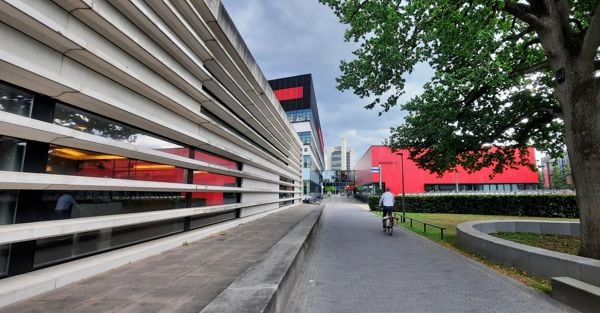
Uno scorcio del campus di Twente: grande come venti campi da calcio, ospita bar, ristoranti, supermercati, medici, hotel e strutture sportive di ogni tipo.
The University of Twente is located in Enschede, on the border with Germany, a city of over 160,000 inhabitants two hours by train from Amsterdam where it is less difficult to find accommodation than in the central part of Holland (Utrecht, Amsterdam, The Hague).
It is also well placed in the rankings, particularly that of the most popular universities among students, where it has been on the podium in the top three for six years. And it boasts important infrastructure, including something like 380 laboratories.
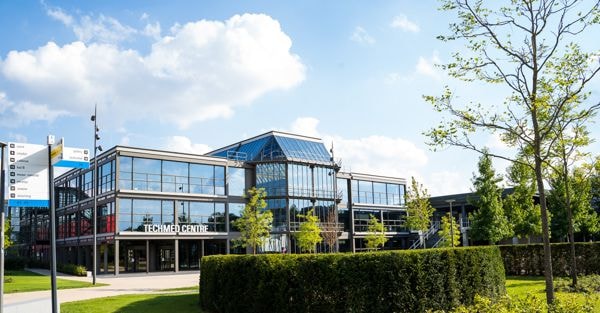
Il Technical Medical (TechMed) Centre di Twente, innovation hub votato alla ricerca scientifica e all’istruzione universitaria: ospita laboratori all’avanguardia.
Hence: human scale, a rare European example of an American-style 'all-in' campus, still reasonably priced rents, many international students, top-class laboratories and infrastructure.
Between humanism and start-ups
But that is not all. Three other things characterise Twente: the large number of double degrees with foreign universities (including Italian ones, such as Parma, Trento or L'Aquila), its humanistic' approach to technology since time immemorial, and the high number of start-ups it generates (historically more than 1,200 in all, including Booking.com and Just Eat).
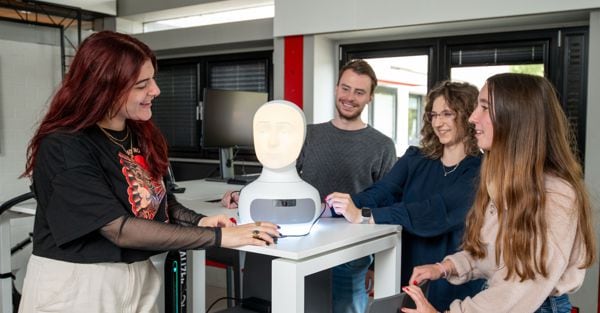
Twente è rinomata per l’alto numero di startup che genera: in tutto storicamente sono state più di 1.200, tra cui Booking.com e Just Eat (foto di Boris Cremers).
"Our slogan 'High Tech Human Touch' sums up well the humanistic and multidisciplinary approach that we have always had,' explains Laurens van der Velde, spokesperson for the university. 'It is no coincidence that alongside the more technological ones we also offer masters courses in psychology, communication, philosophy of science or European Studies.
Costs and salaries
.Twente's brochure on master's degrees gives an indicative idea of the cost of living in Enschede (around thousand euros per month all inclusive but excluding euros, which in turn are around 2600 euros per year) and of the gross salaries that await recent graduates on the Dutch labour market: they range from 2600 euros gross per month in Communication Science or Psychology to 3200 euros in Computer Science, going from 2800 euros in Chemical Science to 3000 euros in Business Administration or Robotics.
The Italians' word: the students
But let's leave it to some Italian students and lecturers in Twente to understand the crosses and delights of studying in the Netherlands.
"The teaching is very different from that of our universities, where the approach is theoretical,' says Francesca Cavallaro, who is attending a Double degree in Business Administration between the University of Trento and the University of Twente. 'Here the approach is very practical, with a lot of group work and tight deadlines, in teams of 5-6 people.
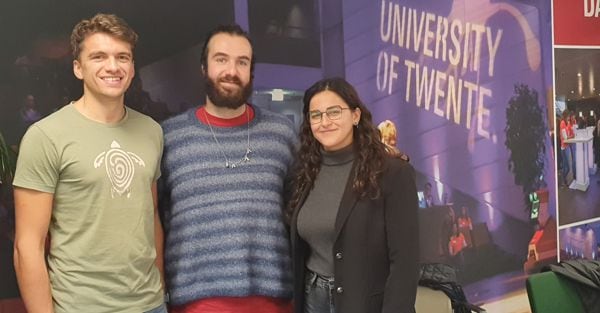
Giovanni Chiementin (Robotics), Giovanni Allovio (Nanotechnology) e Francesca Cavallaro (Business Administration), tre “masterini” italiani a Twente.
"In the Netherlands they knock you off your pedestal, they teach you that you don't have to chase perfection,' echoes John Chiementin, who is attending a Master's course in Robotics (and is a Teacher Assistant in one of Twente's laboratories) after a three-year degree in biomedical engineering at Padua. In group work you experience dynamics that you would find in the company, starting with the tight schedule of assignments'.
Theory and Practice
"In Italy the teaching structure in general is more vertical, very 'top down' - reflects Giovanni Allovio, in Twente for the Master in Nanotechnology after his three-year degree in mechanical engineering at the Politecnico di Torino - . In the Netherlands you call professors by their first name, you drink a beer with them: they are much more direct but attentive to feedback'.
Even in the use of labs, the approach is different. 'In Italy you do very little lab work and always with the 'top down' logic, with the professor behind the desk showing things and the students watching without touching anything. In Twente you get your hands dirty straight away: in Holland I did more lab work in a week than in a year in Turin.
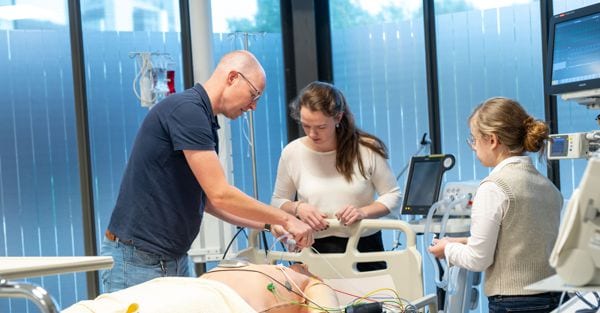
Una delle caratteristiche dei master a Twente è l’uso costante da parte degli studenti dei 380 laboratori (foto di Boris Cremers).
Not only that. "In Italy there is more depth on things that may not be of interest to the student, in the Netherlands you go for general information and then you prepare a much freer study plan,' explains Giovanni Allovio, who then concludes (in agreement with the others): 'the ideal is probably to do the three-year degree in Italy, where there is a solid theoretical approach, and then go to the pragmatic Netherlands for the master. That way you interface with the best of both worlds.
The PhD
.'The Dutch master's experience is a shock for those who come from Italy,' smiles Ricardo Zinelli, who after a double degree between Parma and Twente is engaged in a Phd (doctorate) in Biochemistry, Genetics and Molecular Biology - 'here you are much more independent and have the opportunity to innovate. There is a focus on personal development, in the name of research.
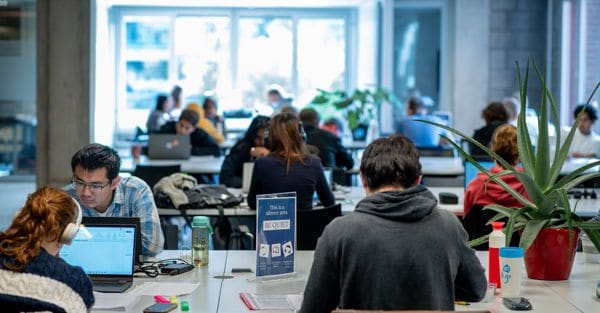
Da sei anni Twente si trova sul podio dei tre atenei olandesi più amati dagli studenti (foto di Boris Cremers).
"But the courses all in all are better in Italy, where the professors spend more time with the students, delving deeper into the topics and probably offering a more solid foundation. In our country you have two or three lecturers per course, here in Holland four to seven: a larger team but also more dispersed, at least in my experience.
The Young Assistant Professor
Let us not forget that in Italy there are also strong universities on the practical side. Antonia Affinito, a young Assistant Professor at Twente in the Design and Analysis of Communication Systems group, is convinced of this: after Computer Engineering at the Federico II University in Naples, Antonia gained experience with Cisco followed by a doctorate, also in the Neapolitan city, and then a postdoc at Twente.
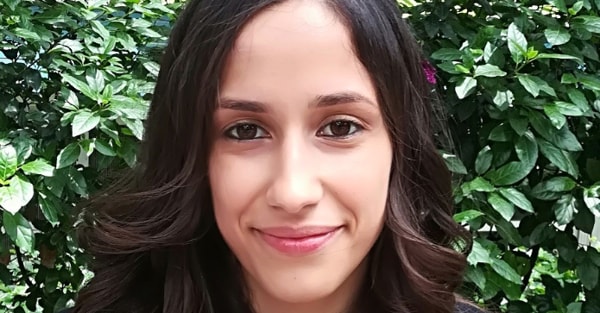
Antonia Affinito, giovane Assistant Professor a Twente nel gruppo Design and Analysis of Communication System.
"I had a good time in Naples,' Antonia explains, 'the Federico II has a practical approach at undergraduate level: you have the group projects but also the positive aspects of the theoretical approach. At Twente I found very good facilities, an international environment, but above all an approach that promotes the independence and empowerment of the student'.
The Full Professor of Neuromuscular Robotics
."In Italy the approach is perhaps too abstract, but with solid preparation. In the Netherlands we encourage students with active learning: all theoretical concepts are 'put on the road' in practice. I, for example, do lessons with 45 minutes of theory and 45 minutes of real laboratory'. Talking about this is Massimo Sartori, Full Professor and Head of Chair of Neuromuscular Robotics, but also head of the Neuromechanical Modeling and Engineering Labs at Twente.
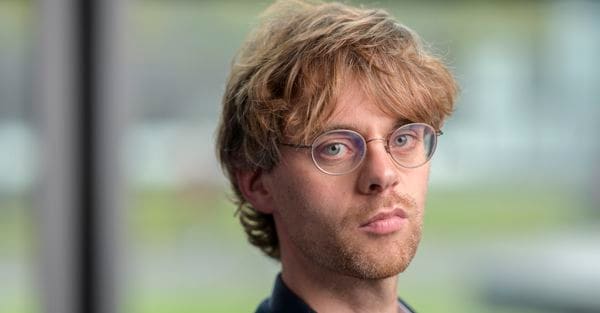
Massimo Sartori, Full Professor and Head of Chair di Neuromuscular Robotics a Twente.
Not just a lecturer: Massimo manages a team with seven PhDs, eight postdocs and two Assistant Professors, working on European projects with multi-million dollar budgets. After university in Padua and Erasmus in Ireland ("that's when I realised the importance of Europe"), he worked at the University of Stanford in California but also in Australian and German universities. He then landed permanently in the Netherlands, in Twente, where he works on neuromuscular robotics.
Between avant-garde labs and flat hierarchies
.Massimo proudly shows the laboratories where his team experiments with exoskeletons with digital twins, bionic limbs tailored to individual disabilities, human-robot neurocellular interfaces with biomechanical models, textures of sophisticated 'electronic leather' and generally the most advanced wearable tech.
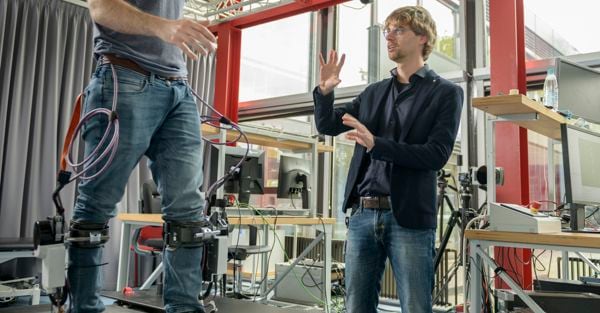
La sperimentazione di un esoscheletro ai Neuromechanical Modeling and Engineering Labs di Twente, diretti da Sartori.
"In the Netherlands, I found very good infrastructures but above all a model where lecturers are encouraged to introduce elements of active learning and participation,' explains Massimo: here, thesis writers 'get their hands dirty' in the lab and are given responsibility in an environment of flat hierarchies.
All very nice, but are you homesick for Italy? 'Actually, I am at home here too: I feel more European than Italian for a long time now,' Massimo smiles. If Europe had not existed, my professional growth would not have been the same.

Brand connect

