
The first Special Economic Zone for Culture is born in Matera
An industrial project, conceived over thirty years ago, which has already obtained the government's approval and which aims to encourage the establishment of 'knowledge factories' in the city of the Sassi

2' min read
2' min read
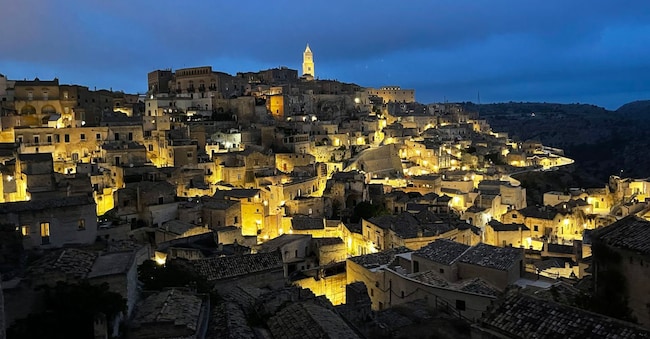
The first Culture 4.0 Special Economic Zone (ZES) in Europe will be set up in Basilicata, in Matera. A major industrial project that has already obtained the willingness of the national government and that aims to encourage the establishment of 'knowledge factories' in the city of the Sassi. The most beautiful 'culture factory in Europe' will rise in Borgo La Martella on an area of at least 6 hectares, combining the unquestionable Matera 'brand' with that of Adriano Olivetti.
A project that was born back in 1987 from an intuition of Raffaello de Ruggieri, president of the Fondazione Zetema and founder of the La Scaletta club, who already claimed that 'culture, a distinctive feature of Matera, is not bought, not consumed, but produced, exchanged, spread and nourished by the territory'. The strength of this concept led Matera to be the first southern city recognised as a Unesco heritage site in 1993, to its designation as European Capital of Culture 2019 and as Mediterranean Capital of Culture and Dialogue in 2026. The transition from 'attractive city to attractive city' is thus realised: cultural and creative enterprises in sectors ranging from music, fashion, visual arts, performing arts, valorisation of material and immaterial cultural heritage, artistic handicrafts, publishing. Matera can become a production platform for 'made in Italy' manufacturing companies. As things stand, the planning level of the ZES is that of a technical-economic feasibility study that envisages an investment of around 32 million.
"Basilicata wants to be a best practice, starting from Matera, which can be replicated in the whole of southern Italy. The objective,' said the president of the Basilicata Region, Vito Bardi, 'is to include the ZES of culture in the Cohesion Agreement, nominating Matera and Basilicata as a productive place of culture, favouring the establishment of enterprises consistent with the vocation of the place and included in an innovative prototype of productive area, the ZES. But it must be done quickly, reiterated de Ruggieri, who in the single ZES for the entire Mezzogiorno also grasps the risk of non-homogeneous competitiveness of such a vast territory, with the possibility that companies will not choose Basilicata, which due to its historical lack of infrastructure and services is not an attractor of investment. Hence his intuition to introduce competitive advantages.
Culture as a driver of production, rather than yet another element of consumption. "In our Strategic Plan, as envisaged by the regulations," Bardi explained, "we will provide additional incentives for cultural and creative production activities with respect to what is already envisaged by the ZES. The La Martella district will host the industrial complex: a 'garden factory' in line with the 'factory with a view' in Pozzuoli, inaugurated by Olivetti in 1955. It will be an industrial architecture in a park, with 'tree-height' volumes and an organised sequence of production spaces that the Region will make available to companies at reduced fees, with two large training areas (ITS Level II and ISIA Roma Design to create the professionals of the future); a sector centre for the study, research, market surveys and advertising of Lucania's valuable production chains, as well as a surveillance booth against the counterfeiting of Italian products.

