
From maternity to retirement: how the system penalises women's work
The INPS report shows strong imbalances: female employment at 53.3%, wage gap over 25% and pensions up to 46% lower

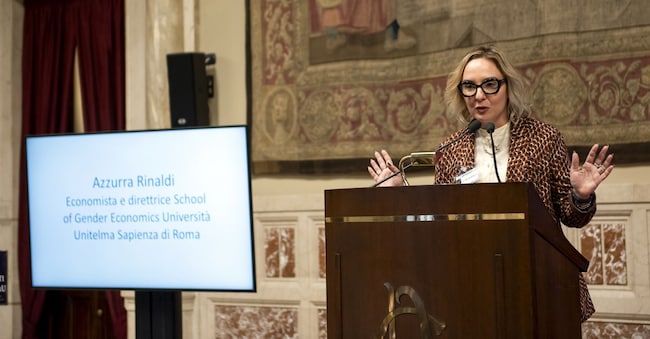
In Italia, power continues to resemble an exclusive club for men. This is certified not by an ideological assessment, but by the numbers of the INPS Gender Report, which photograph an economic and social system that is still profoundly unbalanced.
The first indicator is the labour market. The female employment rate stands at 53.3%, compared to 71.1% for men. A gap of almost 18 percentage points that places Italia firmly at the bottom of the European rankings. Even more significant is the figure on inactivity: over 42% of women not only do not work, but have also stopped looking for a job. This renunciation is rooted in cultural and structural factors: the persistent social expectation that assigns women the primary role of mothers and caregivers and the chronic lack of adequate public services to support families.
Shortage of services
The issue of childcare services remains emblematic. According to the latest available data, for every 100 children between the ages of zero and two, in Campania there are barely 13 places available in crèches, in Sicily 14. Numbers that make it clear how access to work, for many mothers, is in fact hindered by the lack of social infrastructures.
When women manage to enter the labour market, marginality takes other forms. 74% of those employed with vouchers or casual work contracts are women. A concentration that signals greater exposure to precariousness and contributory discontinuity, with effects that drag on throughout working life.
Salary gap
The gap widens on the pay and career front. In the private sector, the wage gap exceeds 25%. This is not just a question of lower salaries, but a real 'snatching' of growth opportunities. The imbalance in top positions is evident: only 22% of permanent managers are women. Female representation at the top therefore remains in the minority, confirming a predominantly male decision-making structure.

