
Mathematical research: a contribution of 680 billion euros to the Italian economy, equivalent to 34 per cent of GDP
The findings of the study ‘The Economic Impact of Mathematical Research in Italia’ show that 8.4 million jobs are supported, accounting for 35 per cent of the country’s total employment

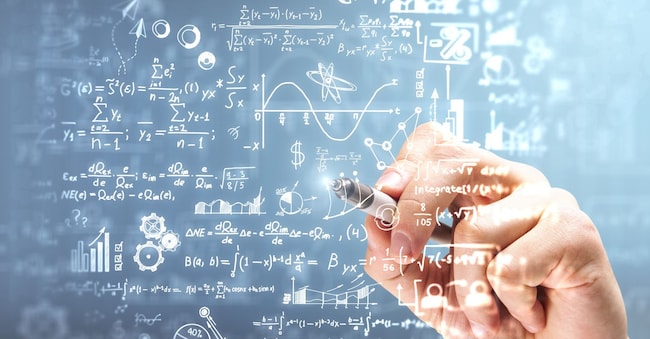
Mathematics has always shaped human development and, in today’s digital society, its role has become central: its applications are not limited to physics and engineering, but extend to biology, medicine, economics, the social sciences and environmental sciences, drawing on increasingly sophisticated models. It underpins the algorithms that drive the web, genome sequencing, data transmission and modern Artificial Intelligence (AI). In Italia, this central role translates into 8.4 million jobs and a contribution to GDP of approximately 680 billion euros.
Key results
These are some of the key findings from the study ‘The Economic Impact of Mathematical Research in Italy’, carried out by Deloitte Economics on behalf of the National Research Council (CNR) and the Italian Mathematical Union (UMI) to independently quantify the contribution of mathematical research to the country’s economy. The report, which was presented last May at the CNR, will be the focus of discussion at the event “Not just numbers: mathematics, a driving force for the economy”, organised by the Brescia campus of the Catholic University of the Sacred Heart, in collaboration with the University’s Faculty of Mathematical, Physics and Natural Sciences, on Tuesday 15 September at 5.00 pm, which will present the findings to an academic, institutional and business audience.
The importance of mathematics
“Mathematics is the language through which we interpret the world: it enables us to build models, interpret complex phenomena and make predictions, and it is therefore natural that it should have a profound impact on the economy and society,” says Claudio Giannetti, Dean of the Faculty of Mathematical, Physical and Natural Sciences. “At a time in history when we are entrusting an increasing proportion of our analytical processes to artificial intelligence, educating people in mathematics, logic and critical thinking becomes even more important. Only by investing wholeheartedly in education, mathematical research and its applications will we be able to prepare generations capable not merely of passively accepting new technologies, but of understanding them, guiding their development and harnessing them for the country’s economic, social and scientific progress.”
A far-reaching economic and employment contribution
The direct economic contribution of mathematical research amounts to 308.5 billion euros, to which must be added 221 billion in indirect impact, generated along the production chains through the exchange of goods and services between businesses, and €150 billion in induced impact, linked to spending by workers involved in the ecosystem. The total stands at €680 billion. For every euro of direct impact, the study estimates a return of an additional €1.2 in indirect and induced terms. A similar trend can be observed in terms of employment, where Mathematical Research directly supports 2.7 million jobs, to which are added 3.2 million resulting from the indirect impact and 2.5 million from the induced impact, making a total of 8.4 million jobs, equivalent to 35 per cent of Italian employment. To complete the picture, the contribution to tax revenue is estimated at €296 billion, comprising €134 billion in VAT, 75 billion in employers’ social security contributions, 58 billion in employees’ income tax, and the remainder from corporation tax and employees’ social security contributions. The sectors that benefit most directly are IT planning and consultancy, architectural and engineering firms, management and legal consultancy, education and construction.
Mathematics as a driver of competitiveness for advanced economies
The study also places mathematical research within an international comparative context. By analysing the link between a country’s mathematical skills – measured by its score in the Programme for International Student Assessment (PISA) – and two key indicators of competitiveness, a positive correlation emerges with both per capita GDP (77 per cent) and hourly labour productivity (73 per cent). Specifically, countries with better results in maths tests tend to generate more wealth and produce more for the same amount of time worked. In Italia, this central role is reflected in the extent to which various economic sectors make use of mathematical research: architectural and engineering firms (71.9 per cent), IT programming and consultancy (65.1 per cent), scientific research and development (53 per cent), auxiliary financial and insurance services (47.2 per cent) and telecommunications (44.3 per cent) are the sectors with the highest intensity of use, confirming that mathematics is now a cross-cutting enabling factor, ranging from artificial intelligence to financial risk management and industrial design.
Brand connect


Newsletter Scuola+
La newsletter premium dedicata al mondo della scuola con approfondimenti normativi, analisi e guide operative
Abbonati