

Un Paese sempre più vecchio e sempre più ignorante
di Francesco Billari

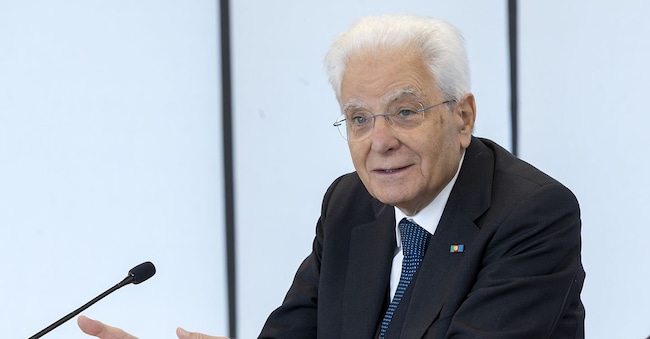
The President of the Republic, Sergio Mattarella, promulgated the law on the national feast of Saint Francis, noting some critical aspects that he pointed out to the presidents of the chambers, La Russa and Fontana: "I have promulgated the law - even though its text presents some critical aspects that I feel it is my duty to point out - in consideration of the significance of the measure and the circumstance that the remarks do not concern profiles of a constitutional nature.
the President of the Republic, Sergio Mattarella," reads the Quirinale's note, "promulgated on 8 October 2025 the law on the "Institution of the National Feast of St. Francis of Assisi", approved by the Chamber of Deputies on 23 September 2025 and by the Senate of the Republic on 1 October, sending the following letter to the President of the Senate of the Republic, Ignazio La Russa, and to the President of the Chamber of Deputies, Lorenzo Fontana: The law on the "Institution of the National Feast of St. Francis of Assisi", approved by the Chamber of Deputies on 23 September 2025 and by the Senate of the Republic on 1 October, has been submitted to me for promulgation. I have provided for the promulgation of the law - even though its text presents some critical aspects that I feel the duty to point out - in consideration of the significance of the measure and the circumstance that the observations do not concern constitutional profiles.
Article 1 of the law, in its first paragraph - in order to promote the values of peace, brotherhood, environmental protection and solidarity - establishes the national holiday of Saint Francis of Assisi, patron saint of Italy, to be celebrated on 4 October of each year. Consequently, the second paragraph inserts 4 October, as the 'national holiday of Saint Francis of Assisi, patron saint of Italy', in the list of days considered to be holidays at the national level from which the effects of observing full working hours in the workplace and the prohibition to perform certain legal acts derive'.
The third paragraph of the same Article 1,' the communiqué continues, 'amends Law No. 132 of 4 March 1958, 'Festive holiday of 4 October in honour of the special Patron Saints of Italy St Francis of Assisi and St Catherine of Siena', merely removing any reference to St Francis from the law and its title. As a result, Law No. 132 of 1958 now provides that '4 October is considered a civil solemnity and a day of peace, fraternity and dialogue between members of different cultures and religions, in honour of the Patron Saint of Italy St Catherine of Siena.
The regulatory framework resulting from the approved law is as follows: the same day, 4 October, is designated both a bank holiday, in honour of St Francis of Assisi, and a civil holiday, in honour of St Catherine of Siena. Two different regulatory provisions provide that, with reference to the two saints, the same values are celebrated on the same day, but with a different regime. In both cases, in particular, it is provided that, on the same day of 4 October, schools may promote initiatives dedicated to the universal values that each of the two saints is considered to express. However, these initiatives may no longer be held on 4 October, since it is now a public holiday. As far as St Francis is concerned, the possibility of taking similar initiatives is extended to public administrations, third sector entities and 'public institutions at national, regional and local level. It is evident that the legislation that governs the two saints is not only a matter of national law, but also of local law.

