
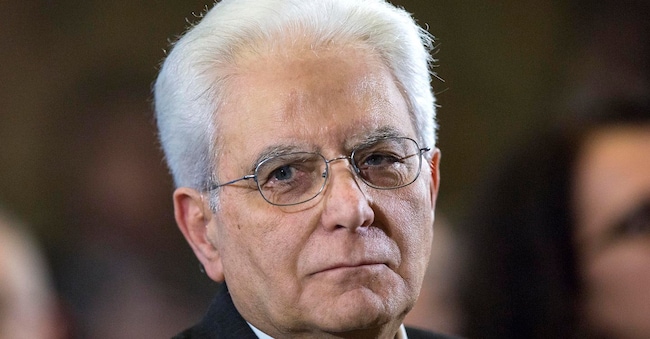
Mattarella: You are never a stranger in your own home; autonomy goes hand in hand with democracy
The President of the Republic during the celebrations marking the 80th anniversary of the Treaty of Paris, which granted autonomous status to Trentino-Alto Adige

Key points
“The Republic and the autonomous regions have accompanied the development of Italian democracy over the past few decades,” said the President of the Republic, Sergio Mattarella, during the celebrations marking the 80th anniversary of the Paris Agreement, which granted autonomous status to Trentino-Alto Adige. “The Paris Agreement,” added Mattarella, “was the result of the far-sighted determination of two statesmen who were able to identify an innovative and courageous solution to the question of Alto Adige/Südtirol.” “The two young republics – the Austrian one reborn with independence and the Italian one established by referendum – sought,” Mattarella added, “to affirm through the agreement a principle enshrined in the Italian Constitution: one is not a ‘foreigner’ in one’s own home.”
The agreement reached 80 years ago that still serves as a model
Mattarella spoke of the “special anniversary marking eighty years since the signing of the De Gasperi–Gruber agreement, which still holds indisputable value today as a founding, historical and symbolic element, and which coincides with the eightieth anniversary of the Italian Republic”. “Naturally, differing perspectives informed their respective positions. What emerged was not a mere compromise, but a model that is still invoked today in situations requiring difficult reconciliation in Europe. The two leaders shared the conviction that it was necessary to safeguard the German- and Ladin-speaking minorities present in the region, protecting their identities and ensuring the peaceful coexistence of all the peoples living in the territory. It was not an easy choice: it concerned territorial areas that had been the subject of dispute during the First World War, settled only by the Treaty of Saint-Germain in 1919 and subsequently subject to severe ethnic policies enforced by Fascism and Nazism. These measures even extended to the ‘options’ of 1939, provided for in the Mussolini–Hitler agreements, which envisaged the migration to Germany of citizens of German cultural background. “The aim was to arbitrarily align geopolitical borders with ethnic boundaries, making the rights of citizens living in those territories contingent upon the cultural identity they embodied,” explained the Head of State.
Europe has enriched our shared culture
“Since its inception, the Italian Republic has held that promoting the unique characteristics of communities situated along its borders serves to enrich the values of coexistence within our civilisation. This is a principle that the European Union has been able to further develop, lending ever greater depth to our shared culture,” emphasised Sergio Mattarella during the ceremony. “Eighty years after the signing of the Paris Agreement, these examples of ambitious and concrete collaboration reaffirm the validity of the model developed in Alto Adige/Südtirol, its exemplary nature at an international level, and the value of autonomy for these territories. A shared heritage, precious to our two countries and to Europe, which must be safeguarded and promoted with constancy and determination, as demonstrated by the recent constitutional law containing new provisions on the Statute of Autonomy. “The Republic is grateful to the people of these lands for the contribution they have made and continue to make to the progress of our country and to our shared European life,” the President of the Republic added in his speech in Merano, alongside his Austrian counterpart, Alexander Van der Bellen.

