The Maxxi Bulgari Prize: an all-female fifth edition
For the first time, three female artists have reached the final. The prize, which brings together the Roman museum and the Bulgari Foundation in support of young talent, will be awarded on 23 February 2027

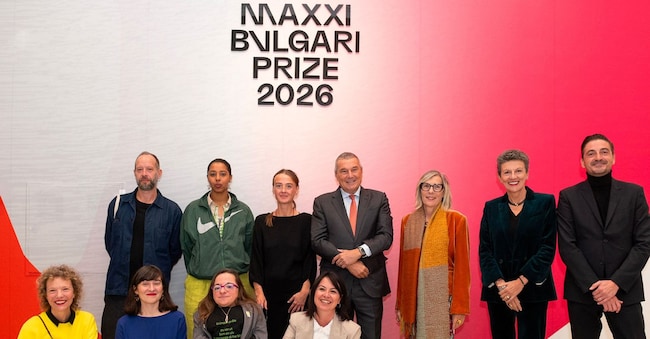
Now in its fifth year, the Maxxi Bulgari Prize has announced its finalists – for the first time, an all-female shortlist of three: Chiara Bersani, Adji Dieye and Margherita Moscardini have exhibited their works in the galleries of the Roman museum, which, together with the Bulgari Foundation, is thus supporting art and the work of young talents.
The exhibition, curated by Giulia Ferracci, opens to the public on 6 November and features three previously unseen works, created for the prize and which offer valuable insights into our times.
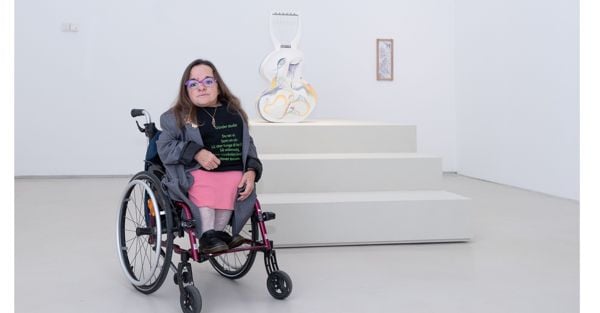
Chiara Bersani frames the question of which lives matter in the form of a sarcophagus and a ritual; Adji Dieye topples the tower of a pavilion from the 1931 Paris Colonial Exhibition and demonstrates how much that perspective still influences the present; Margherita Moscardini uses a section of bronze pavement as the starting point for a legislative proposal on the commons.
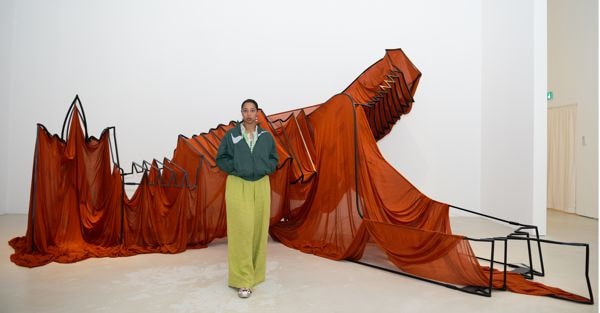
The exhibition begins with Adji Dieye’s large-scale installation, Una Resa senza Caduta, a structure of tubular iron wrapped in rayon veils. The installation echoes, upside down and in precarious balance, the silhouette of the tower of the French West Africa pavilion at the 1931 International Colonial Exhibition in Paris – a structure built to present the European public with an image of Africa tailored to the empire’s needs. By turning upside down a building designed to showcase the colonies, Dieye reveals just how much the images fixed in place back then continue to shape our perspective today.
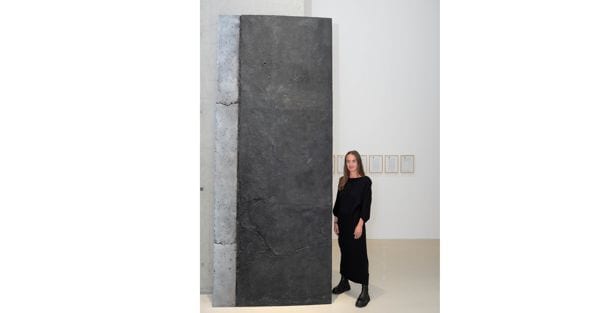
With Una strada, Margherita Moscardini intertwines sculpture and law. A bronze sculpture reproduces a section of the pavement on Via Guido Reni – the street on which the MAXXI overlooks – and is displayed vertically alongside its rubber and plaster cast. The project draws on a category of Roman law described in Justinian’s *Institutiones*: *res nullius in bonis*, things that do not form part of anyone’s estate. Together with the philosopher Michele Spanò and the legal scholars Alessandra Donati and Francesco Follieri, the artist has drawn up a proposal to amend the Code of Cultural Heritage and the Landscape, establishing assets that cannot be appropriated or alienated, intended for collective enjoyment. The artwork would serve as a test case, and if it wins the prize, the sculpture is set to be installed in place of the original paving. Thus, the reflection on the common good extends from a work of art to the whole of civic life.