
MAXXI: the new management put to the test by the accounts and Stocchi’s succession
The new constitution introduces a Director-General with a five-year term of office. The 2025 accounts provide a basis for assessing the impact of the reorganisation, whilst the selection process for the Head of Art is now underway

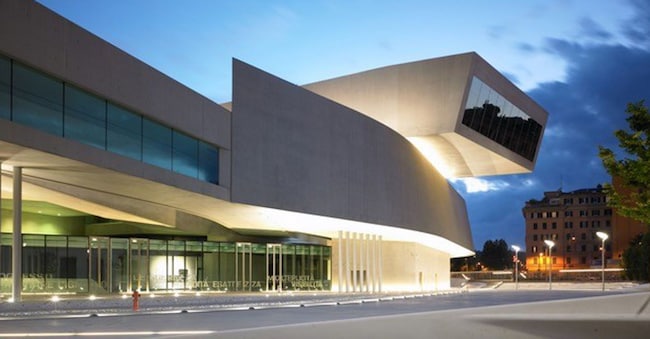
The succession of Francesco Stocchi marks one of the first concrete steps in the reorganisation of MAXXI, which began last June with the entry into force of the new statutes of the Foundation. Stocchi’s term of office came to an end at the end of June, after three years as artistic director, following a parting described as having been mutually agreed with the Foundation. He will, however, continue to oversee a number of projects already underway, including the exhibition dedicated to Gordon Matta-Clark.
The Foundation’s new constitution draws a clearer distinction between strategic direction and operational management, and reorganises the structure of cultural responsibilities. Among the changes is the abolition of the artistic director role, whose responsibilities are redistributed amongst the departments and a new Management Committee. There are also changes to the senior management, with the introduction of a Director-General appointed for a five-year term. The post has been entrusted to Paola Macchi, formerly the Foundation’s Secretary-General, who was officially appointed on 13 July 2026 by the Board of Directors upon the recommendation of the Minister for Culture, Alessandro Giuli. The reform raises an issue that concerns not only the distribution of responsibilities but also the financial sustainability of the new structure. Will there be changes to the management structure and operating costs?
To establish the baseline, the analysis of the 2025 accounts provides a snapshot of MAXXI’s economic and financial situation prior to the new constitution coming into force. A comparison with the financial statements for the coming years will make it possible to assess the potential impact of the reform on staff costs, institutional bodies and internal organisation, as well as on decision-making processes.
A snapshot of the accounts at the end of 2025
In 2025, the accounts show a production value that remains virtually unchanged, against a backdrop of rising costs and revenue affected by both operational constraints and the variability of the various sources of funding. The operating result is essentially a break-even figure. Rather than the final figure itself, it is the breakdown of income and expenditure that provides an indication of the Foundation’s ability to maintain financial equilibrium during a period of transformation of its premises and organisation.
Whilst the value of production remained broadly stable at 21.82 million euros – of which 15.8 million euros related to public funding – production costs rose by 2.3 per cent to 21.59 million. This increase is mainly attributable to services, which account for around 73 per cent of production costs and constitute the largest component of expenditure. Within this category, expenditure on exhibitions and cultural activities at the Rome headquarters rose from €4.39 million to €5.25 million.

