Maire leads the way in training specialists in the energy transition
The first ITS programme in Rome is set to begin in November, marking the start of a major project aimed at bridging the gap between supply and demand. Di Amato said: “The project has significant social value because of the contribution it can make to NEETs.”

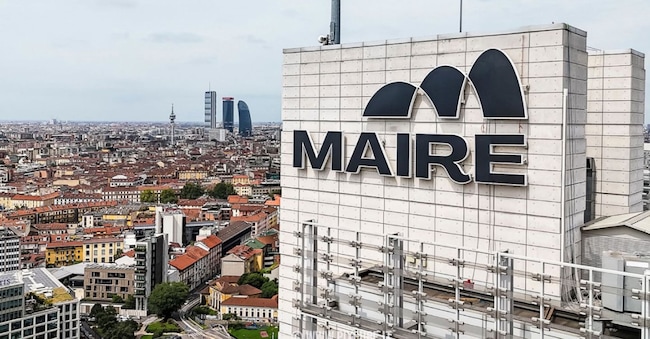
It is simply ‘the first step in a major training programme on the energy transition’. Fabrizio Di Amato, chairman and shareholder of Maire, describes the ITS course to become an Energy Transition Specialist in these terms. The course is set to begin in November in Rome and will be presented on 6 October, first to institutions and then at an open day aimed at young people and their families. Di Amato is already looking beyond this stage and outlines his plans for a major training hub across several regions: “We’re starting in Lazio, but the aim is to extend the project to the north, in Lombardy, and to the south, in Sicily, in Catania, where we’ve recently opened an engineering centre.” At Maire, the average age is 42 and 74 per cent of employees hold a university degree. Around 73 per cent of these – 6,068 – are engineers. Over the last three years, 5,150 new staff have been recruited.
The group has ‘partnerships and collaborations with over twenty universities, as well as two funded chairs – one in Open Innovation and Sustainability at Luiss and one in Chemical Projects Engineering and Management at the Politecnico di Milano,’ continues Di Amato. There are no specific courses on the energy transition in our country and, precisely for this reason, drawing inspiration from both Italian initiatives, such as the Motor Valley University in Emilia-Romagna, and international ones such as those at Harvard and MIT – which I personally visited specifically with this project in mind – we decided to create an ecosystem focused on strategic issues, such as the energy transition, both for us and for society at large.”
Referring to Maire, Di Amato explains that ‘a company has two assets: one is its people and their intelligence, the other is intellectual property. Through our project, we are making the most of both and launching a training programme that is unique in this country. Our distinguishing feature is our ability to attract young people and persuade them to undertake a two-year training programme, which we must make appealing’. The programme also aims to have an international dimension and attract young people from other countries, building on agreements with numerous social and educational organisations committed to the integration of immigrants, to promote guidance, training and awareness-raising on energy transition issues, and to introduce young people and their families to the skills and professions related to sustainability.
The Green Innovation ITS Academy foundation was established at the strong instigation of the Maire Group and will address the need to train highly specialised technicians in decarbonisation and the circular economy, bridging the gap between labour supply and demand. To better understand what is happening, Di Amato says we need to ‘go back a little, to 20–25 years ago, when our group was much smaller in size. It had fewer than 1,600 employees, compared with 11,400 today, representing 85 nationalities across 50 countries. At the time, the backbone of the organisation was highly structured and comprised many technical experts and engineers from various disciplines, ranging from chemistry to mechanics, as well as other support staff in administrative and financial roles. Over time, we have seen certain technical roles within the organisation grow, roles for which there is a shortage on the market: as we expanded, we needed to increase the number of specific staff, and that is when we began to recognise the gap in the market. As part of our strategy, we carried out a skills analysis to drive forward our business plan – a ten-year plan that requires an enormous effort. It was during this exercise that the ITS programme for the role of ‘energy transition specialist’ was developed.”

The collaboration between the public and private sectors – in this case with the Lazio Region – represents significant added value, particularly as the ITS will enable its students to earn academic credits. The Green Innovation ITS Academy Foundation comprises many partners: on the industrial side, Maire, Acea, Kuwait Petroleum Italia and Orange Branded, as well as various schools and universities, including the Rome Biomedical Campus, Unindustria Perform and the Salesians. In the partnership that gave rise to the ITS, ‘the public sector actively involves the private sector, which is, in a sense, the beneficiary of the training, and helps to make these professions more attractive. Public accreditation allows for the recognition of training credits, so if students decide to continue their studies at university after the two years, they will already have credits. I am certain that those who undertake this programme will then be taken on immediately by a company, but should they wish to continue their studies, they will be able to do so with a substantial number of credits already under their belt. I myself followed a pathway combining work and study, though it was less structured than what we are offering young people. The social objective we have set ourselves is also to play our part in reducing the number of NEETs and to encourage a generation of young people who are often demotivated by the fact that jobs are hard to find, that not enough is being done on environmental issues to find solutions and resolve problems, there is a financial crisis and an uncertain geopolitical landscape due to conflicts. Personally, during the meetings organised in schools and universities, I engage with many young people, and I believe the NEET phenomenon should be seen as a failure on the part of a country’s ruling class. Given that entrepreneurs and managers form part of the ruling class, it is both a necessity and a duty for us to make our contribution to this issue.”