Food

McDonald's: E. coli outbreak in the US blamed on onions. Alarm also in other chains

Other fast-food restaurants, including Taco Bell, Pizza Hut, KFC and Burger King, have withdrawn onions from some menus

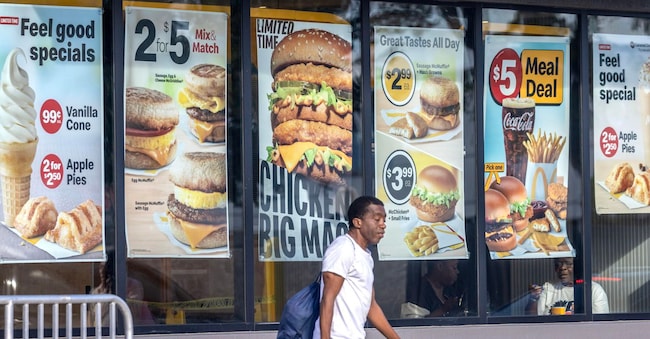
Una persona lascia un ristorante McDonald’s a Miami, Florida, USA, 23 ottobre 2024. I Centri statunitensi per il controllo e la prevenzione delle malattie (CDC) hanno segnalato un focolaio di E. coli che ha colpito quasi 50 persone in 10 stati in seguito al consumo di cibo proveniente dai ristoranti McDonald.  EPA/CRISTOBAL HERRERA-ULASHKEVICH

3' min read

3' min read

At the origin of the E. coli outbreak that led to the death of one person and another fifty or so suffering from serious illnesses were sliced onions. This was said by the McDonald's chain, which suffered a share crash on Wall Street the other day when news of the contamination problems spread. The Centers for Disease Control and Prevention had in fact linked the serious outbreak to the American fast food chain.

Onions under indictment

McDonald's officials said that the Taylor Farms company, of Salinas, California, sent the onions to a distribution centre, and that from there they were then sorted to restaurants in several states. The chain thus decided to remove the Quarter Pounder burgers from the affected restaurants, but did not specify which distribution centre this was.

Loading...

Meanwhile, other fast-food restaurants, including Taco Bell, Pizza Hut, KFC and Burger King, have withdrawn onions from some menus.

U.S. Foods, a major restaurant wholesaler throughout the United States, said Taylor Farms had issued a recall this week for whole peeled and diced yellow onions for potential E. coli contamination. The recalled onions came from a Taylor Farms facility in Colorado, a U.S. Foods spokesman said. But the wholesaler also noted that it was not a McDonald's supplier and that its recall did not include any products sold in the fast food chain's restaurants.

Taylor Farms did not respond to multiple requests for comment. U.S. Food and Drug Administration officials have not confirmed that the agency is investigating Taylor Farms. A spokesman said Thursday that the agency is "looking at all sources" of the outbreak.

The other chains

.

Meanwhile, other national restaurant chains have temporarily stopped using fresh onions. "As we continue to monitor the recently reported E. coli outbreak, and out of an abundance of caution, we have proactively removed fresh onions from some Taco Bell, Pizza Hut and KFC restaurants," Yum Brands said in a statement.

Yum Brands, based in Louisville, Kentucky, did not say where the onions were removed or whether the company uses the same supplier as McDonald's. Yum Brands said it will continue to follow the guidelines of regulators and its suppliers.

Restaurant Brands International, which owns Burger King, said Thursday that five per cent of its restaurants use onions distributed from Taylor Farms' Colorado facility. Burger King restaurants receive deliveries of whole, fresh onions and its employees wash, peel and slice them.

Although it was not contacted by health officials and had no indication of illness, Restaurant Brands said it had asked restaurants that received onions from the Colorado facility to dispose of them two days ago. The company said it replenished its stock with onions from other suppliers.

Dangerous toxin

.

At least 10 people were hospitalised during the McDonald's outbreak, including a child who suffered a severe kidney complication from the infection. The illnesses were confirmed between 27 September and 11 October, according to the US Centres for Disease Control and Prevention.

The victims were infected with Escherichia coli 0157:H7, a type of bacterium that produces a dangerous toxin. It causes about 74,000 infections in the US each year, leading to more than 2,000 hospitalisations and 61 deaths each year, according to the CDC.

Symptoms of E. coli poisoning can occur rapidly, within a day or two of ingesting contaminated food. They typically include fever, vomiting, diarrhoea or bloody diarrhoea and signs of dehydration: little or no urination, increased thirst and dizziness. The infection is particularly dangerous for children under the age of five, the elderly, pregnant women or those with a weakened immune system.

Copyright reserved ©
Loading...

Brand connect

Loading...

Newsletter

Notizie e approfondimenti sugli avvenimenti politici, economici e finanziari.

Iscriviti