
McKinsey: Fashion at the heart of Italy’s economy and appeal
With one million employees across 47 provinces, 70 per cent of fashion school students come from abroad. The Chamber of Fashion is launching an observatory to assess and promote its impact

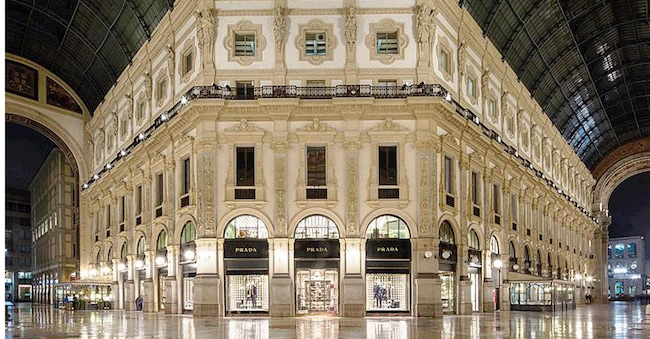
The general meeting of the National Chamber of Italian Fashion concluded with the unanimous re-election by the members of Carlo Capasa as president for the two-year period 2026–2028, and with the presentation of an Observatory established in collaboration with McKinsey. These are two key milestones at a time of change within the Italian and global fashion industries, and of great social and geopolitical uncertainty, which is equally global in scope.
Capasa is now in his seventh term and, since 2015 – the year he was first elected president of the Chamber of Fashion – he has introduced countless innovations across various areas, from sustainability to support for young designers, as well as agreements with other associations such as Pitti Immagine and Altagamma. Theirs is a systemic vision, one that remains pioneering in our country, not just in the fashion industry.
In the age of AI, the collection and interpretation of data have become equally important – a role entrusted to the newly established observatory, named Il bello della moda. “Measuring the value of fashion means recognising its strategic role in Italia’s competitiveness,” emphasised Gemma D’Auria, senior partner at McKinsey and global head of the apparel, fashion & luxury practice. “The Observatory was set up to highlight the contribution of a sector that creates jobs, enhances local areas, involves the entire supply chain and strengthens the country’s economic, cultural and international appeal.”
D’Auria offered many insights yesterday: the sector accounts for around 5 per cent of Italian industrial production and is underpinned by a production network spanning 47 provinces, supporting over 500,000 direct employees and around one million workers when the entire value chain is taken into account. Fashion also remains one of Italia’s main attractions on the international stage: up to 70% of students at Italia’s leading fashion schools come from abroad, and nearly 7 out of 10 visitors cite fashion as one of the main reasons for choosing Italia as travel destination, partly thanks to the presence of over 50 fashion-related museums, alongside more than 1,200 archives and collections – some of which are open to the public – documenting the history of textiles and fashion. Only France surpasses us in tax-free shopping, whilst Japan comes third.
The figures on the growth of M&A activity in the textile and clothing sector also give cause for cautious optimism – or at least a greater awareness of the value of the supply chain: McKinsey’s figures show that the fashion sector is one of the main drivers of international capital inflows, and the average size of financial transactions is five times higher than the national average.


