Cargo

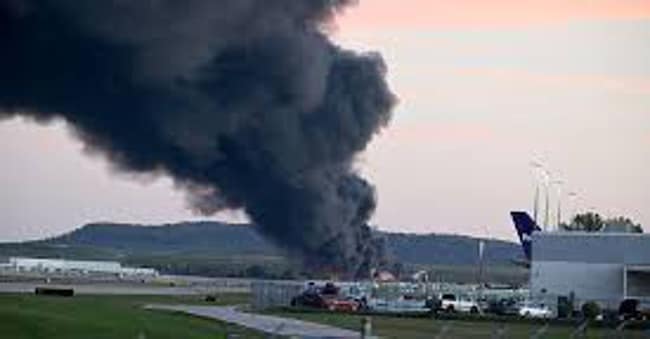
UPS accident, death toll rises to 12, nine missing

The cargo plane spent six weeks on the ground before the accident. Investigations are also focusing on possible maintenance problems with the aircraft

by Mara Monti

3' min read

Translated by AI
Versione italiana

3' min read

Translated by AI
Versione italiana

The UPS cargo plane that crashed and exploded Tuesday at Louisville's Muhammad Ali International Airport, killing 12 people, reportedly spent more than six weeks on the ground in San Antonio before the crash, from 3 September to 18 October, according to flight tracking data. On board were three crew members, all of whom are deceased,

Federal investigators from the National Transportation Security Board (NTSB), the US flight safety agency, are now examining the aircraft's maintenance records to determine whether mechanical problems may have contributed to the crash. "We know that this aircraft was located in San Antonio," said Todd Inman, of the NTSB, without providing a specific time frame. "We will be reviewing any maintenance performed, including maintenance performed in San Antonio, up to the date of the flight.

Loading...

According to Federal Aviation Administration records dated 18 September, a crack on a structural element inside the wing's central tank reportedly required repair. There is currently no evidence whether poor maintenance caused the Honolulu-bound freighter to crash. Meanwhile, the aircraft's two 'black boxes', the cockpit voice recorder and flight data recorder, have been recovered, and transcripts of cockpit conversations are being made.

More bodies are being searched in the rubble of the accident: in addition to the 12 people recovered lifeless, there are reportedly another nine people missing.

Regarding the dynamics of the accident, what is known is that the aircraft took off two hours late due to a service on the General Electric GE CF6 engine, and during take-off the tanks were full of fuel (38 thousand gallons). The General Electric GE CF6 No. 1 engine, the one on the left, separated from the left wing and after reaching a maximum height of 53 metres, passing just above the debris-damaged UPS Worldport, it began to lose altitude. After impacting the left wing, the aircraft hit the surrounding businesses, turning into a fireball.

So far, the NTSB has found no immediate safety problems with the larger MD-11 programme owned by Boeing since its merger with McDonnell Douglas in 1997. The crashed UPS cargo plane, the McDonnell Douglas MD-11, was for decades among the giants of aviation: today it is no longer used for passenger traffic, but mainly for cargo. The aircraft involved, with the registration number N259UP, had been built in 1991 when it was delivered to Thai Airlines as its first passenger operator; it had been operating for 34 years with General Electric CF6-8 engines.

The only modern aircraft with three engines, currently in circulation - according to data from the aviation analysis company Cirium - there are about a hundred still in the fleets of the major international cargo companies: FedEx Express has about 28 aircraft in its fleet and 32 parked with a plan to retire them completely by 2032; UPS Airlines, the company involved in the accident, has about 28 active and 32 parked; Western Global Airlines only 4 and another 12 parked. Putting these figures together, there are between 40-50 active MD11s, but many are not used except occasionally, bringing the figure to around 90-100 aircraft.

The MD-11. when launched in 1986, was an updated version of the DC-10. Its production was cancelled after the 1996 acquisition of McDonnell-Douglas by Boeing, as the aircraft had become a direct competitor to the Boeing 777.

The dynamics of the accident, according to experts, were reminiscent of the 1979 American Airlines DC-10 crash at Chicago airport: in this case, it was a passenger plane and all 220 people on board lost their lives. As in the case of the UPS cargo plane, the number one engine detached on take-off, damaging the left wing, which without an engine unbalanced the plane that crashed into a trailer park near the airport. Investigations found that the detachment of the engine was due to damage to the pylon structure attaching the engine to the wing, caused by improper maintenance procedures.

Copyright reserved ©
Loading...

Brand connect

Loading...

Newsletter

Notizie e approfondimenti sugli avvenimenti politici, economici e finanziari.

Iscriviti