The sector

Mechanical engineering and subcontracting: the challenge of restructuring, as outlined by the General Assembly

The initiative by Confartigianato Imprese Veneto and Confartigianato Padova highlights the opportunities in the biomedical and aerospace sectors

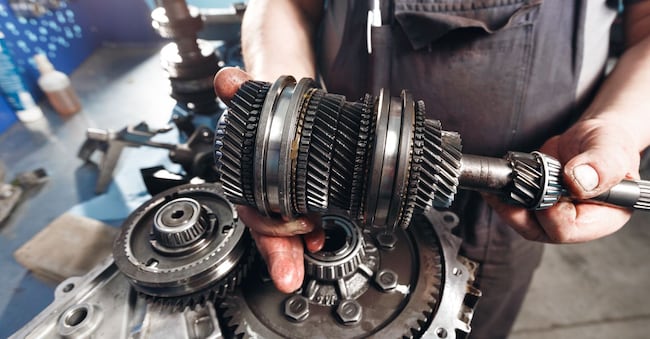
 (Adobe Stock)

5' min read

Translated by AI
Versione italiana

5' min read

Translated by AI
Versione italiana

The first edition of the ‘Stati Generali della Meccanica e della Subfornitura’ (General Assembly on Mechanical Engineering and Subcontracting), organised by Confartigianato Imprese Veneto and Confartigianato Padova, has come to a close. This nationwide initiative brought together, on the afternoon of Tuesday 17 November, representatives from the business world, economic analysts, institutions and agencies involved in supporting the internationalisation of businesses.

The region

The Veneto region plays a leading role in the Italian mechanical engineering sector. According to the analysis by the Research Department of Confartigianato Imprese Veneto, mechanical engineering remains a pillar of the regional economy. The sector comprises 18,137 businesses, accounting for 11.6 per cent of the national total, and employs a total of 225,110 people. The presence of craft businesses is also significant: 9,703 businesses, representing 53.5 per cent of all companies in the sector. This is a fundamental component of a production system characterised by a widespread network of small and medium-sized enterprises and specialist skills.

Loading...

Mechanical engineering exports from the Veneto region totalled 29.9 billion euros in the 12-month period from July 2025 to June 2026. More than half of the sector’s exports (52.8 per cent) consisted of machinery and equipment. These are followed by metallurgical products (13.8 per cent) and metal products, excluding machinery (13.4 per cent). Figures for the first half of 2026 show an 8.4 per cent increase in exports compared with the same period in 2025, reversing the downward trend recorded last year. However, this performance is influenced by the sporadic but substantial sales of ships and boats: excluding this item, the Veneto region’s mechanical engineering exports remain essentially unchanged.

“The mechanical engineering sector,” explains Roberto Boschetto, president of Confartigianato Imprese Veneto, “is one of the pillars of the Veneto region’s manufacturing system and makes a decisive contribution to our region’s ability to compete on international markets. When we talk about the Veneto’s mechanical engineering sector and the success of ‘Made in Italy’, we are also talking about craftsmanship. Our businesses are part of supply chains, producing components, specialised processes, prototypes and bespoke products. Today, this system is facing a major transformation: the challenge is to remain a key player in international markets, whilst also reducing its vulnerabilities. I believe that one of the key words for the future of our businesses must be diversification: diversification of markets, customers, products and manufacturing processes.”

The sector

The Italian mechanical subcontracting sector is undergoing a profound transformation, driven by pressure from energy costs, international tensions and the crisis affecting traditional sectors such as the automotive industry. Against this backdrop, many small craft businesses are being called upon to rethink their production and explore new opportunities in emerging sectors, starting with aerospace and biomedicine.

The unpublished data presented by the research departments of the Confartigianato network provide a detailed picture of the sector’s dynamics. In the first nine months of 2026, mechanical engineering output in Italia grew by 2 per cent. However, excluding transport equipment, which recorded an increase of 0.8 per cent, the sector remained largely stable (+0.1 per cent).

Exports in the sector showed stronger growth, rising by 8.9 per cent in the first eight months of 2026. Even when excluding exports of precious metals to Switzerland, growth remained positive, standing at 3.2 per cent. Energy costs are the main factor weighing on businesses’ prospects. Since the start of the Gulf crisis, on average between March and 9 November, the price of gas on wholesale markets has risen by 74.6 per cent compared with February, whilst the price of electricity has increased by 44.6 per cent. For diesel, excluding tax, the average price between March and October was 57.8 per cent higher than pre-crisis levels.

The outlook

To support businesses in the challenge of diversifying their production and entering new markets, the States General have devoted a special feature to the opportunities offered by the aerospace and biomedical sectors.

“The States General,” says Stefano Campanella, president of Confartigianato Meccanica e Subfornitura, “represent an important opportunity to reflect on the present and future of the Italian mechanical engineering sector, with a specific focus on subcontracting. Flexibility, high-quality products, expertise and advanced technology are the strengths and unique features of this widespread ecosystem. A network of small and micro-enterprises which, by engaging with lead companies in the supply chain, contribute to their development whilst simultaneously gaining access to new expertise and the latest frontiers of research as part of a process of continuous innovation. Faced with international turbulence, these businesses are called upon to diversify not only their markets but often their sectors as well, opening up to emerging supply chains.”

“For our companies, branching out into new sectors and collaborating with new leading firms in the supply chain also means having to meet increasingly complex certification requirements, ranging from sustainability to safety,” explains Nerio Dalla Vecchia, president of the Confartigianato Imprese Veneto Mechanical Engineering Federation - These are often complex and demanding processes, requiring significant investment, including in training and skills development. At the same time, they represent an important opportunity for growth: they encourage businesses to evolve, innovate and strengthen their competitive position, highlighting their distinctive characteristics, particularly in comparison with their Chinese competitors.”

Loading...

And Federico Boin, president of the Mechanical Engineering Sector of Confartigianato Imprese Padova, said: “We want this event to give rise to new relationships, collaborations and concrete business opportunities, because the future of the mechanical engineering sector is also built by bringing together different areas of expertise and manufacturing organisations.”

The figures

The figures analysed by the Confartigianato Imprese Research Department confirm growth in the aerospace and biomedical sectors. In Italia, there are 45,966 businesses that form part of the potential aerospace supply chain, accounting for 4.6 per cent of all economic activities. They employ 2,447,569 people (19.2 per cent of the total), generate €206 billion in added value and account for €210 billion in exports, equivalent to 47.7 per cent of national exports. Unlike the rest of the economy, where micro-enterprises predominate, the aerospace sector shows a higher concentration of firms in the 10–49-employee size bracket (48 per cent compared with the national average of 18.6 per cent). It is also a sector characterised by a strong propensity for innovation and investment: 91.1 per cent of companies invest in research and development, compared with 21.1 per cent of the economy as a whole.

The biomedical sector is also a sector of particular interest to the Italian manufacturing sector. The sector comprises 10,914 potentially active firms and 83,210 employees, according to figures as at 30 September 2026. Exports total 10.8 billion euros, accounting for 1.7 per cent of total manufacturing exports. Whilst there was a slight decline in the number of companies (-1.1% year-on-year), employment rose by 1.4%. Emilia-Romagna has the highest average company size, with 15.2 employees. At regional level, Veneto stands out for the value of its biomedical exports, at over €5.26 billion, followed by Lombardy with €2 billion and Emilia-Romagna with €1.17 billion.


Copyright reserved ©
Loading...

Brand connect

Loading...

Newsletter

Notizie e approfondimenti sugli avvenimenti politici, economici e finanziari.

Iscriviti