
The engineering sector “promotes” the initiative launched at Mimit
Rosa (Ucimu): “The surge in bookings on the GSE portal is a positive sign.” Almici (Anima): “Our proposal has been accepted – a first step towards a new industrial policy”
by Luca Orlando
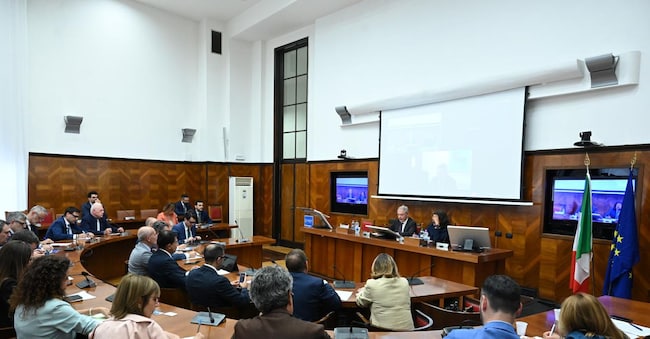
Feedback from businesses was positive on the day of the first meeting dedicated to the mechanical engineering sector, held at the Mimit headquarters in Rome.
“The new Transition Plan 5.0,” explained Adolfo Urso, Minister for Enterprise and Made in Italy, “is already being widely welcomed by businesses: since 12 June, 3,355 applications have been submitted via the GSE platform, representing over 1.25 billion in investments. This is a comprehensive scheme involving nearly 10 billion in national funding to support business investment in digital innovation, energy efficiency and advanced technologies over the next three years. This marks a further step forward following the success of the first scheme, which saw over 4.25 billion in projects launched and around 20,000 businesses involved.”
Although the timeframe for the measure’s actual implementation – as was the case with the previous 5.0 plan – has been considerably longer than anticipated, companies in the sector welcome this new direction.
“The surge in bookings made via the GSE platform during these first ten days of operation confirms what UCIMU has been reporting for some time: demand for capital goods involving the latest-generation technologies in Italia is certainly buoyant. Incentive schemes such as this ‘hyper-depreciation’ scheme, provided for under the New Transition Plan 5.0, work particularly well when designed for the long term, as they enable manufacturing companies to plan their production and end-users to plan their purchases.”
Urso, who highlighted the strength of the mechanical engineering sector – with exports worth around 180 billion – went on to point out the main vulnerabilities the sector faces: the small average size of companies, which limits their competitiveness on global markets; the need to further diversify the geographical reach of exports to reduce exposure to international crises; the mismatch between supply and demand for skilled labour, which calls for a strengthening of training and regional mobility; growing competitive pressure from China; and, finally, the delay in adopting artificial intelligence and increasing exposure to cyber risks. In light of these challenges, the Mimit’s departments have set up four technical working groups focusing on innovation and technology, skills and training, exports and internationalisation, and finance and capitalisation, which will aim to draw up operational proposals to support the sector’s competitiveness and growth.


